
Apple Letter Recognition Activity with Beginning Sound
This apple letter recognition activity with beginning sounds makes the perfect addition to your fall preschool theme ides, amping up your go-to letter recognition activities! These cute little apple basket with their beginning sound apple counterparts offer a hands-on approach to mastering letter identification as well as beginning sounds.

When you’re working with preschoolers, sometimes what you really need is an activity that feels like a game. This apple letter recognition activity feels just like that. With colorful, apple cards with beginning sound pictures on them, preschoolers get to practice “picking” apples and placing them in the correcponsfing letter basket. It’s a fun, effective way to reinforce phonics skills while also working on letter recognition and vocabulary.
After this activity has been introduced, we like to add them to our preschool literacy centers, morning tubs, or keep them in our small group instruction cart. This apple-themed phonics game brings a fresh (and easy!) energy to your alphabet instruction and who can’t appreciate that?!
Read this: Preschool Apple Lesson Plans
What Kids Learn with This Apple Letter Recognition Activity?
This activity seamlessly blends letter recognition and beginning sound awareness. Her’s more about it.
SKILL #1: Letter Recognition
Preschoolers need lots of exposure to letters before they feel confident naming and identifying them. This activity gives children repetitive practice in a meaningful, thematic way. What preschooler won’t have fun picking apples and stacking them in a basket? By seeing each letter paired with a picture, children start to connect the shape and name of the letter.
Read more about how to teach letter sounds to preschoolers.
SKILL #2: Beginning Sounds
Recognizing the beginning sounds of words is a tough pre-reading skill. This game invites children to listen carefully and isolate the first sound they hear, and then match that sound to the corresponding letter. This skill takes time to fully develop, so having games like this can really help solidify letter sound recognition connections.
Apple Letter Matching and Beginning Sounds Activity
Bring the fun of the harvest season into your preschool phonics lesson plans with this easy-to-use apple letter recognition activity!
What’s Included
- 26 basket cards with upper and lower case letters
- 78 apple cards with pictures that represent beginning sounds
Additional Materials
- Laminator
- Paper cutter
- Storage bin to keep pieces together
The Set Up
Print out the apples and cut everything apart. You can laminate them if you want to use the set again. Mix up the apple pieces and place them in a basket or tray. Decide if you want to use all 26 pairs or just a few at a time. Invite children to start matching the picture apples with the correct letter apples.

How to Teach Letter Recognition Using Apple Beginning Sounds Matching Game
Turn learning letter sounds into an exciting game with our apple-themed printable! Here’s how to guide your little ones:
Step 1: Introduce the Letters and Sounds
Start by choosing just 3–5 letter baskets, and in advance set aside the corresponding beginning sound apples. If you give all 78 apples to your preschoolers at once, or all 26 alphabet baskets, they will immediately be overwhelmed and feel defeated, so just do a few at a time.
Show your preschoolers a letter basket and say its name and sound. Hold up the picture apple and name the object, emphasizing the first sound. Ask your child if the letter and picture go together. If not, model how to find a match.

Step 2: Guide the Matching Process
Spread the apple cards out face up on a table or rug. Ask the child to find a picture apple and name what’s on it, and help them listen for the beginning sound and find the matching letter apple. You can model one or two examples if needed, or walk them through the entire alphabet, doing a couple of letter baskets as a time. Offer gentle support as they work through the matches.
Step 3: Add Challenge Over Time
Once the child is confident with a few letters, gradually increase the number of apple pairs. Or, just start with the letters in their name. While the children are working, encourage them to explain their thinking aloud: “I hear ‘sss’ in sun, so it goes with the S basket.” Talking through their process builds important connections!

Apple Activties for Preschoolers
Extend the apple fun beyond letters and sounds! Here are some sample activities for the Apple-themed activities:
- 6 Low Prep Apple Activities for Preschoolers
- Apple Theme Math Activities for Preschoolers
- Apple Life Cycle Printable Apple Activities
- Apple Activity Pack for Preschoolers
- Apple Counting Cards
- Apples and Pumpkins Preschool Centers
- Apple Lesson Plans for Preschoolers
- Handprint Apple Tree Craft
- Rice Apple Sensory Bin
- Apple Stamps Process Art Activity
- Apple Taste Testing with Free Exploring Apples Printable
Shop our Fall Preschool Centers
Perfect for preschool and kindergarten autumn-themed learning.
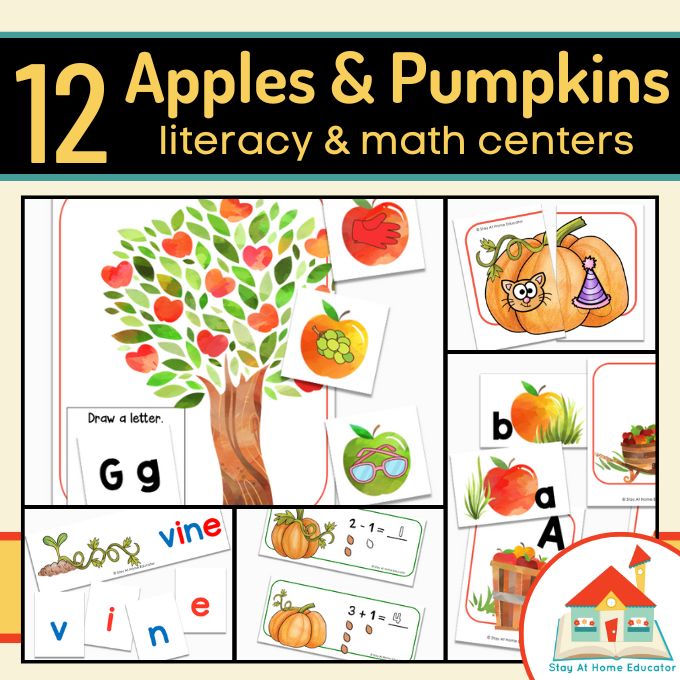
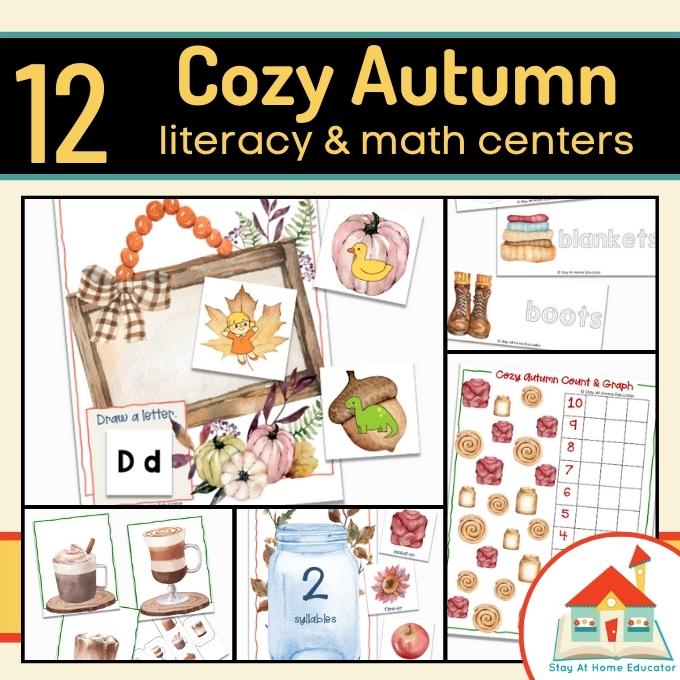
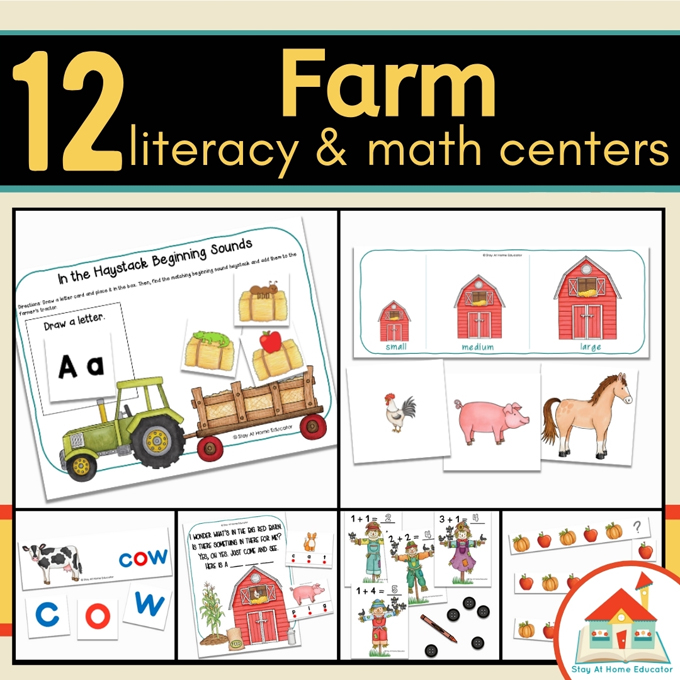
Get Your Free Apple Beginning Sounds Matching Printable Here
Ready to add this apple-tastic learning tool to your resources? Simply enter your email address below to receive your free Apple Beginning Sounds Matching Printable download.
Read this: Games to Help with Letter Recognition
FAQs About Letter Recognition and Beginning Sounds
It means recognizing and saying the first sound heard in a spoken word, such as /m/ in “mouse.” This builds early phonemic awareness, helping children hear and isolate sounds. It also connects to early reading as children begin to match those sounds with letters. Practice using picture cards, sound boxes, or sound-focused storytime discussions. These beginning sound games can support this learning through play.
To practice beginning sounds, use pictures or objects that clearly represent one sound at the start, such as “cat” for /k/. Say the word slowly and emphasize the first sound, asking the child to repeat it. Sorting games with sound categories or using sound matching cards are also helpful. You can make this hands-on by using toys, playdough, or movement activities tied to each sound.
For printable sorting mats and games, visit this beginning sound activity pack.
Help children tune into beginning sounds by exaggerating them during read-alouds or daily routines (e.g., “Let’s wash our h-h-hands!”). Use beginning sound clip cards or matching games that focus on one sound at a time. Alliterative books and name games can make learning feel more personal and fun. Sound-based centers with visuals also support auditory discrimination. Try this set of beginning sound matching cards for hands-on learning.
Children often begin to identify letter sounds around ages 3–4, especially when given repeated, playful exposure. Sound awareness develops gradually, starting with hearing and then naming the sound. Preschool activities focused on sounds rather than letter names can help build this skill earlier. Consistent routines and repetition support retention and understanding. For age-appropriate resources, see this alphabet learning guide.
Yes—when children hear and identify sounds in spoken words, it’s phonemic awareness. If they connect those sounds to written letters, that’s the start of phonics. Phonemic awareness is purely auditory and a key pre-reading skill. Activities like clapping, segmenting, and isolating sounds help build it without needing text. These phonemic awareness games give you a clear starting point.
Shop our Preschool Literacy Lesson Plans
Engaging, ready-to-use lesson plans designed for early learners.

I’m Sarah, an educator turned stay-at-home-mama of five! I’m the owner and creator of Stay At Home Educator, a website about intentional teaching and purposeful learning in the early childhood years. I’ve taught a range of levels, from preschool to college and a little bit of everything in between. Right now my focus is teaching my children and running a preschool from my home. Credentials include: Bachelors in Art, Masters in Curriculum and Instruction.


