
Alphabet Sensory Bin for Letter Recognition and Beginning Sounds
Looking for a fun way to teach letters? This alphabet sensory bin is one of my favorite letter recognition activities! Kids love digging through the bin to find letters, and teachers love how it builds important pre-reading skills.
Whether you’re a parent with a curious preschooler or a teacher managing a busy classroom, this sensory activity keeps kids learning and engaged. Plus, it’s easy to adapt to different themes or abilities, which makes it super versatile. Let’s take a peek at how this simple bin turns into a powerful teaching tool!
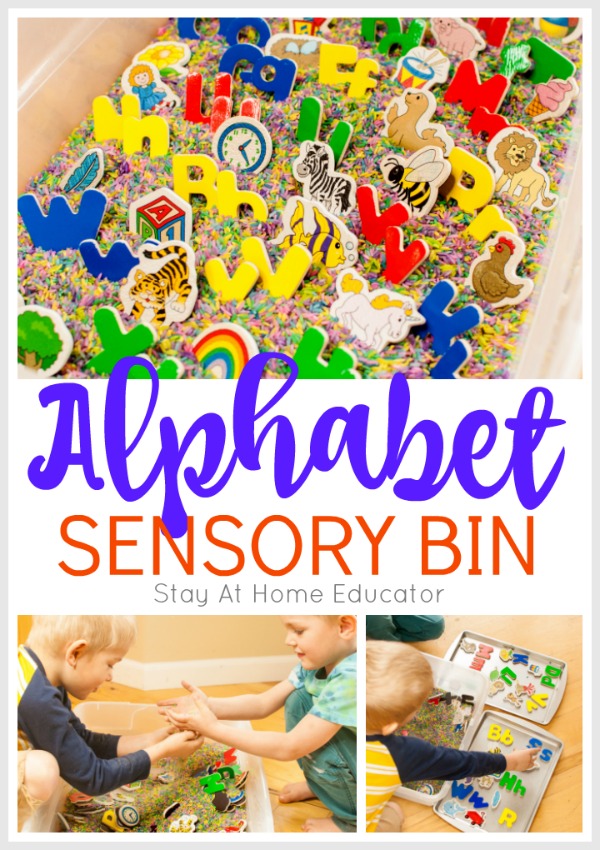
If you’ve got a child who loves to dig, scoop, or explore with their hands, this activity is going to be a hit. This alphabet sensory bin turns everyday sensory play into one of your go-to letter recognition activities.
Your child gets to dig through a textured bin filled with rice, beans, sand, or any filler you choose, and hunt for plastic letters and beginning sound pictures hidden inside. As they explore, they’ll pull out letters, name them, match them, and even try to put them in ABC order.
Whether you’re just starting with letter names or working on matching upper and lowercase, this activity meets your kids right where they are, and it couldn’t be easier to set up, either. You can even sneak in extra challenges for those ready to stretch their skills a bit further.
Sensory activities like this pair well with explicit alphabet instruction because they offer hands-on reinforcement after direct teaching.
So grab a tub and some letter manipulatives—this is one activity you’ll want to use again and again!
Read this: The Ultimate Guide to Creating Sensory Bins
What Kids Learn from This Activity
This alphabet sensory bin teaches more than just letters. It helps build fine motor skills, visual discrimination, and early literacy understanding.
SKILL #1: Letter Recognition
Kids develop familiarity with letter shapes, names, and sounds while digging and identifying—it’s hands-on fun that helps letters stick! The more they repeat the activity, the more easily those letters stick in their memory. You’ll find that your preschoolers will naturally start sorting letters. This is a powerful time to talk about those letters by having your preschooler explain their sorting.
SKILL #2: Fine Motor Development
Sifting, grabbing, and scooping letters strengthen hand and finger muscles. This prepares kids for pencil grip and writing later on, but also builds the muscles for everyday self-help activities. It also improves coordination and hand-eye control.
SKILL #3: Visual Discrimination
This activity trains kids to notice small differences between letters, which comes from their natural inclination to sort and group the letters as they play. It supports attention to detail and early reading accuracy.
Learn the Alphabet with a Sensory Bin
This alphabet bin is a wonderful way to make learning letters feel like playtime. Kids stay engaged while building essential pre-reading skills.
Materials
- rice
- magnetic letters or other letter manipulatives
- trays that are magnetic, like from the Dollar store
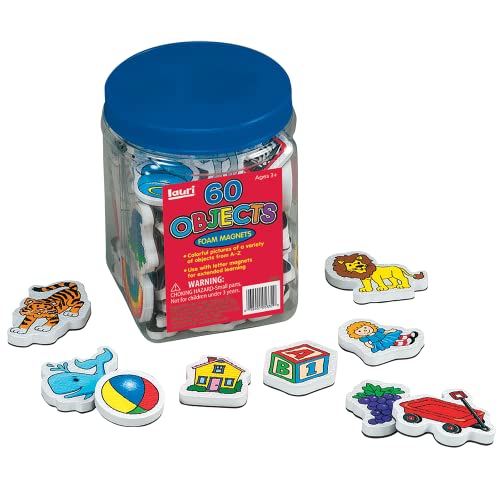
- magnetic beginning sound pictures

Additional Materials for Prep Work:
- A shower curtain to contain mess
- Ziplock bags or containers for storing letters
- Optional: beginning sound toys (e.g., animals, shapes) for added play
The Set-Up
Begin by dying your rice. That will be the filler for our alphabet sensory bin. Happy Hooligans has a great recipe for how to dye rice if you have not made it before.
Arrange the prepared rice as desired in a sensory bin. Then arrange the magnetic letters and beginning sound magnets.
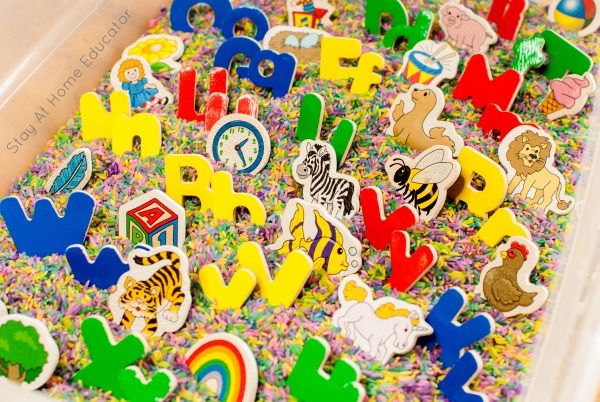
Unless your sensory bin is really big, you might not be able to fit everything in. I use an under-the-bed container, so I focused on the most recent letters and sounds we had been exploring in preschool instead of adding the entire alphabet.
How to Teach Letter Recognition Using an Alphabet Sensory Bin
Here’s a step-by-step guide to teaching with this playful bin. These tips will keep things fun and intentional at the same time.
Step 1: Introduce the Bin
Gather your child or class around the bin and let them know they’re about to go on a letter hunt! Show them how to gently dig with their fingers or a tool to uncover a letter. When you find one, light up with excitement to draw them in. Hold it up and ask, “What letter do you think this is?” or “Can you name it?” This simple moment of modeling helps set the stage for joyful, engaged learning.
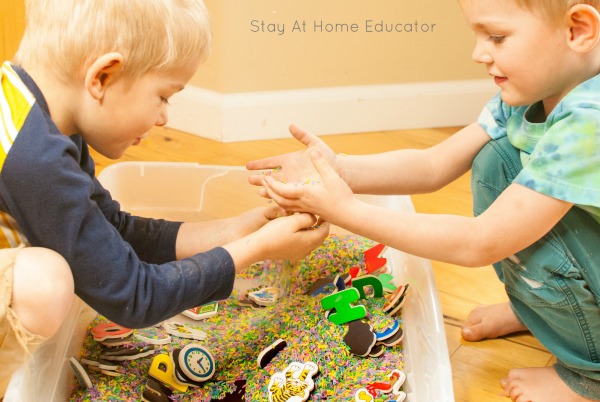
Step 2: Identify and Name Letters
As kids find letters, encourage them to say the name out loud, offering prompts if needed. Use simple questions like, “What letter is this?” or “What sound does it make?” Give praise for each try, and rinse and repeat the process.
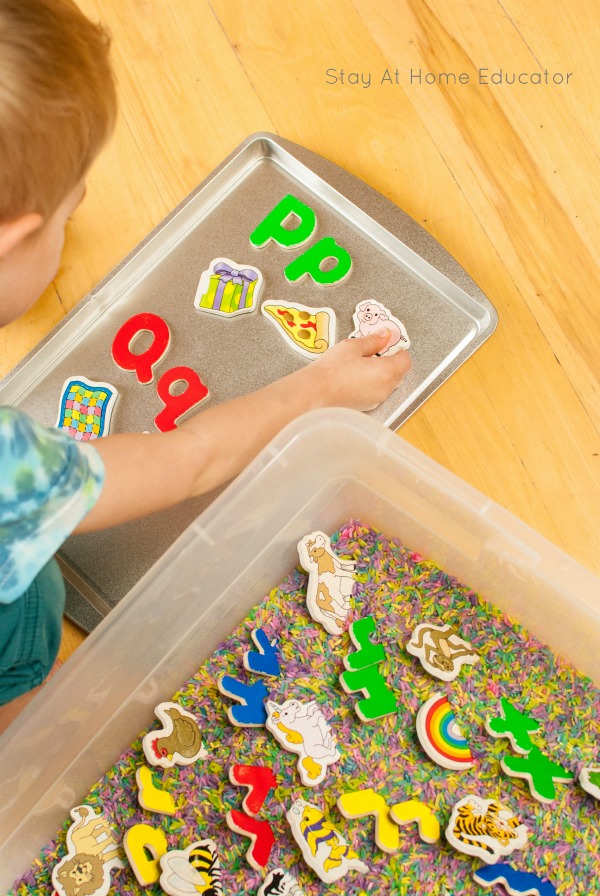
Step 3: Match the Letters and Beginning Sounds
Invite the kids to match each magnetic letter they find to a picture that starts with that sound. Say the letter name together as they make each match. This playful activity supports letter recognition and beginning sound awareness—and kids love the hands-on fun of snapping the pieces into place!
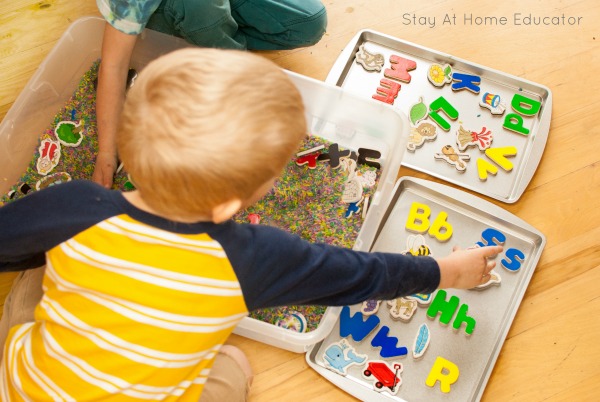
Alphabet Sensory Bin for a Range of Abilities
Sometimes it is difficult to know how to use sensory bins as a teaching tool. Let’s be honest…it looks like “just playing”. But here’s the catch…just playing is just learning!
Here are some ways to use a sensory bin to meet the needs of a range of abilities.
- Allow the children to choose how long they stay at the sensory bin.
- Keep it play-based. It’s important to not pressure the children into the “academic” side before they are ready. A sensory experience is still a learning experience. (One student, for example, might only bury the letters. But another student might voice that she is looking for said letter and then the first will un-bury it).
- Encourage the children to play and have fun. Maybe the letters fly and say their names or sounds as they fly to the magnetic trays.
- Use two sets of magnetic letters and invite preschoolers to find matching letters. Two uppercase letters, A A, or two lowercase letters, f f.
- Encourage the children to talk about the beginning sound magnets. Do they like to eat grapes? Where do you put a clock? When do you see stars? This will help develop their oral language skills.
Read this: 12 Hands-on Alphabet Activities
Alphabet Sensory Bin Ideas
Absolutely, here are some creative ideas for an alphabet sensory bin:
- Colored Rice Alphabet Bin: Fill the bin with dyed rice and hide magnetic alphabet letters in it. Children can search for the letters and match them to printed alphabet or letter formation cards.
- Sand and Seashell Alphabet Bin: Create a beach-themed bin with sand and seashells. Write different letters on each seashell for children to find and identify.
- Nature Alphabet Cards Sensory Bin: Use elements from nature like leaves, sticks, and stones. Write the alphabet on these items for a natural take on letter recognition.
- Alphabet Ice Bin: Freeze small toys or colored water inside ice cubes, each with a different letter. As children melt the ice, they can identify the hidden letters.
- Construction Site Alphabet Bin: Fill a bin with sand, toy construction vehicles, and plastic or wooden letters. Children can ‘excavate’ the letters and match them to printed cards.
Remember, the goal of these bins is to provide a fun, hands-on way for children to learn letter recognition and beginning sounds. Enjoy creating your alphabet sensory bin!
-
 12 Fine Motor Task Boxes$10.00
Sensory Bins for Learning Through Play
Sensory bins are full of learning! But they also keep kids engaged and excited. Try some of these:
- Fruit and Veggie Sensory Bin for Preschoolers
- Valentine’s Day Sensory Bin with Letter Matching Activity
- Autumn Leaves Sensory Bin for Preschoolers
- 4th of July Sensory Bin
- Easter Sensory Bin Ideas for Preschoolers
- Ocean Animal Hide and Seek Sensory Bin
Letter Recognition Manipulatives for Sensory Play
Letter recognition manipulatives for sensory play offer a hands-on approach that engages children’s senses, making learning more interactive and enjoyable. These tools help reinforce letter recognition through touch, sight, and movement, fostering a deeper understanding of the alphabet.
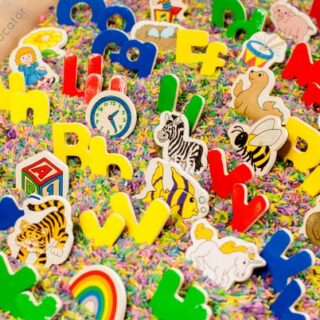
ALPHABET SENSORY BIN FOR LETTER RECOGNITION AND BEGINNING SOUNDS
Alphabet sensory bins are a wonderful way to combine sensory work with letter recognition.
These preschool sensory bins offer a fun and interactive way for children to practice with letter recognition and beginning sounds, while also developing their sensory skills.
The best part about an alphabet sensory bin? children get to physically explore letters, connecting their shapes and sounds in a tangible way.
Plus, preschoolers typically love sensory play, so they will likely get lots of alphabet practice that will merely feel like play!
Materials
- rice
- magnetic letters
- trays that are magnetic, like from the Dollar store
- magnetic beginning sound pictures
Instructions
- First, dye your rice. This is the filler for your sensory bin.
- Next, simply spread out the rice in your sensory bin and add your magnetic letters and beginning sounds magnets. Spread them out in whichever fashion makes sense for you and your preschoolers.
- Invite your preschoolers to play, while encouraging them to match magnetic letters with magnetic pictures.
- When you feel they have had ample time to explore, provide a magnetic tray for the children to place their letter/object pairs.
- Assist and guide the children, as needed. Encourage conversation about letter names, sounds, and what objects they can match. This is also excellent vocabulary building practice.
Notes
Modify your alphabet sensory bin to meet the needs of your preschoolers.
That might mean just including a few letters and matching objects, This could also mean setting more of a focus on uppercase/lowercase matching. You could also personalize it for individuals by only including the letters of their name (and corresponding objects).
There are many fun ways to make this activity meet the needs of your children.
Recommended Products
As an Amazon Associate and member of other affiliate programs, I earn from qualifying purchases.



I’m Sarah, an educator turned stay-at-home-mama of five! I’m the owner and creator of Stay At Home Educator, a website about intentional teaching and purposeful learning in the early childhood years. I’ve taught a range of levels, from preschool to college and a little bit of everything in between. Right now my focus is teaching my children and running a preschool from my home. Credentials include: Bachelors in Art, Masters in Curriculum and Instruction.
Where did you find he beginning sound magnets?
I just edited the post to give the link in the materials list.