Winter Sensory Bin for Preschool
Brrrrr, it’s that time of year! Winter sensory bins are one of the easiest ways to bring hands-on learning into your preschool day, especially when outdoor play is limited. If you’re looking for simple, developmentally appropriate winter activities for kids that support fine motor skills, language development, and early math through play, we’ve got you covered with this activity!
Our winter sensory bin is the perfect hands-on complement to the Winter Activities Bundle, too!
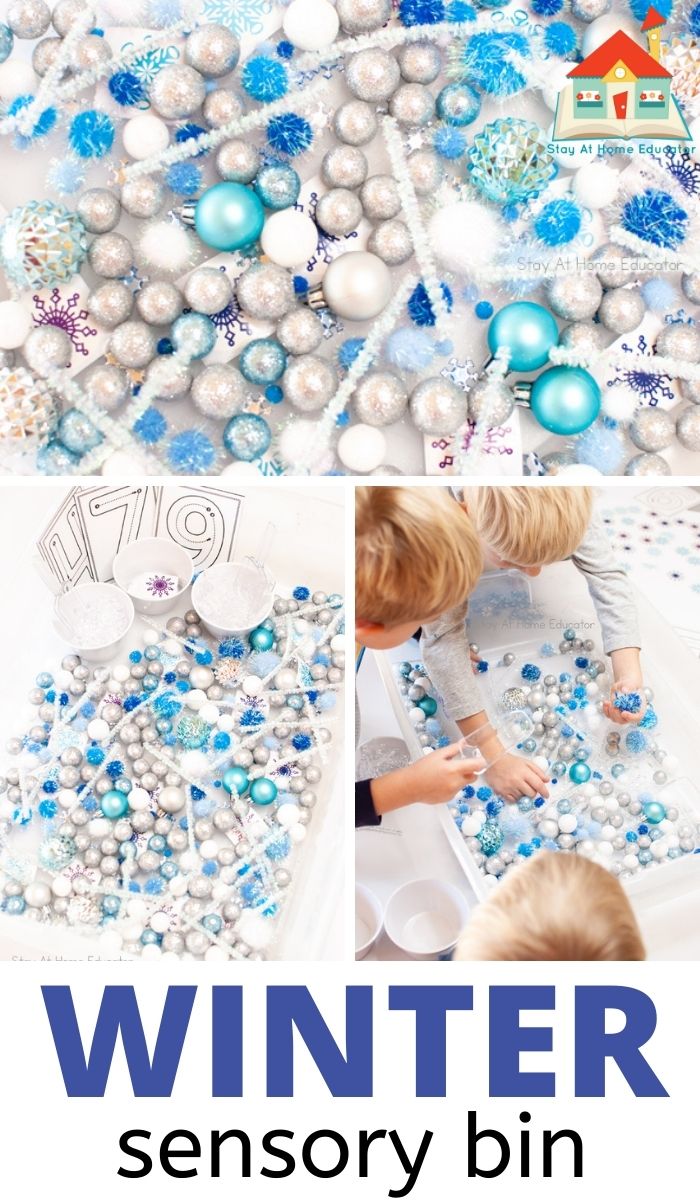
Why Winter Sensory Bins Work So Well for Preschoolers
Sensory bins are open-ended, calming, and highly engaging, which is just what you need for the winter months in the classroom.
A well-designed winter sensory bin helps preschoolers:
- Strengthen fine motor skills (scooping, pouring, pinching)
- Build vocabulary through descriptive language
- Practice early math concepts like counting and sorting
- Regulate emotions through tactile play
Best of all, they’re easy to adapt for mixed-age groups and different attention spans.
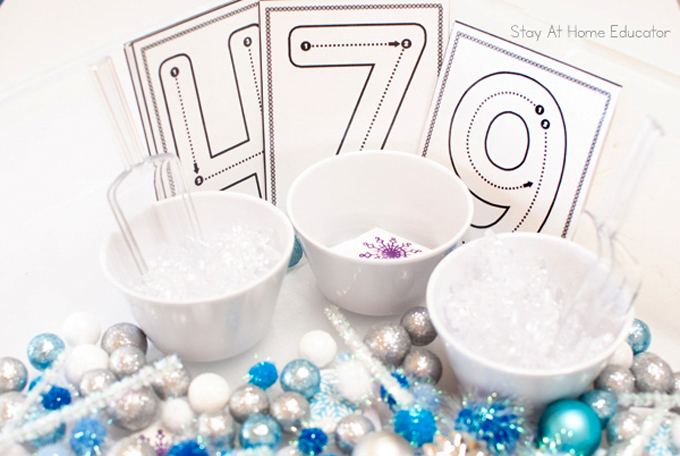
Simple Winter Sensory Bin Fillers
Start with a base that’s easy to store and reuse. Here are preschool-friendly winter fillers that worked well in our winter sensory bin this year.
Plus, we’ve included free number formation cards to help those little fingers practice tracing and identifying the numerals as they play.
Materials
- Blue, silver, and white foam balls (also known as vase filler)
- Mini ornaments
- Large snowflake stickers
- Irridescent white pipe cleaners
- Bowls, small scoops, and/or jumbo tweezers/tongs
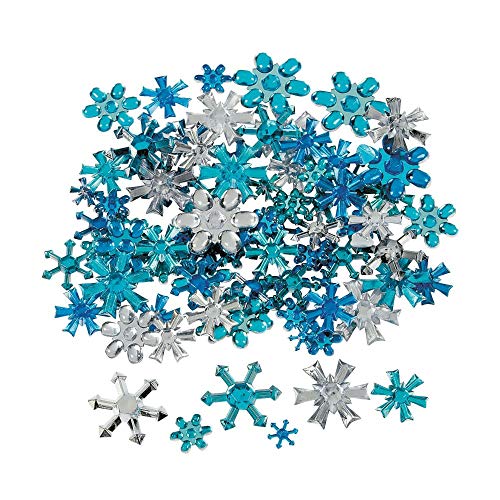
- Acrylic snowflake table scatter
- Blue pom-poms
- Plastic snowflake gems or stickers
- Number formation cards (free printable included in this post)
Teaching tip: Always model how to use materials before opening the bin. This sets expectations and reduces spills.
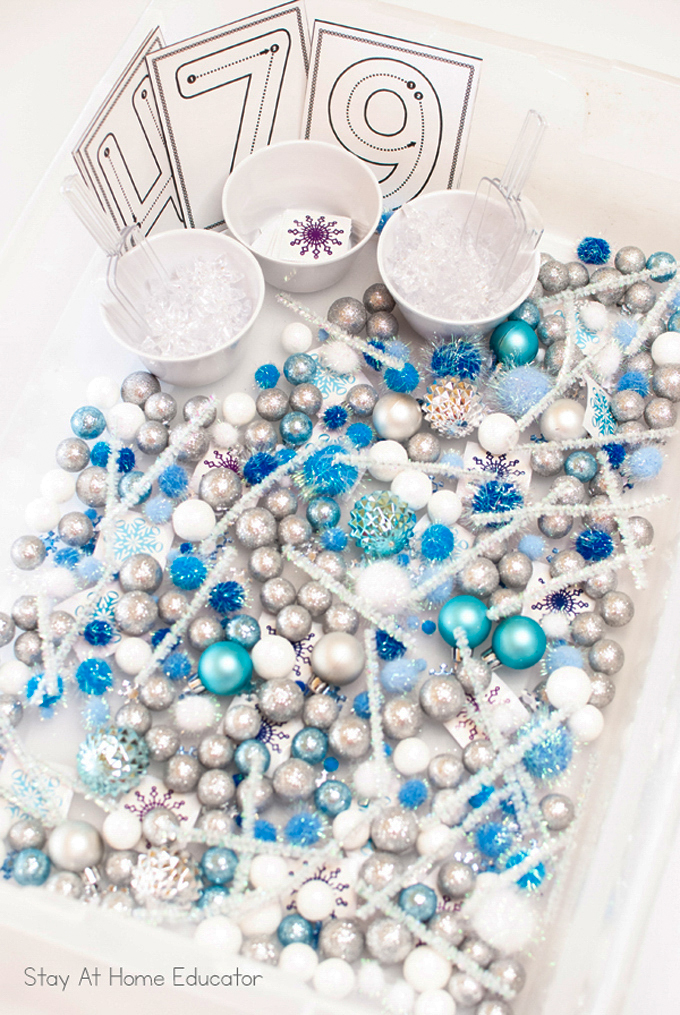
Free Number Formation Cards to Add to Sensory Bins
These printable winter sensory bin cards are designed to be grab-and-go, so you can set up meaningful play without extra planning. Just print, choose a card, and place it next to your bin for instant learning prompts.
Right after printing, you might also find it helpful to keep your weekly themes organized in one place—something like a simple Winter Activity Bundle can save time, though free sensory play works beautifully on its own.
Winter Sensory Bin Play Ideas for Early Learning
Invite children to dive in. This is where the magic happens. With a few engaging materials, every child finds their own path to learning and play, which is why sensory bins are one of my favorite teaching tools!
What We Observed
Open-Ended Sensory Play
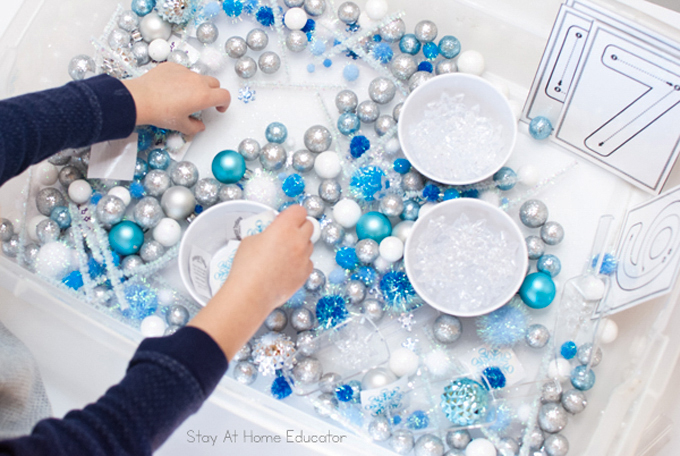
For the first few minutes, the boys explored freely: squishing, stirring, scooping, and feeling all the materials. This sensory exploration kept them engaged and excited.
Counting & Number Formation
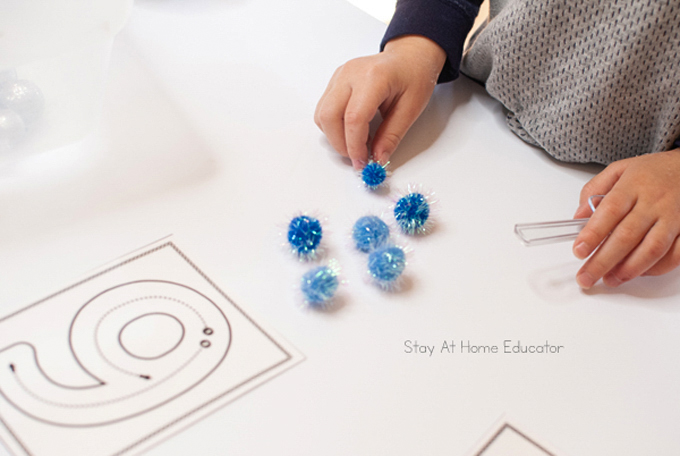
One child jumped right into using number formation cards, scooping sparkly pom-poms to count. He worked through six numbers before moving on.
Descriptive Language & Observation
This was the perfect moment to ask questions about textures. The poms poms were spiky and the ornaments were smooth or shiny and bumpy. They also noticed glitter transferring to their hands and the table.
Measuring & Problem Solving
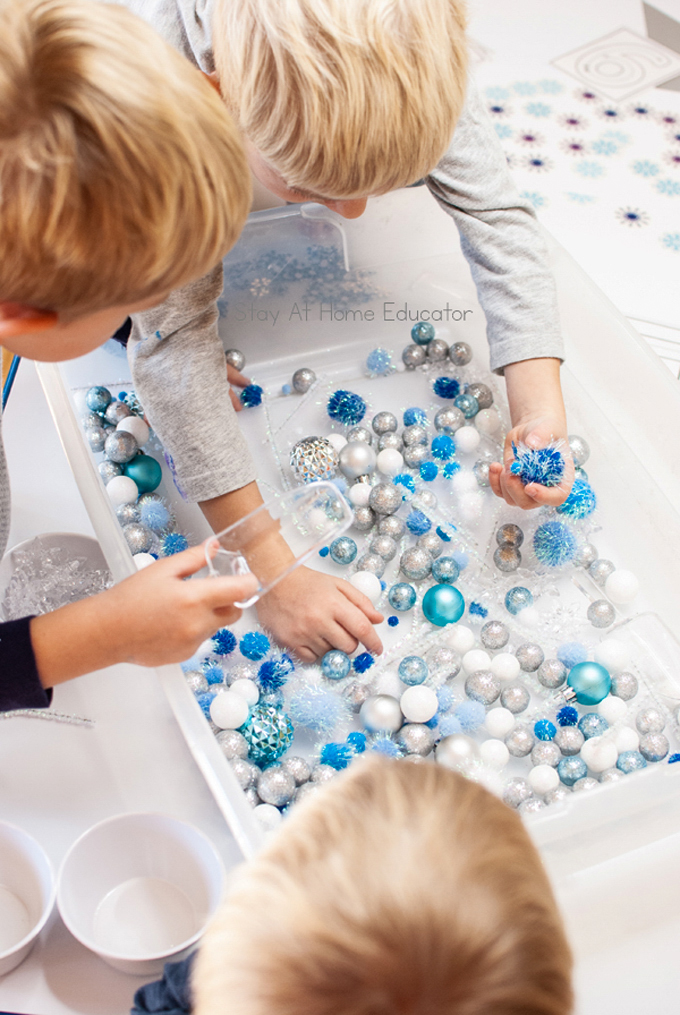
After gathering the “icicles” (silver pipe cleaners), one child began threading ornaments. He noticed some were longer than others and tested how many ornaments would fit. Soon, everyone joined in to find the longest icicle! The result: 6 small ornaments fit on the longest one.
It’s always amazing how a bin full of interesting materials can provoke so much learning, thinking, and creativity. Sensory play at its best!

More Math (or Just Play!)
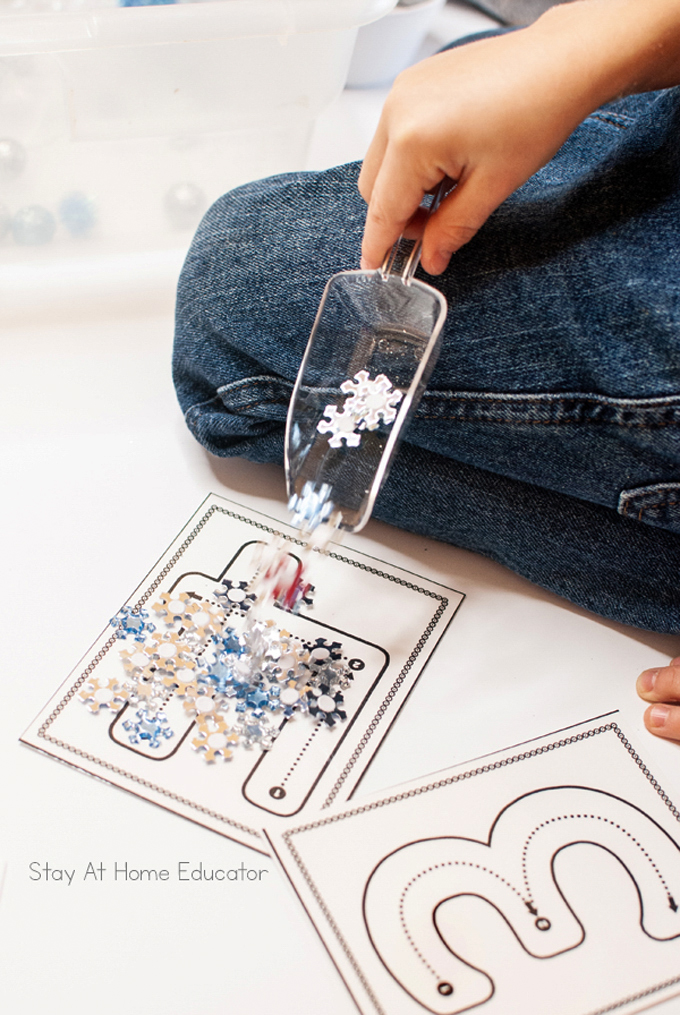
Later, snowflake gems were scooped and poured onto number cards to trace numbers or create trails. Sometimes it was math-focused, sometimes just pouring and scooping—and both are valuable.
Sorting & Cooperative Play
At one point, each child chose an item to sort, like icicles or spiky pom-poms, or a mix of the two. and worked together to collect matching objects in their bowls.
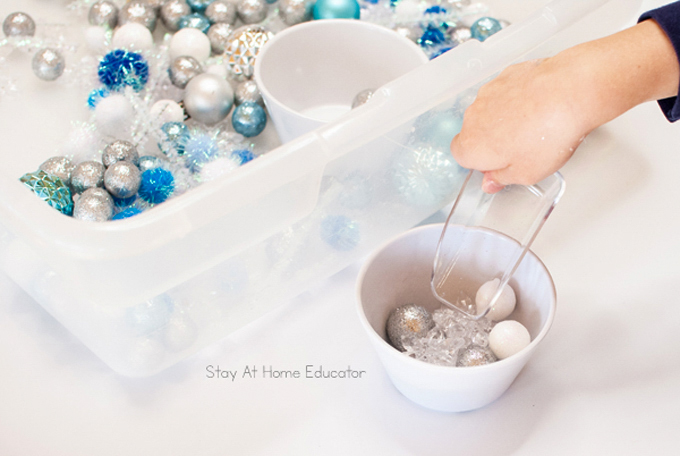
This winter sensory bin supports a wide range of early learning outcomes by integrating mathematical thinking, sensory exploration, and social interaction within an open-ended play context. As children naturally engage in activities such as counting, sorting, measuring, and manipulating materials, they develop foundational numeracy skills, descriptive language, fine motor control, and problem-solving strategies in very meaningful ways.
Sensory bins provide a developmentally appropriate, play-based approach to learning, making them a highly effective component of meaningful winter learning experiences.
Don’t Forget Your Number Formation Cards
If you’d like more winter themed printables that support preschool literacy and math, you can explore the resource below. And remember: using free printables and simple materials is always a perfectly solid way to teach preschool, but if you’re looking for more ideas, I’ve got you covered.
View the Winter Activities Bundle.
You can absolutely plan winter learning one week at a time with free resources—this is just an option if you want extra structure and time-saving support.
About the System
Themes are the lenses; the system is the structure. The curriculum isn’t a collection of topics (like number formation cards to use in your winter sensory bin), it’s an intentionally designed sequence that builds understanding over time. Themes help surface meaning and patterns, but the system determines order, depth, and progression. What matters isn’t just what is taught, but how learning compounds. This structure is what makes the curriculum coherent, repeatable, and transferable.
Want to see my whole system? Check our my Daily Lessons in Preschool Curriculum.
Winter Picture Books
High quality literature is so important for kids, and is a perfect addition to every preschool theme! We’ve hand-picked some of our favorite winter books for you. There are books about snow, snowmen, and all things winter!
Shop our Winter Preschool Centers
Engaging, hands-on activities for early literacy and math skills.

Winter Sensory Bin
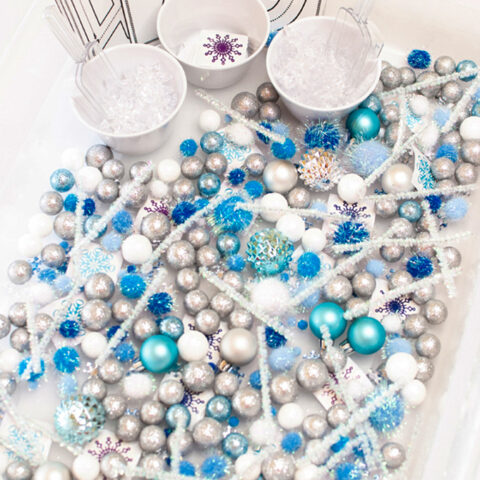
This winter sensory bin for preschoolers is the perfect opportunity to practice free play, counting, and sorting from the warmth of your home or classroom this winter.
Materials
- Blue, silver, and white foam balls (also known as vase filler)
- Mini ornaments
- Large snowflake stickers
- Irridescent white pipe cleaners
- Bowls, small scoops, and/or jumbo tweezers/tongs
- Acrylic snowflake table scatter
- Blue pom-poms
- Plastic snowflake gems or stickers
- Number formation cards (free printable included in this post)
Tools
- Laminator (optional)
Instructions
- To set up, gather all of the sensory materials that you have available and add them to a bin. Include things for scooping and pouring like spoons, measuring cups, jumbo tweezers, tongs, and/or sand shovels. Add enough bowls so that each child playing in the bin has their own bowl.
- Print the number formation cards and laminate (optional for durability) and cut them out. Place them inside the bin.
- Invite the children to dive in!
- Some might be interested in just playing at first. Feeling, squishing, stirring it all up, and scooping entertained and excited for quite some time. Feel free to ask questions about what the objects feel like.
- Then they may enter the sorting phase. Some may choose to sort by color, size, or type of object. Some may sort in totally different ways or sort to make patterns.
- Invite them to use the silvery iridescent pipe cleaners to thread the ornaments on. Challenge them to discover how many icicles will fit and encourage children to measure them.
- Another way to play with these materials is to scoop out snowflake gems and pour them on the number formation card. Then line them up over the number and make a trail of snowflakes. Or scoop with no math intent at all!
Recommended Products
As an Amazon Associate and member of other affiliate programs, I earn from qualifying purchases.


Frequently Asked Questions About Sensory Bins
Winter sensory bin ideas are endless! You can use any materials that relate to a winter theme. Stickers, pipe cleaners, pom-poms, cotton balls, white, clear, or blue gems, little foam beads, large winter-themed beads, or even shaving cream (that one is the messy option!) Incorporate arctic animals for a habitat-based theme or put together a snowman sensory bin!
Grab some simple household items such as rice, white beans, dry noodles or chickpeas (great opportunity to paint them silver or icy blue), or even coconut flakes. If choosing food or small items, use extra caution to monitor your little ones as they play.
Snow is a popular winter sensory table filler! Whether it’s pretend snow or real snow, a snow sensory bin provides a ton of fun and learning.
Winter is full of seasonal activities that are specific to winter weather. Make a sparkly winter painting with your littles or fine motor winter process art, perfect for a cold day when you are stuck inside! Or for a little color, try this rainbow fine motor snowmen activity.

I’m Sarah, an educator turned stay-at-home-mama of five! I’m the owner and creator of Stay At Home Educator, a website about intentional teaching and purposeful learning in the early childhood years. I’ve taught a range of levels, from preschool to college and a little bit of everything in between. Right now my focus is teaching my children and running a preschool from my home. Credentials include: Bachelors in Art, Masters in Curriculum and Instruction.