
Fun Ideas for Teaching Preschool Math
Sparkling eyes, giggles, and the thrill of discovery…that’s what preschool math activities should invoke! So we’re going to really kick it up a notch with some extra fun ideas for teaching preschool math. The most effective preschool math instruction is hands-on and woven into everyday routines.
In this post, you’ll find practical ideas for teaching preschool math that build real understanding — not just memorization — plus guidance on how to organize these activities into a simple, repeatable system you can use every day.
Preschool Math Activities You’ll Find Here
You’ll find developmentally appropriate preschool math activities that focus on core early math skills, including:
- Easy counting games
- Sorting and comparing activities
- Shape activities for preschoolers
- Measurement activities using everyday objects
- Simple graphing games
- Patterning ideas for early learners
How to Put These Preschool Math Activities Into a Teaching System
Having activity ideas is helpful, but without a system, math instruction can easily become inconsistent.
Throughout this post, you’ll also see examples of how to organize these preschool math activities into a simple daily structure, similar to the approach I use in my Daily Lessons in Preschool Math Curriculum.

Preschool Math: How Children Learn Early Math Skills
Preschool math is much more than learning to count. It is a rich, hands-on investigation into how the world works through five key areas of mathematics. Sounds dramatic, I know, but in preschool, math is how children organize the things they experience.
In a high-quality preschool environment, children engage in:
- Number Sense – counting objects, comparing quantities, and understanding concepts like more, less, and equal
- Patterns and Algebraic Thinking – recognizing, creating, and extending patterns, and making simple predictions
- Geometry and Spatial Sense – exploring shapes, positions, and how objects fit together in space
- Measurement – comparing size, length, weight, and time using everyday language and experiences
- Data Analysis and Problem Solving – sorting, classifying, asking questions, and drawing simple conclusions from what they observe
Through play, conversation, and exploration, children develop early reasoning skills, learn to make connections, and begin solving real-world problems. Strong early math experiences build confidence, curiosity, and the critical thinking skills children need for future learning—both in math and beyond.
How to Teach Preschool Math Effectively
Before diving into activities, it’s important to understand how preschoolers learn math best.
Keep Math Play-Based
Preschoolers learn through play. Games, movement, songs, and hands-on exploration help math concepts stick.
Use Real Objects
Manipulatives like blocks, buttons, toys, and household items make abstract ideas concrete and also make math feel more like play.
Short and Frequent Is Better
A 5-15 minutes of math every day is more effective than one long lesson each week.
Talk About Math Out Loud
This is a biggie! Use math language naturally:
- “Which one has more?”
- “That tower is taller!”
- “What basket should we put this toy in?”
In my preschool math curriculum, math talk is intentionally embedded into each day’s lessons as teachers model and use math language naturally throughout play and routines.
Preschool Math Activities by Skill Area
Below are ideas for teaching preschool math, organized by skill so you can easily choose what to focus on.
Counting & Number Sense Preschool Math Activities
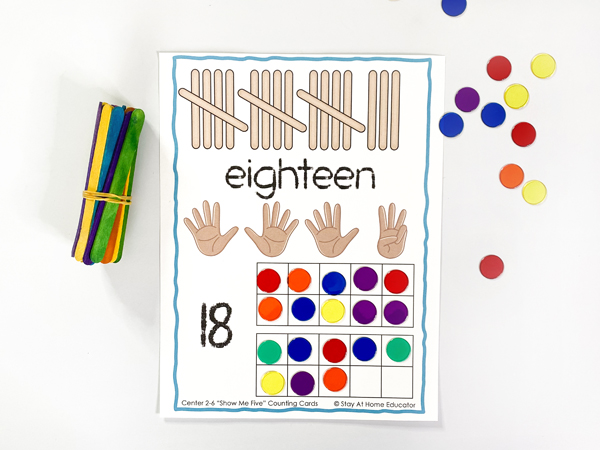
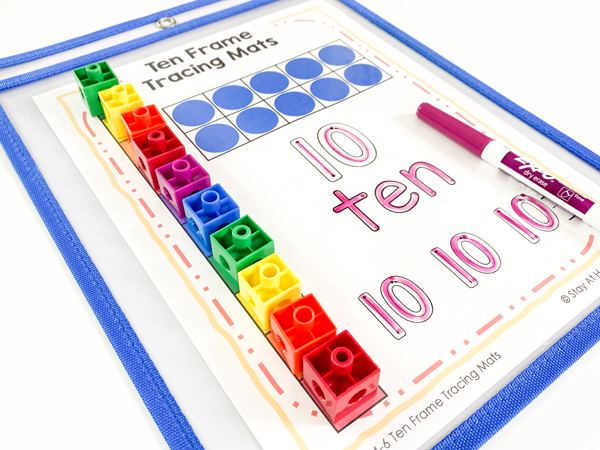
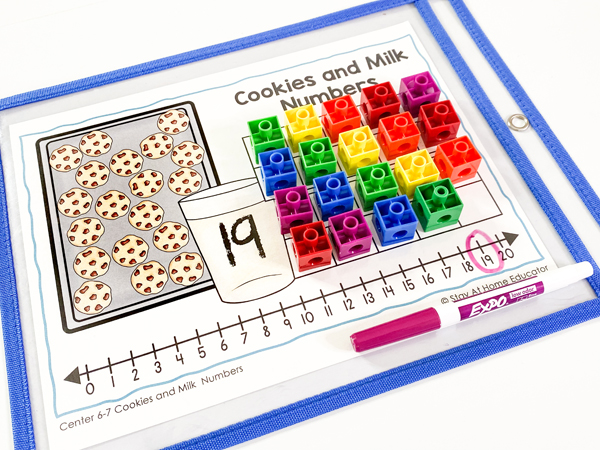
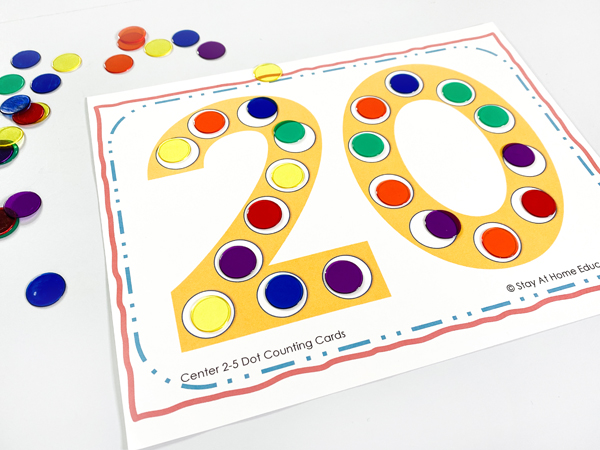
Counting in preschool is about more than reciting numbers. Children need repeated opportunities to connect numbers to quantities, see numbers represented in different ways, and practice counting with purpose.
Effective counting activities focus on small ranges at first and use hands-on materials so children can touch, move, and build quantities as they count. As confidence grows, activities naturally extend to higher numbers and more complex representations, such as ten frames and number sequencing.
Game-based counting centers help children practice these skills repeatedly without it feeling like drill work, while also supporting one-to-one correspondence and number recognition.
Teaching Tip: Focus on accuracy before speed. Encourage children to slow down, touch each item as they count, and check their work by counting again.
Addition & Subtraction Preschool Math Activities
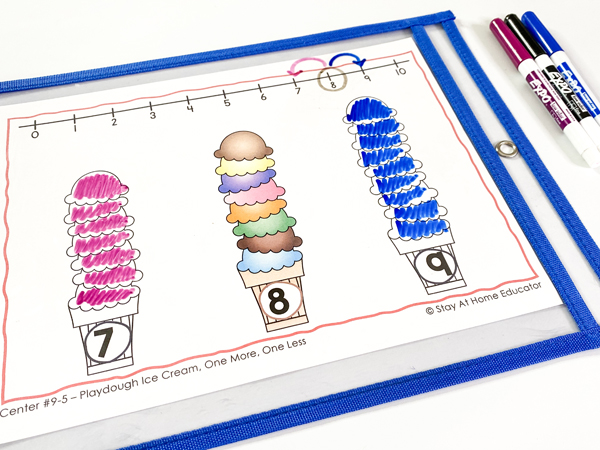
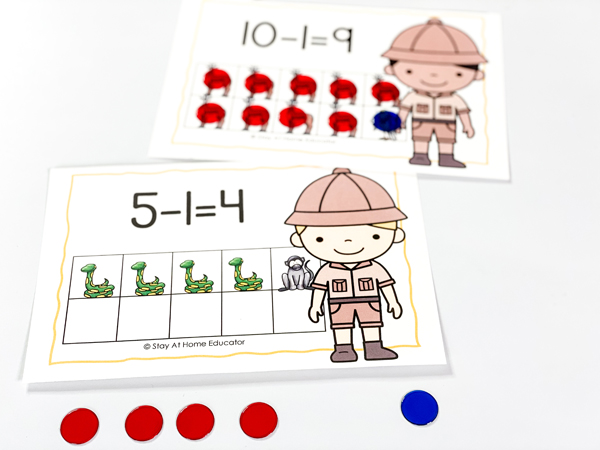
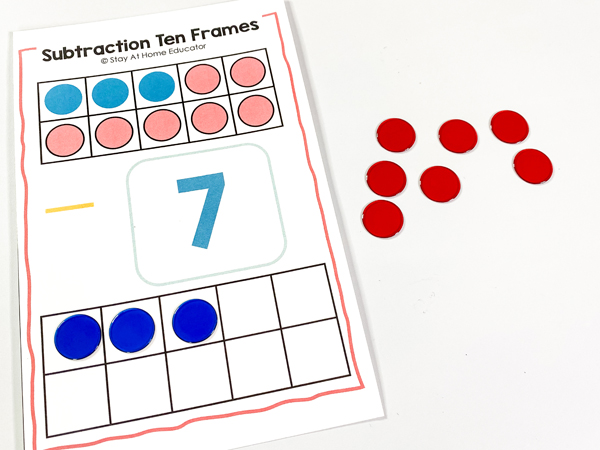
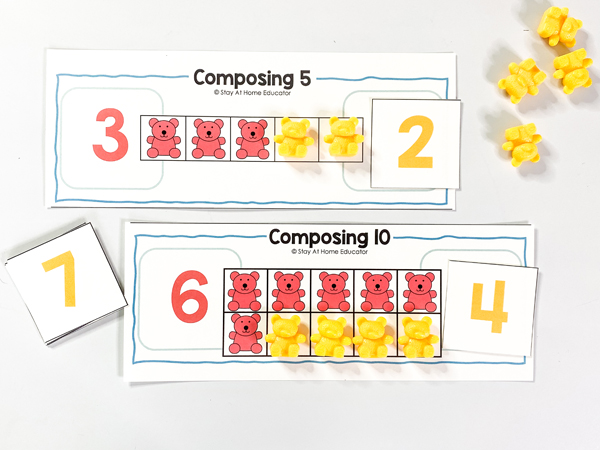
In preschool, addition and subtraction are introduced through hands-on experiences, not equations. Children begin by composing and decomposing small numbers and noticing how quantities change when objects are added or taken away.
Effective early math activities use concrete tools, such as counters, ten frames, or manipulatives, so children can see and feel what “one more” or “one less” means. As children grow more confident, these experiences naturally expand into simple number order and early problem-solving.
Play-based math centers help children explore these ideas repeatedly through building, rolling, and modeling quantities, making early addition and subtraction meaningful rather than abstract.
Teaching Tip: Focus on language before symbols. Phrases like “one more,” “one less,” and “how many now?” help children understand the concept long before they’re ready to write equations.
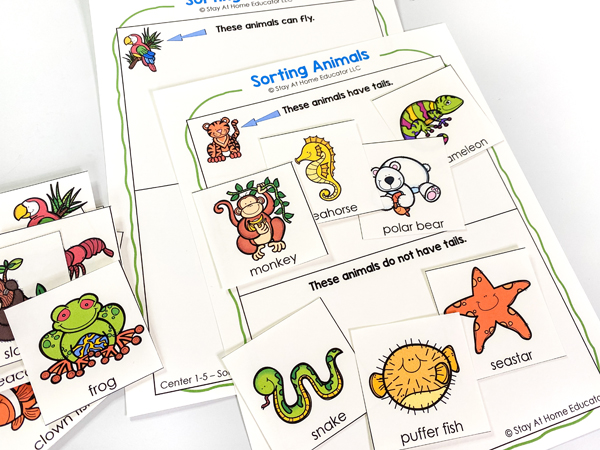
Comparing & Sorting Preschool Math Activities
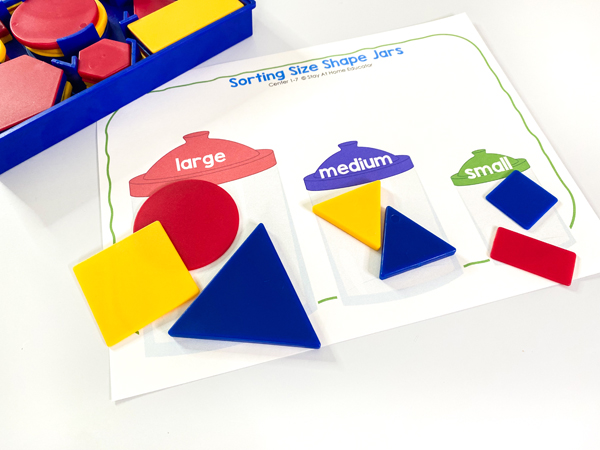
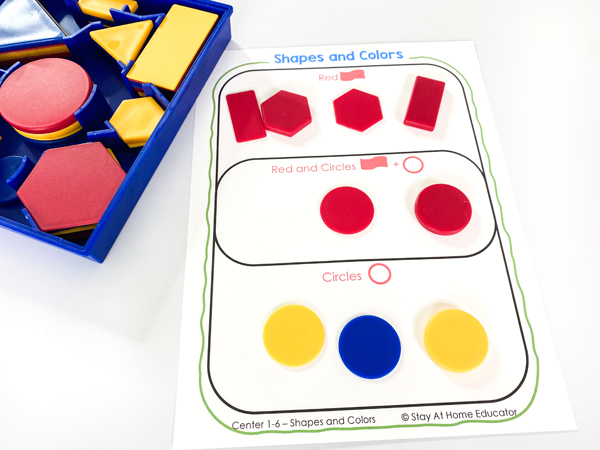
Sorting and classifying help preschoolers learn to notice similarities and differences, which is an essential early math skill. At first, children benefit from activities that focus on one clear attribute, such as color, shape, or size.
Simple sorting mats or object-based sorting activities allow children to practice grouping items without feeling overwhelmed. As they gain confidence, sorting games naturally add challenge by introducing two attributes at once, encouraging children to slow down, think carefully, and explain their choices.
Using game-style math centers keeps this practice engaging and allows children to repeat the same skill in different ways — building understanding through play rather than repetition alone.
Teaching Tip: Start with one sorting rule and use consistent language. Once children can explain why items belong in a group, they’re ready for more complex sorting tasks.
Spatial Awareness & Shapes Preschool Math Activities
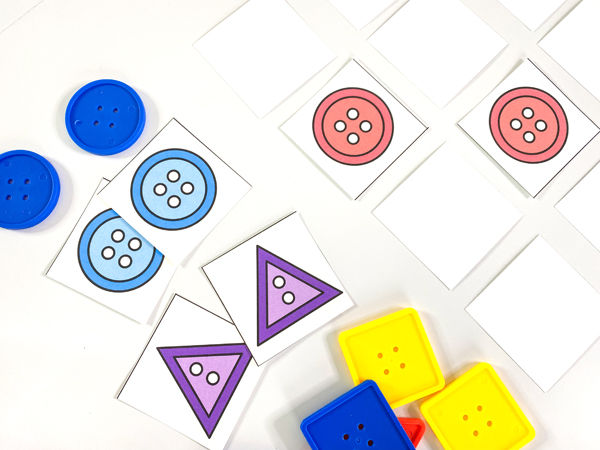
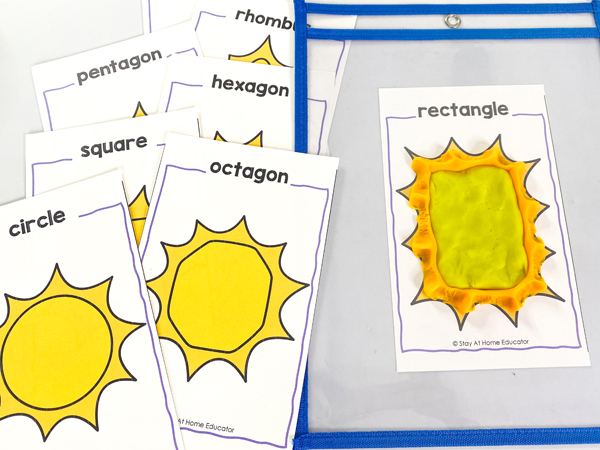
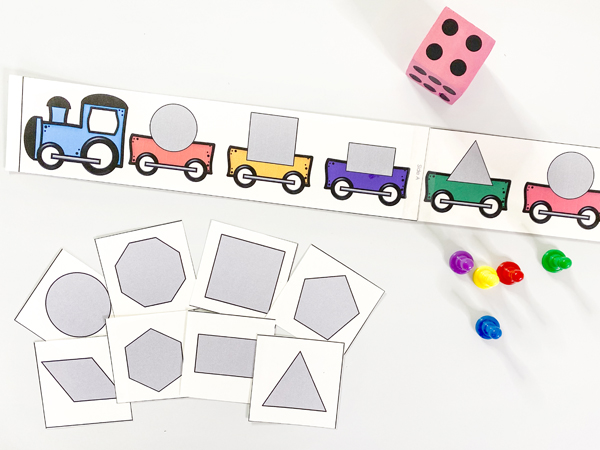
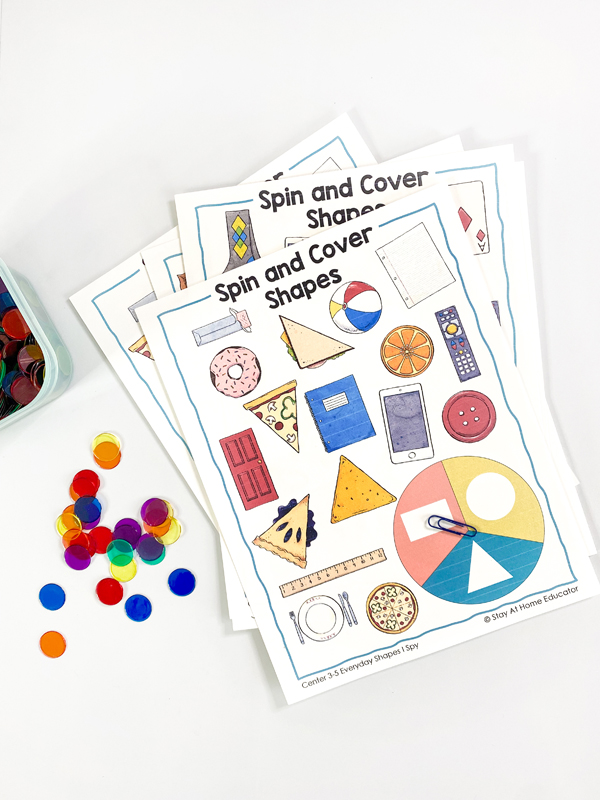
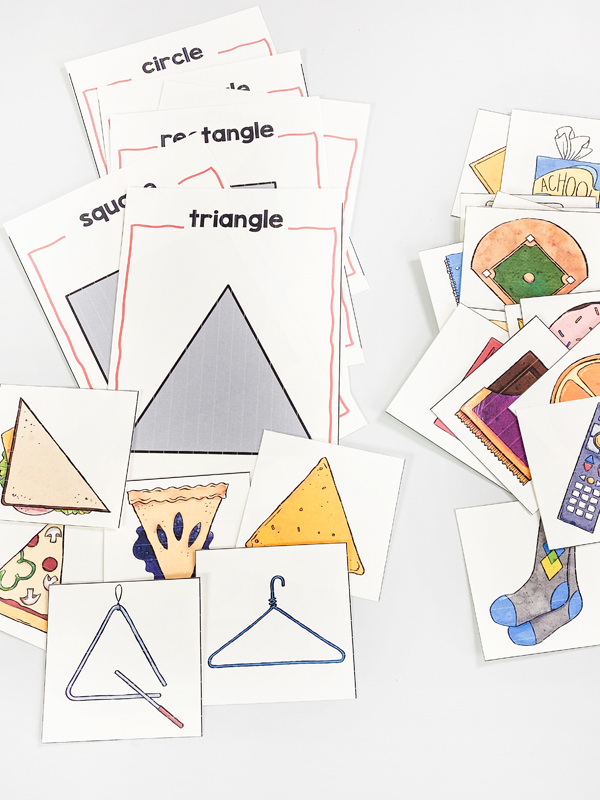
Learning shapes in preschool goes beyond naming them. Children need opportunities to build, manipulate, compare, and find shapes in their everyday environment to truly understand how shapes work.
Effective shape activities allow children to create shapes, take them apart, and recognize them in different contexts…from puzzles and games to real-world objects. As children gain experience, they begin to notice attributes like sides, corners, and how shapes can be sorted or combined.
Play-based math centers that include building, matching, and searching for shapes help strengthen both shape recognition and spatial awareness, supporting later geometry skills.
Teaching Tip: Use shape language consistently throughout the day. Talking about sides, corners, and curves helps children move beyond memorization and toward real understanding.
Positions and Patterns Preschool Math Activities
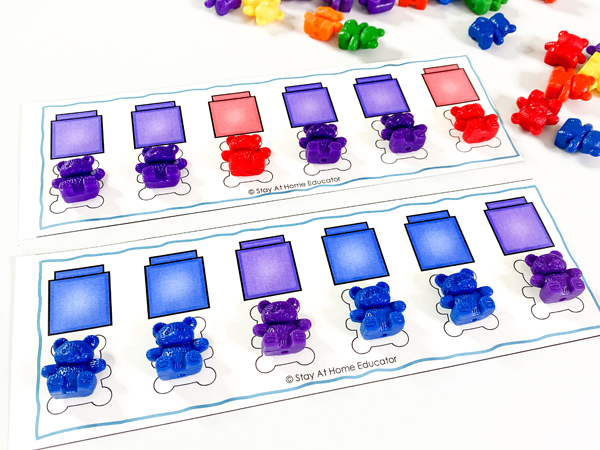
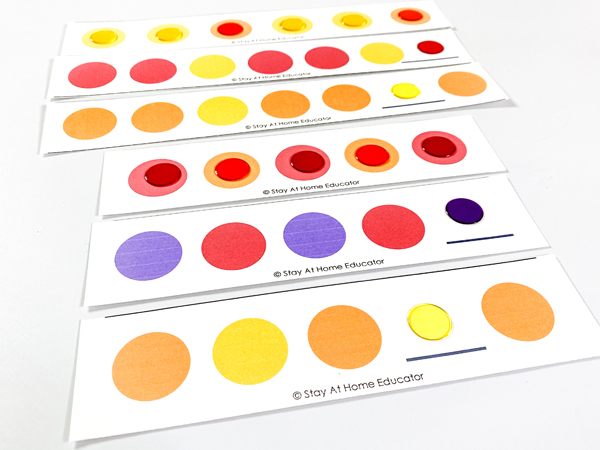
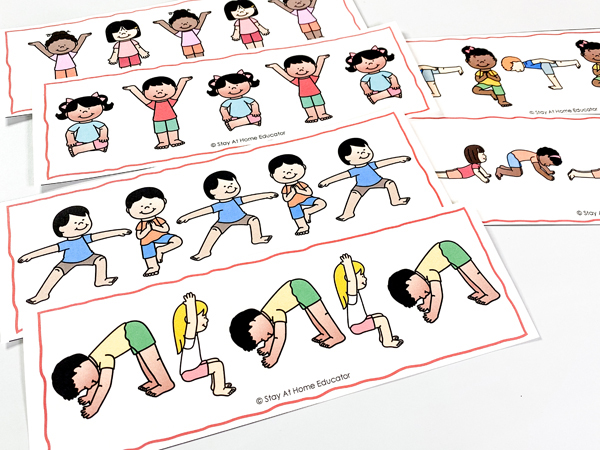
Patterns and positional language help preschoolers recognize order, predict what comes next, and describe relationships between objects. These skills lay the groundwork for later algebraic thinking and problem-solving.
Effective patterning activities allow children to match, extend, and create patterns using movement, objects, sounds, and visuals. Positional language activities support this work by helping children describe where objects are in space using words like above, below, next to, and between.
Play-based math centers that combine movement, visuals, and hands-on materials keep patterning meaningful and engaging while giving children repeated practice with both concepts.
Teaching Tip: Have children explain their thinking out loud. Asking “What comes next?” or “How do you know?” strengthens pattern recognition and language development at the same time.

Measurement Preschool Math Activities
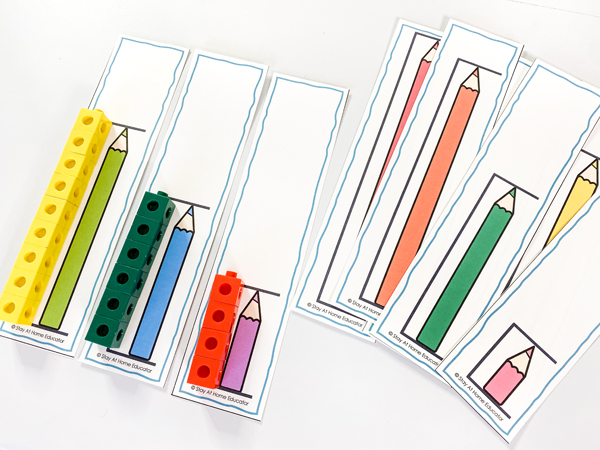
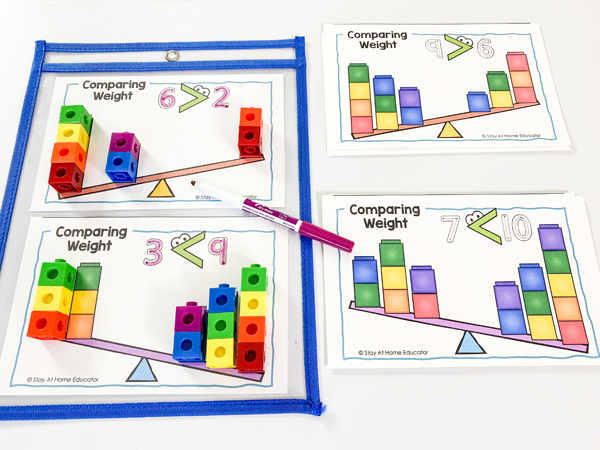
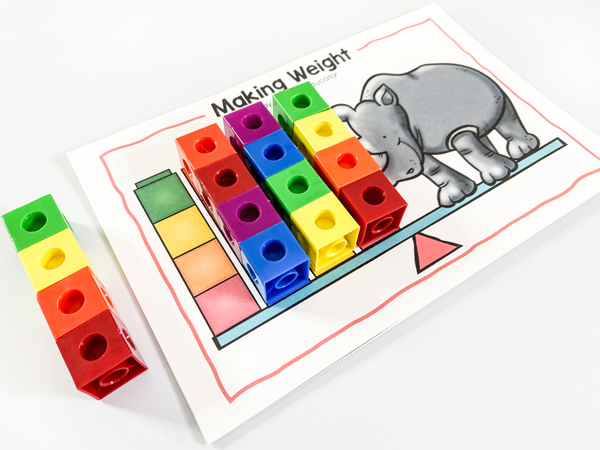
Measurement in preschool focuses on comparing and describing, not precision. Children learn best when they explore concepts like taller, shorter, longer, heavier, and lighter using hands-on materials they can manipulate and observe.
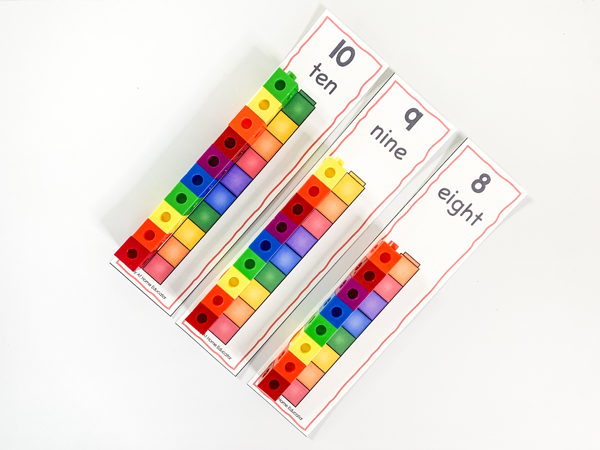
Effective measurement activities give children opportunities to build, line up, and compare objects, helping them notice differences in size, length, height, and weight. As children repeat these experiences, they begin to make predictions and explain their thinking using measurement language.
Play-based math centers that involve sequencing, building, and comparing support early measurement skills while keeping learning active and concrete.
Teaching Tip: Encourage comparison before measuring. Ask questions like “Which is taller?” or “How do you know?” before introducing any tools or numbers.
Graphing & Data Preschool Math Activities
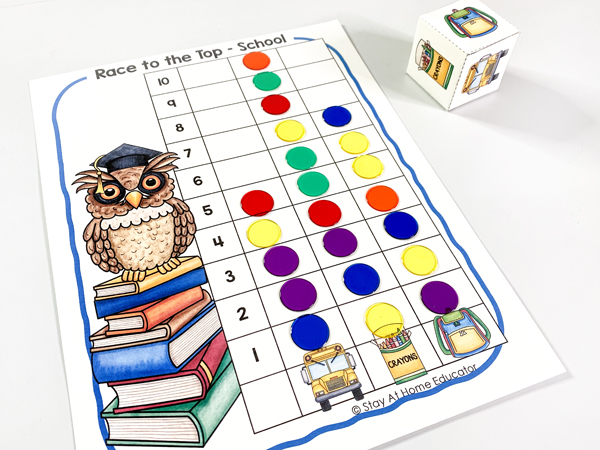
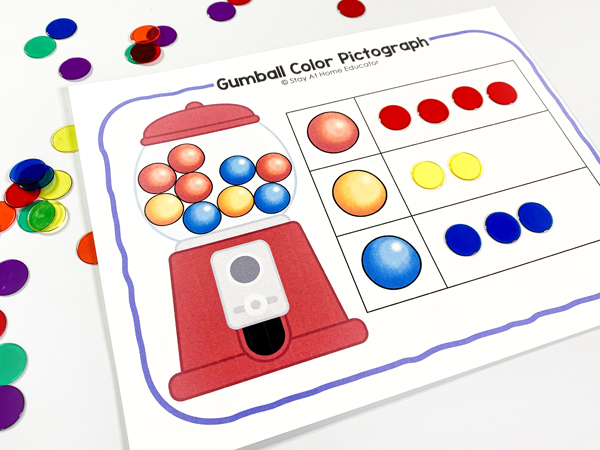
Graphing in preschool is about organizing information and making sense of it visually. Before children work with numbers on a graph, they need hands-on experiences collecting data, sorting it, and talking about what they see.
Effective graphing activities invite children to count, compare, and represent information using real objects or pictures. As children interact with graphs, they begin to answer simple questions like Which has more? or Which has less? — building early data analysis skills in a very concrete way.
Play-based graphing centers that involve spinning, sorting, pouring, or transferring data help children revisit these concepts repeatedly while keeping learning engaging and meaningful.
Teaching Tip: Always talk through the graph after it’s complete. Asking “What do you notice?” or “What does this graph tell us?” helps children connect the visual to the math idea.


How to Make Preschool Math Feel Consistent (Without Having to Do More Planning)
One of the biggest challenges with teaching preschool math is knowing what to teach next and how often to revisit skills.
Rather than rotating random activities, math works best when it follows a predictable structure. A simple daily routine might include:
- A short math warm-up or review
- One focused concept activity
- Time for math talk and reflection
This approach allows children to build skills gradually while helping teachers feel more organized and confident.
A Simple Way to Teach Preschool Math Every Day
If planning and organizing preschool math feels overwhelming, having a clear structure can make a big difference. My Daily Lessons in Preschool Math Curriculum is designed to:
- Break math into manageable daily lessons
- Build skills gradually across the year
- Reduce planning time
- Keep math developmentally appropriate and engaging
Common Questions About Teaching Preschool Math
Preschool math works best when it is taught intentionally and consistently, not occasionally. Instead of treating math as a once-a-week activity, young children benefit from short, focused math instruction every day.
Daily math doesn’t need to be long. A predictable routine — such as a brief warm-up, one targeted activity, and time to talk about the math — helps children build understanding over time. When skills are revisited frequently, children don’t have to relearn them from scratch, and progress becomes more steady and meaningful.
Different skill levels are expected in preschool, which is why math instruction should be systematic rather than random. When skills are taught in a clear sequence and practiced frequently, children can engage at their own level while still working within the same routine.
Some children may count fewer objects or need more support, while others move ahead more quickly — but the structure stays the same. Consistent routines and explicit modeling allow children to make progress without requiring separate lessons for each learner.
Preschool math should begin with foundational skills that support later learning. This includes counting with understanding, number sense, sorting, shapes, patterns, comparing quantities, and early measurement.
Rather than rushing into formal operations, it’s more effective to teach these skills directly and revisit them often. When children understand how numbers and quantities work, addition, subtraction, and problem-solving make sense later on — instead of feeling confusing or forced.
Grab our Math Lesson Plans for Preschoolers Bundle
Bundle and save on preschool math lesson plans for the year!
Shop our Counting, Addition & Subtraction Preschool Math Lesson Plans
Help preschoolers master math skills with playful and done-for-you math lesson plans.
Shop our Measurement, Graphing & Sorting Preschool Lesson Plans
Simplify instruction with ready-to-use lessons on measurement, sorting, and graphing.

Shop our Shapes, Patterns, and Comparing Math Lesson Plans
Find the perfect preschool math lessons for easy, effective teaching.

I’m Sarah, an educator turned stay-at-home-mama of five! I’m the owner and creator of Stay At Home Educator, a website about intentional teaching and purposeful learning in the early childhood years. I’ve taught a range of levels, from preschool to college and a little bit of everything in between. Right now my focus is teaching my children and running a preschool from my home. Credentials include: Bachelors in Art, Masters in Curriculum and Instruction.


