
Child Struggling With Letter Recognition? What to Do Next
If your child is struggling with letter recognition, it can be really worrisome, and honestly, a really stressful.
You might be wondering if this is normal, if you’re doing enough, or what you should try next. And when letters just don’t seem to “stick” even with all the best letter recognition activities, it’s easy to feel like you’re spinning your wheels.
The good news is this: most children who struggle with letter recognition just need a few impactful tweaks to their instruction. Teachers don’t have to overhaul their lessons. They just need a clearer, more structured approach.
What to Do If Your Child Is Struggling With Letter Recognition (Quick Answer)
If you need a starting point right away, focus on this:
- Teach 2-3 letters at a time
- Practice for 5–10 minutes daily
- Use a systematic, explicit teaching approach
- Review more often than you introduce new letters
- Reinforce with hands-on, multi-sensory activities
What You’ll Learn
- Why children struggle with letter recognition (and when it’s normal)
- The key signs your child may need more support
- A simple step-by-step plan to help your child improve
- What actually works (and what doesn’t)
- How to adjust if your child isn’t making progress
- What’s typical at ages 4 and 5, and when to act on red flags
A Clear, Step-by-Step Way to Help Your Child Learn Letters
If you don’t want to guess your way through this, a structured plan can make things much easier. It helps you focus on the right skills in the right order, without second-guessing yourself, and all the while making sure your child is getting the best possible letter recognition practice.
If you want to see what that looks like in practice, you can explore how its done step-by-step in the Daily Lessons in Preschool Literacy Curriculum.
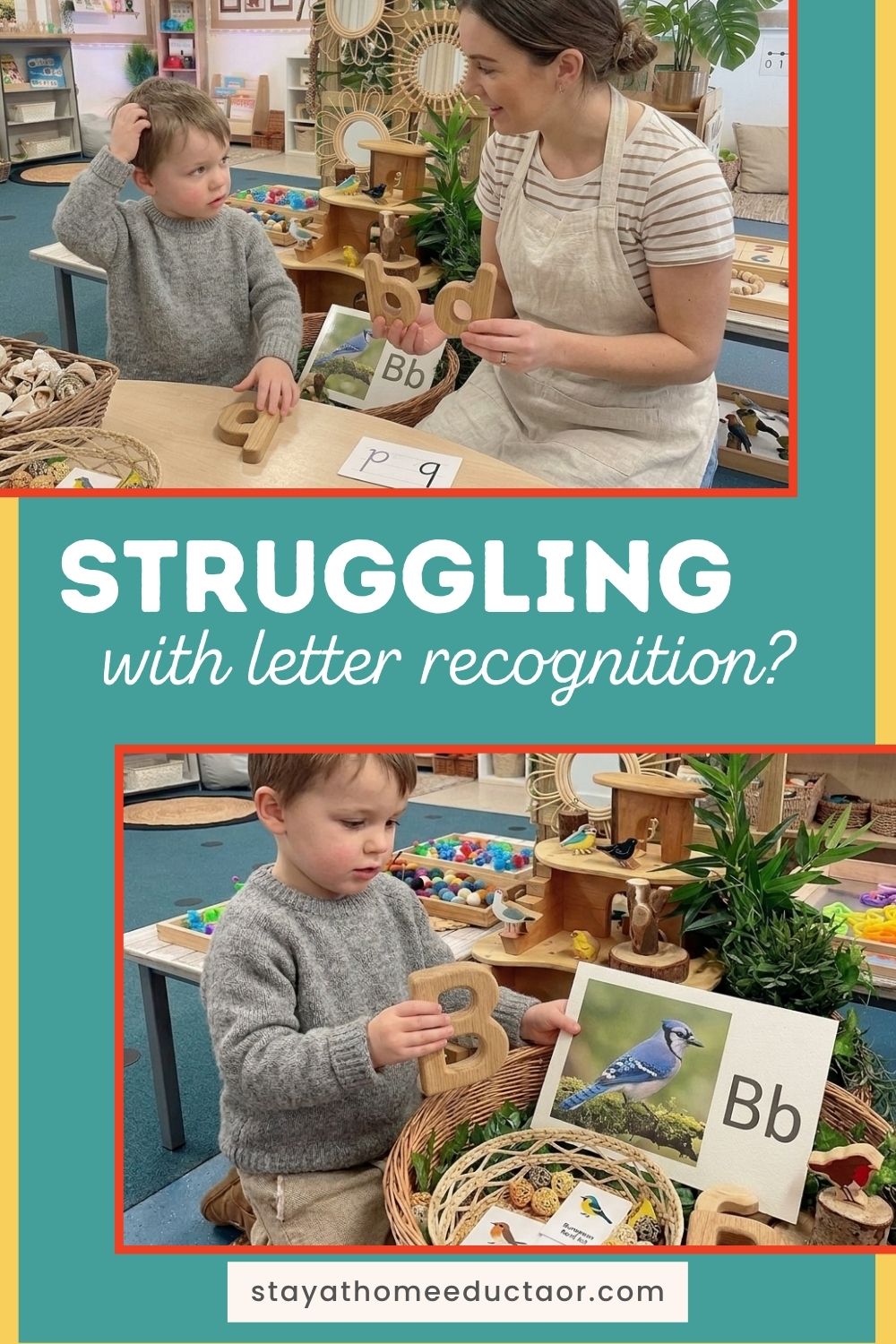
Why Do Some Children Struggle With Letter Recognition?
Letter recognition is more complex than it looks at first glance. It’s not just about memorizing letter names and reciting them. It actually requires several skills working together:
- Visual recognition (identifying and distinguishing letter shapes)
- Memory (recalling what each letter looks like and represents)
- Sound-letter connection (phonological awareness—knowing what sound each letter makes)
- Repetition over time (consistent exposure to build automatic recognition)
Most struggles tend to come down to a few common issues:
- Too many letters introduced at once, which can overwhelm your child
- Not enough review, so letters aren’t fully retained before moving on
- Learning that feels too abstract, without enough hands-on or visual support
- Inconsistent practice, making it harder for skills to stick over time
Because so many skills are involved in mastering letter recognition, it’s very normal for some children to need more time and practice than expected. And when the factors above combine, it can slow progress.
If you want a deeper explanation of why this happens, see: Common Problems Kids Have with Letter Recognition
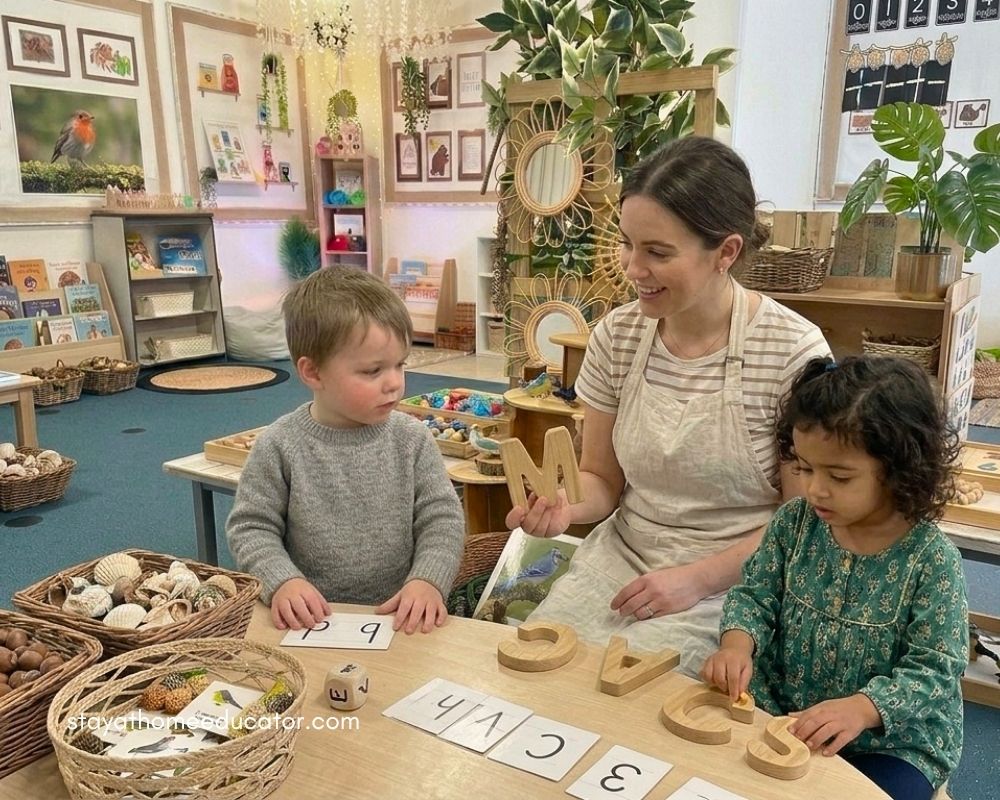
Reasons Why Children Struggle to Learn Letter Recognition
Here are the most probable possible reasons some children may have difficulty developing alphabetic knowledge.
Keep in mind, these are contributing factors, not definitive answers. It’s always beneficial to take a proactive approach by discussing your observations with families and consulting specialists to gain deeper insights before reaching any conclusions.
Reason #1: Limited Working Memory Capacity
Working memory functions as the brain’s “short-term storage” system, temporarily holding and manipulating information. Since preschoolers’ working memory isn’t fully developed, it can be challenging for them to remember multiple letters and their sounds simultaneously.
Research shows that working memory is essential for early literacy skills, particularly for tasks like letter-sound recognition and word decoding. This is especially true when new letters are taught in quick succession. Children with stronger working memory tend to retain and apply new information more easily, supporting early reading development.
Sources:
- Baddeley, A. D. (2003). “Working memory and language: An overview.”
- Swanson, H. L., & Berninger, V. W. (1996). “Individual differences in children’s working memory and writing skill.”
- Gathercole, S. E., & Alloway, T. P. (2008). Working memory and learning: A practical guide for teachers.
Reason #2: Limited Exposure to Literacy Rich Environments
Children’s literacy development is strongly influenced by early exposure to language-rich environments at home and in their communities.
Research shows that children who regularly experience books, storytelling, and meaningful conversations are more likely to develop foundational skills such as letter recognition and phonemic awareness. When children are exposed to literacy-rich environments in everyday routines, they become more familiar with how written language works, even without formal instruction.
In contrast, children with limited access to books and fewer language-rich interactions may have more difficulty building these early skills. Therefor, creating environments that encourage curiosity about letters and words can play an important role in supporting long-term reading development.
Sources:
- Dickinson, D. K., Griffith, J. A., Golinkoff, R. M., & Hirsh-Pasek, K. (2012). “How Reading Books Fosters Language Development Around the World.”
- Mol, S. E., & Bus, A. G. (2011). To read or not to read: A meta-analysis of print exposure from infancy to early adulthood.
Reason #3: Phonological Awareness Deficits
Phonological awareness, which is the ability to recognize and work with sounds in words, is essential for connecting letters to their sounds. Children who struggle in this area often have difficulty learning letter-sound relationships, which are critical for reading.
Research identifies phonological awareness as a strong predictor of reading success.
Children build these skills through activities like rhyming, breaking words into syllables, and blending or segmenting sounds. Limited exposure to language play, such as songs and rhymes, or lack of practice with more advanced sound activities can slow this development.
Sources:
- National Early Literacy Panel. (2008). Developing early literacy: Report of the National Early Literacy Panel.
- Gillon, G. T. (2004). Phonological awareness: From research to practice.
Reason #4: Lack of Systematic and Explicit Phonics Instruction
Research consistently shows that structured phonics programs that explicitly teach letter-sound relationships support early reading success and are especially beneficial for children who may struggle with literacy.
Systematic instruction, where letters and sounds are introduced in a logical sequence, allows children to build upon previously learned skills, leading to more effective alphabetic knowledge and decoding abilities. Furthermore, explicit phonics instruction—where the teacher directly teaches each sound and letter—helps reduce confusion and allows children to apply their knowledge with confidence in both reading and writing tasks.
Children who do not receive this type of instruction may find it harder to retain letter sounds and recognize letters, as they lack a clear and consistent approach to mastering these foundational skills. Phonics instruction that is structured, sequential, and clearly taught has been shown to significantly improve early literacy skills, making it an essential component in early education programs.
For educators, ensuring that phonics instruction is both systematic and explicit can be a game-changer in supporting children’s letter recognition and literacy growth.
Sources:
- National Reading Panel. (2000). Teaching children to read: An evidence-based assessment of the scientific research literature on reading and its implications for reading instruction.
- Ehri, L. C. (2005). Learning to read words: Theory, findings, and issues.
- Bowers, J. S., & Bowers, P. N. (2017). Beyond phonics: The case for teaching children the logic of the English spelling system.
Reason #5: Limited Multi-sensory Learning Opportunities
Another reason your child is struggling with letter recognition may be because they need more multisensory learning activities.
Preschoolers benefit greatly from learning experiences that engage multiple senses simultaneously. Research shows that children retain information more effectively when they can interact with materials through multiple senses, which is particularly beneficial for learning abstract concepts like letters and sounds.
Multi-sensory letter recognition activities, such as tracing letters in sand or using alphabet playdough mats, make learning more engaging and effective than relying on visual or auditory instruction alone.
Incorporating a multi-sensory approach not only enhances memory retention but also caters to diverse learning styles, offering a well-rounded learning experience that supports early literacy development.
Sources:
- Piaget, J. (1970). Science of Education and the Psychology of the Child.
- Sousa, D. A. (2011). How the Brain Learns.
What Letter Recognition Should Look Like by Age
Letter recognition develops gradually and looks different at each stage of early childhood. Rather than expecting children to master all letters at once, it’s helpful to understand what progress typically looks like by age.
These general milestones can help you gauge whether a child is on track and guide how you support their learning. Keep in mind that development varies, and children may move through these stages at different paces.
Age 3
At this stage, children are beginning to notice and explore letters in their environment. They may recognize a few familiar letters—especially those in their name—and show interest in books, signs, and labels. Letter learning is often informal and play-based, with exposure being more important than accuracy.
Further reading: Explore age-appropriate letter activities for 3-year-olds.
Age 4
By age four, many children can recognize several letters and may begin connecting some letters to their sounds. They often enjoy singing the alphabet song and engaging in hands-on activities like tracing, sorting, or matching letters. Recognition may still be inconsistent, and that’s developmentally appropriate.
Further reading: Learn how to support letter recognition for 4-year-olds.
Age 5
At age five, children typically recognize most uppercase and many lowercase letters and can identify corresponding sounds for many of them. They may start blending simple sounds and showing early reading behaviors. While mastery varies, children at this stage are building the foundation needed for formal reading instruction.
Further reading: See what to do when your 5-year-old struggles with letter recognition.
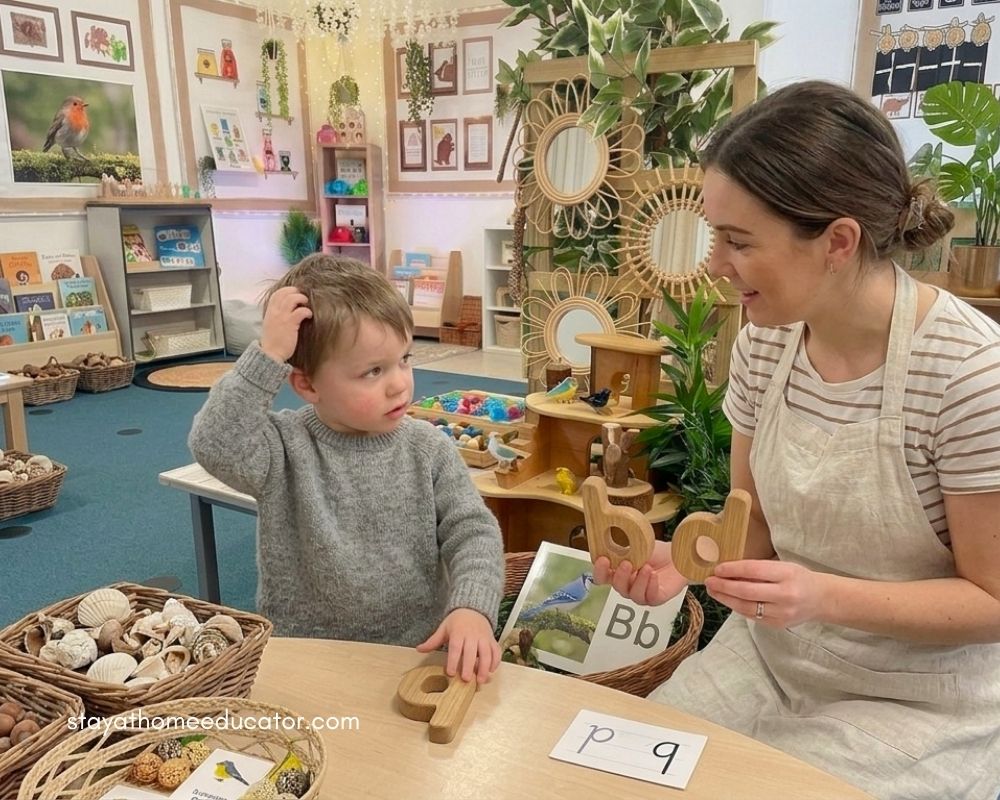
See What This Looks Like as a Simple Daily Plan
If you’re tired of guessing what to do next, it helps to see how all of this fits together in a real, structured lesson.
The Daily Lessons in Preschool Literacy Curriculum walks you step-by-step through exactly what to teach, in the right order, so your child can build letter recognition without frustration.
If the sample gave you a helpful starting point, the full curriculum is designed to take you the rest of the way and guiding you step by step through what to teach, how to teach it, and how to build real progress over time.
How to Assess Letter Recognition Skills
Understanding a child’s letter recognition skills is an important step in supporting early reading development. A simple assessment can help you identify which letters a child knows, where they may need more support, and how to adjust your instruction to better meet their needs.
Formal and Informal Assessments
In preschool, letter recognition assessments usually fall into two categories: formal and informal. Both are useful, and most effective classrooms use a combination of the two. Use formal assessments for clear data and tracking progress, and informal assessments to understand how learning shows up in real life.
For a step-by-step guide, read my full post on letter recognition assessments.
What to Look For
Focus on patterns in the child’s responses. Notice which letters are recognized quickly and which cause hesitation and how those responses change over time. Watch for common confusions (like b/d or p/q), and whether the child recognizes uppercase, lowercase, or both. Also consider whether they can consistently connect letters to their sounds.
Interpreting Results
Instead of focusing only on how many letters are correct, look at overall trends. Consistent recognition with a few mistakes is typical. However, frequent confusion, limited recall, or difficulty connecting sounds may signal a need for more targeted support. Use these insights to guide your next steps and tailor your teaching approach.
How to Teach Letter Recognition to Struggling Children
Teaching letter recognition is most effective when it’s intentional, structured, and consistent. Rather than introducing letters randomly, a step-by-step approach helps children build strong, lasting connections between letter shapes, names, and sounds.
1. Use a Systematic Approach
Introduce letters in a planned sequence instead of all at once. Focus on 1–3 letters at a time so children aren’t overwhelmed. This allows for deeper learning and better retention.
2. Teach Letters Explicitly
Be clear and direct when teaching each letter. Say the letter name, model the sound, and show the letter shape. For example: “This is the letter M. It says /m/.” Repeat this often so children hear and see the connection consistently.
3. Practice Daily (5–10 Minutes)
Short, consistent and frequent practice is more effective than long, infrequent sessions. Aim for 5–10 minutes each day to keep learning focused and manageable while building routine.
4. Review More Than You Introduce
Spend more time reviewing known letters than introducing new ones. Repetition strengthens memory and helps children move from recognition to automatic recall.
5. Reinforce with Hands-On Activities
Use multi-sensory activities to deepen learning. Let children trace letters, build them with objects, or find them in books and their environment. These experiences make learning more concrete and engaging.
By keeping instruction systematic, explicit, and consistent, children are more likely to develop strong letter recognition skills that support early reading success.
Read this article if you want to know how much practice preschoolers need to memorize letters.
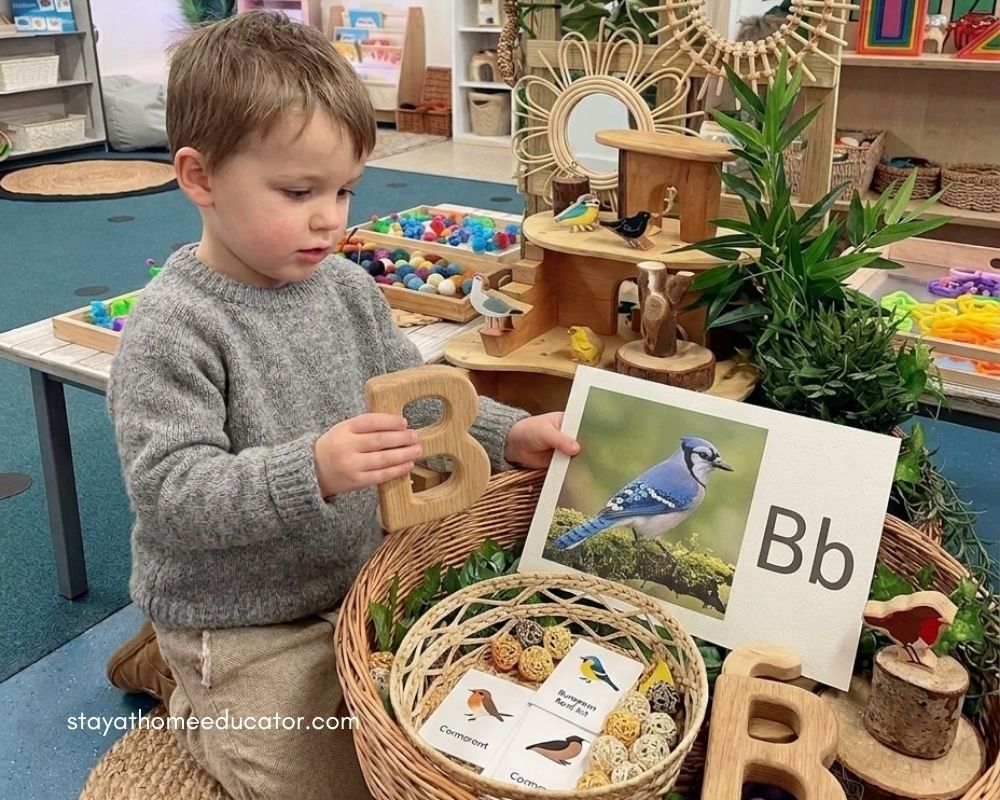
What to Do If a Child Is Still Struggling
When a child is not making expected progress in letter recognition, it is important to adjust instruction in a structured and intentional way. Emphasis should be placed on consistency, increased practice, and the use of evidence-based strategies.
Maintain Consistency
Instruction should be delivered in a predictable and consistent manner. Regular and familiar routines, even in brief sessions, supports skill development and retention. Frequent changes in approach can hinder progress, as children benefit from stable and repeated learning experiences.
Increase Frequency of Practice
When progress is limited, increasing the frequency of practice can support improvement. Short, focused sessions (5–10 minutes) delivered daily are more effective than infrequent, longer lessons. Repeated exposure strengthens memory and supports automaticity.
Use Evidence-Based Instruction
Instruction should remain explicit and systematic. This includes clearly modeling letter names and sounds, providing guided practice, and offering repeated opportunities for review. Structured, direct instruction has been shown to be more effective than unstructured or incidental approaches.
Seek Additional Support When Necessary
If a child continues to experience difficulty despite consistent and targeted instruction, further support may be warranted. Consultation with a reading specialist or early childhood professional can provide additional assessment and inform more individualized intervention strategies.
Related Articles: Supporting Letter Recognition
Looking for more ways to help a child who is struggling with letter recognition? These articles provide practical strategies, clear milestones, and targeted guidance to support early literacy development at every stage.
- Letter Recognition Objectives
- Problems with Letter Recognition
- Letter Recognition Milestones
- Best Ways to Teach Letter Recognition
- How to Teach Letter Recognition to Struggling Students
If Your Child Is Still Struggling With Letter Recognition
If your child is still forgetting letters, getting frustrated, or not making the progress you expected, it’s a sign they need more than occasional practice. They need a clear, consistent approach that builds skills step by step.
The Daily Lessons in Preschool Literacy Curriculum is designed specifically for children who need that extra support. Each lesson is short, structured, and builds on the last, so your child isn’t overwhelmed—and you’re not left guessing what to do next.
Instead of repeating the same activities and hoping something clicks, you’ll be following a plan that helps letters stick over time.
Take the next step and see how the full curriculum can support your child’s progress.
Shop our Preschool Literacy Curriculum Lesson Plans
Includes everything you need—daily lesson plans, printable centers, and more!
Shop our Preschool Literacy Lesson Plans
Engaging, ready-to-use lesson plans designed for early learners.

I’m Sarah, an educator turned stay-at-home-mama of five! I’m the owner and creator of Stay At Home Educator, a website about intentional teaching and purposeful learning in the early childhood years. I’ve taught a range of levels, from preschool to college and a little bit of everything in between. Right now my focus is teaching my children and running a preschool from my home. Credentials include: Bachelors in Art, Masters in Curriculum and Instruction.
Wow, Thank you for the comprehensive information on why children struggle to master early literacy skills. I appreciate the references provided!
I’m glad you found it helpful! I have other articles about what to do when children struggle with letter recognition, so be sure to search for them on the site.