
The Mitten Activities for Preschool (Free Retelling Printable)
The Mitten is one of my favorite stories to share with preschoolers, and I especially love using a flannel story to bring it to life. Moving the animals onto the board gives the storytelling a hands-on element and creates opportunities for children to participate. These The Mitten activities for preschool build on that experience with retelling games, a mitten-design challenge, playful math, and simple investigations. Choose a few that fit your group, keep the book nearby, and let children revisit the story through materials they can move, arrange, and explore.
The Mitten activities for preschool work best when they help children retell and sequence Jan Brett’s story, in which a mole, rabbit, hedgehog, owl, badger, fox, bear, and mouse crowd into Nicki’s lost mitten. Try animal retelling cards, a felt board mitten, counting animals into the mitten, a warm-water mitten experiment, and acting out the story.
About The Mitten by Jan Brett: A Preschool Favorite
The Mitten by Jan Brett adapts a Ukrainian folktale. Nicki asks his grandmother, Baba, for white mittens, and when he drops one in the snow, woodland animals crowd inside it one after another. When a tiny mouse settles on the bear’s nose, its whiskers set off a sneeze that sends everyone tumbling out. Nicki brings the mitten home, and Baba is left puzzling over how it got so stretched. The growing group and surprising ending make this book a useful starting point for prediction, sequencing, and playful problem-solving.
Read the whole story for enjoyment before introducing a learning task. On later readings, invite children to look closely at the illustrations, including the side panels that hint at who is coming next, and predict what might happen. You do not have to fit every activity into one week; familiar stories are worth returning to.
The Mitten Retelling and Sequencing Activities
Story Retelling Cards
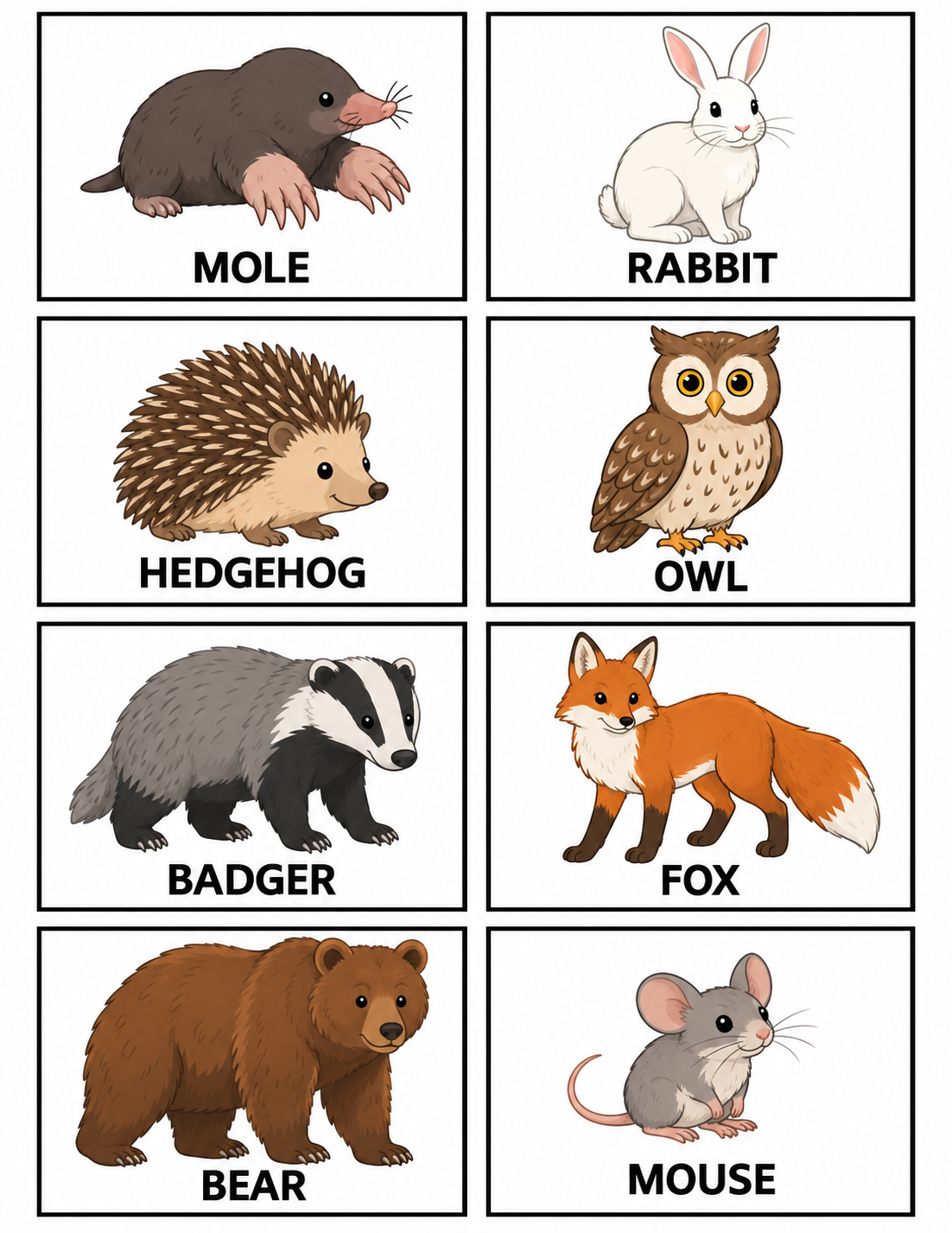
Use the eight original animal cards in the printable pack. An adult cuts them apart, then children place them beside the book as the animals appear. Begin with three or four cards for children who find eight choices overwhelming.
For a fresh variation, play Mystery Animal Delivery. Put one card in an envelope, describe the animal without naming it, and invite children to predict who has arrived. A clue might focus on a physical feature, such as long ears or prickly spines. Reveal the card and ask where it belongs in the story.
Keep the distinction clear: the clues help children identify an animal, while the book helps them establish its place in the sequence. Children can point, name, gesture, or speak in their home language as they participate.
Felt Board or Giant Paper Mitten Retelling
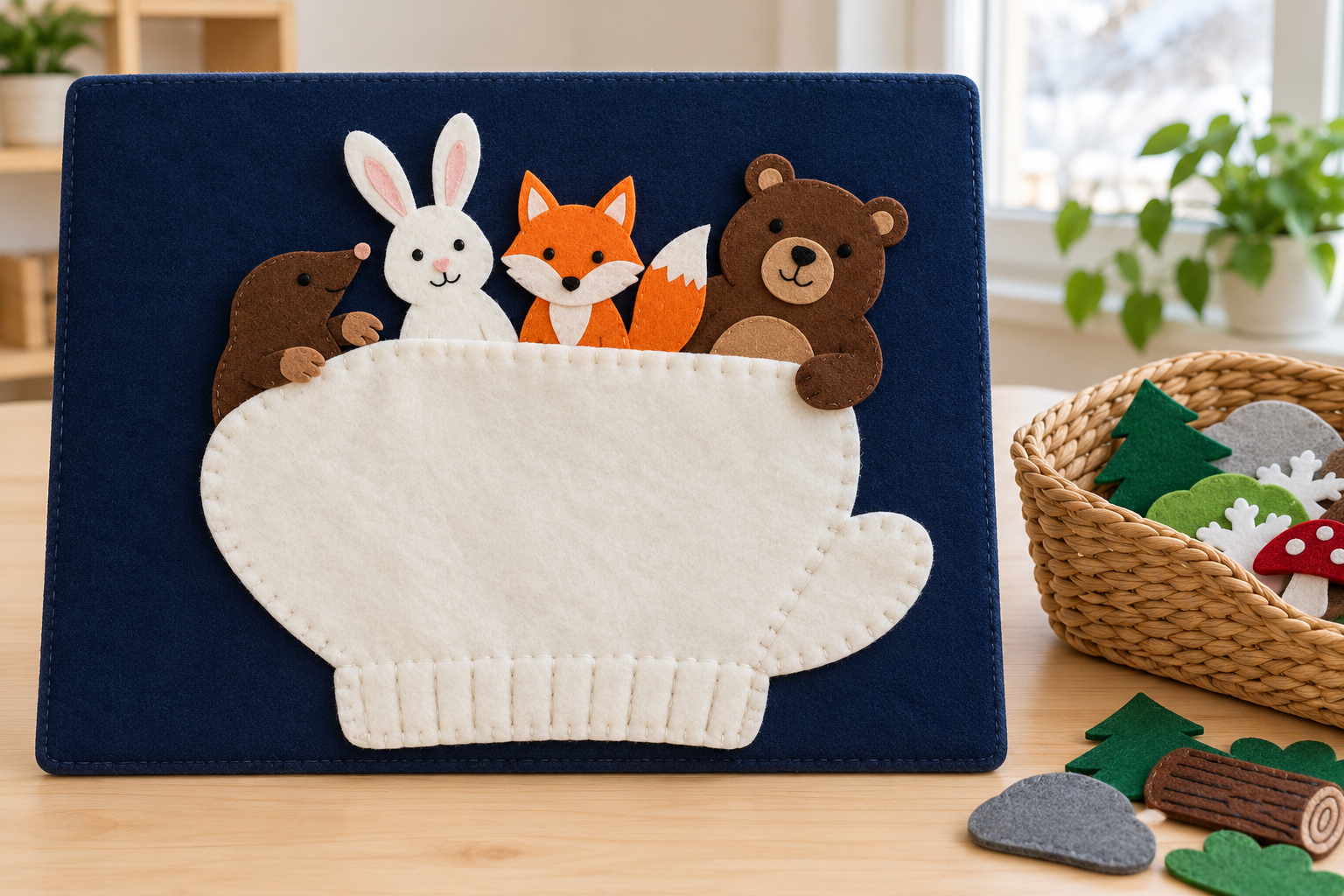
A flannel story is my favorite way to revisit this book. For this version, make a plain felt mitten pocket and add original felt animals or printable cards with felt backing. Let children move a character into the pocket as the group retells the events in its own words.
Try The Missing Animal Mystery after children know the story. Arrange several characters, ask children to cover their eyes, and remove one. Invite them to identify the missing animal and explain what helped them remember. Start with three animals and add more when the group is ready.
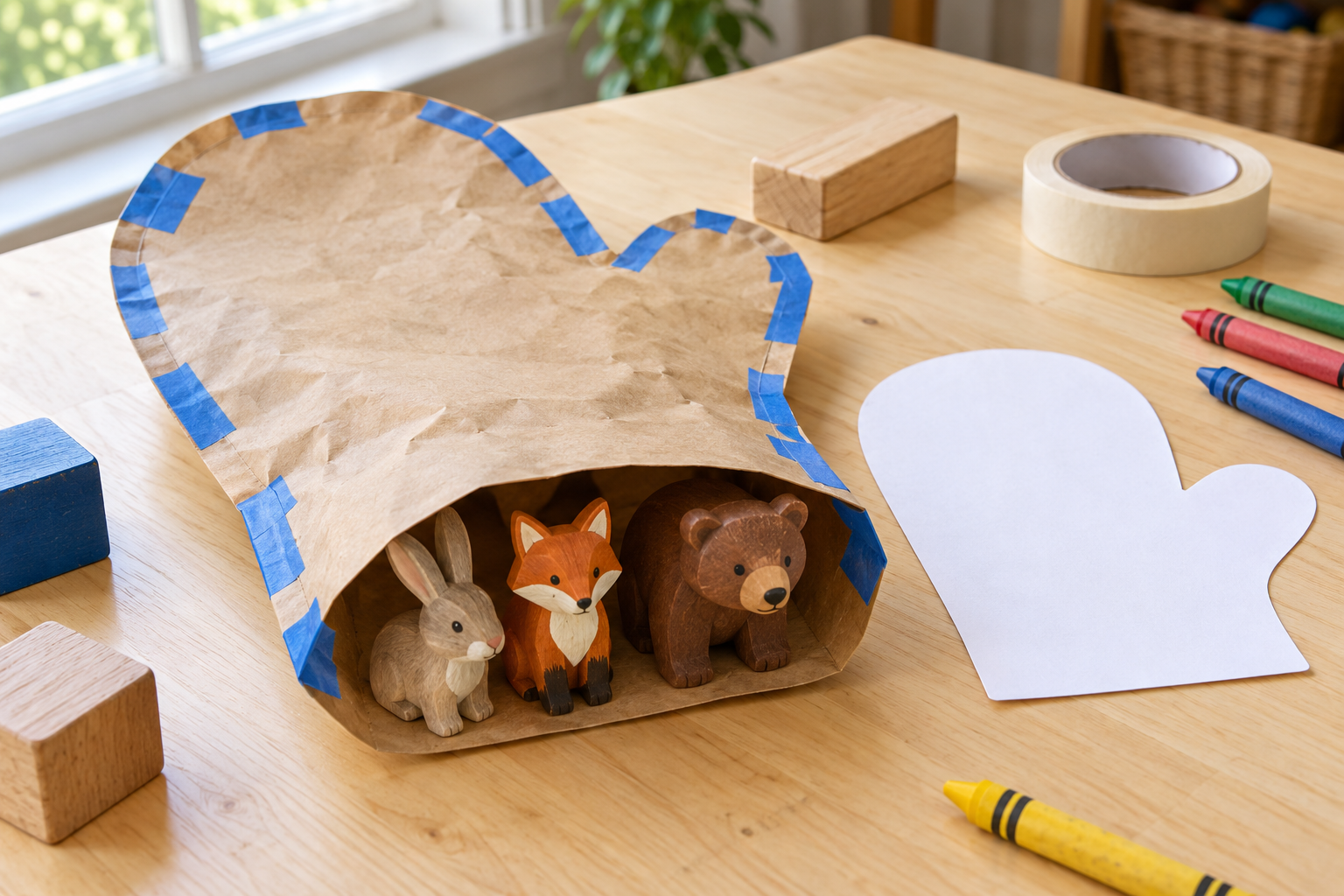
A giant paper mitten works, too. Tape two large mitten shapes around the edges, leaving the cuff open. Add animal cards rather than heavy toys so the paper pocket stays manageable.
Sequencing the Animals
In Jan Brett’s version, the animals enter in this order: mole, rabbit, hedgehog, owl, badger, fox, bear, mouse. Use your copy of the book to check each placement rather than making the activity a memory test.
Place the cards along a floor path or use The Mitten sequencing printable. Model words such as first, next, before, after, and last. Ask, “Which animal came before the bear?” or “Where should the owl go?”
For Story Detectives, deliberately place two cards out of order. Invite children to find the mix-up and show the page that supports their choice. These The Mitten retelling activities encourage children to explain their thinking, not simply recite a list.
The Mitten Math Activities
Count the arrivals. Place one animal card at a time on the counting mat. Touch each card while counting, then ask how many animals are inside altogether. Begin with quantities up to three or five before working toward eight. Remove one and ask how many remain.
Make a mitten fit forecast. Before adding another animal, ask children whether they think there is room. Record predictions with a mark in a yes or no column. Count the marks together. The vote records our ideas; it does not determine what happens in the book.
Compare animal sizes. Offer toy animals or pictures deliberately drawn at different sizes. Ask children to order those particular objects from smallest to largest. Explain that equal-sized cards do not show real animal sizes, and story order is different from size order: the mouse is the smallest animal, but it arrives last.
Match and pattern mittens. Cut paper mitten pairs in contrasting colors and designs. Children match pairs, then build repeating patterns such as blue, white, blue, white. Invite a partner to extend the pattern or spot a deliberately misplaced mitten. Use clear visual differences rather than relying on color alone. If your group enjoys this, the free winter patterning cards make a good next step.
The Mitten Science and Sensory Activities
Which Mitten Keeps Warmth In?
Turn a question about warm hands into a comparison using two identical, securely closed containers of comfortably warm water. An adult fills them with equal amounts of water at the same starting temperature (warm to the touch, never hot). Place one in a fleece mitten and the other in a thin cotton mitten, keeping both in the same location.
Predict which will stay warmer, then have an adult check each with a thermometer after 10 and 20 minutes. Discuss the results using “warmer,” “cooler,” and “the same.” Mittens slow heat loss; they do not make their own heat. This setup compares materials more consistently than asking different children how warm their hands feel.
Woodland Snow Search
Create a shallow bin with white fabric scraps, large animal figures, and a plain mitten. Hide some animals under the fabric and invite children to find them, describe them, and match them to retelling cards.
Add a challenge: “Can you find the animal that comes after the rabbit?” Children can refer to the book or sequencing strip. For a winter snow sensory bin, use material approved by your program, supervise closely, and choose figures too large to fit inside a toilet paper tube, a common check for choking risk. Fabric offers a reusable option without powders or loose artificial snow. You can swap in other fillers from these easy winter sensory bin ideas, or pair the bin with ice and snow activities for preschool.
The Mitten Stretch Investigation
Compare a knitted mitten with a paper mitten pocket using identical large blocks. Children predict which will hold more, then add one block at a time and count. Stop before seams tear or the fabric is damaged; do not stretch mittens around children’s bodies.
Ask what changed: Did the material stretch? Did the opening widen? Were the mittens the same size to begin with? If they differed, explain that both size and material may have affected the result. This connects nicely to Baba’s puzzled look at the stretched mitten at the end of the book.
Then offer Build a Better Mitten. Children use paper, tape, and fabric scraps to design a pocket that holds three animal cards. Test it, notice a problem, and change the design. This extends the story into engineering without requiring a perfect finished product.
The Mitten Crafts for Preschool
Lacing Mitten
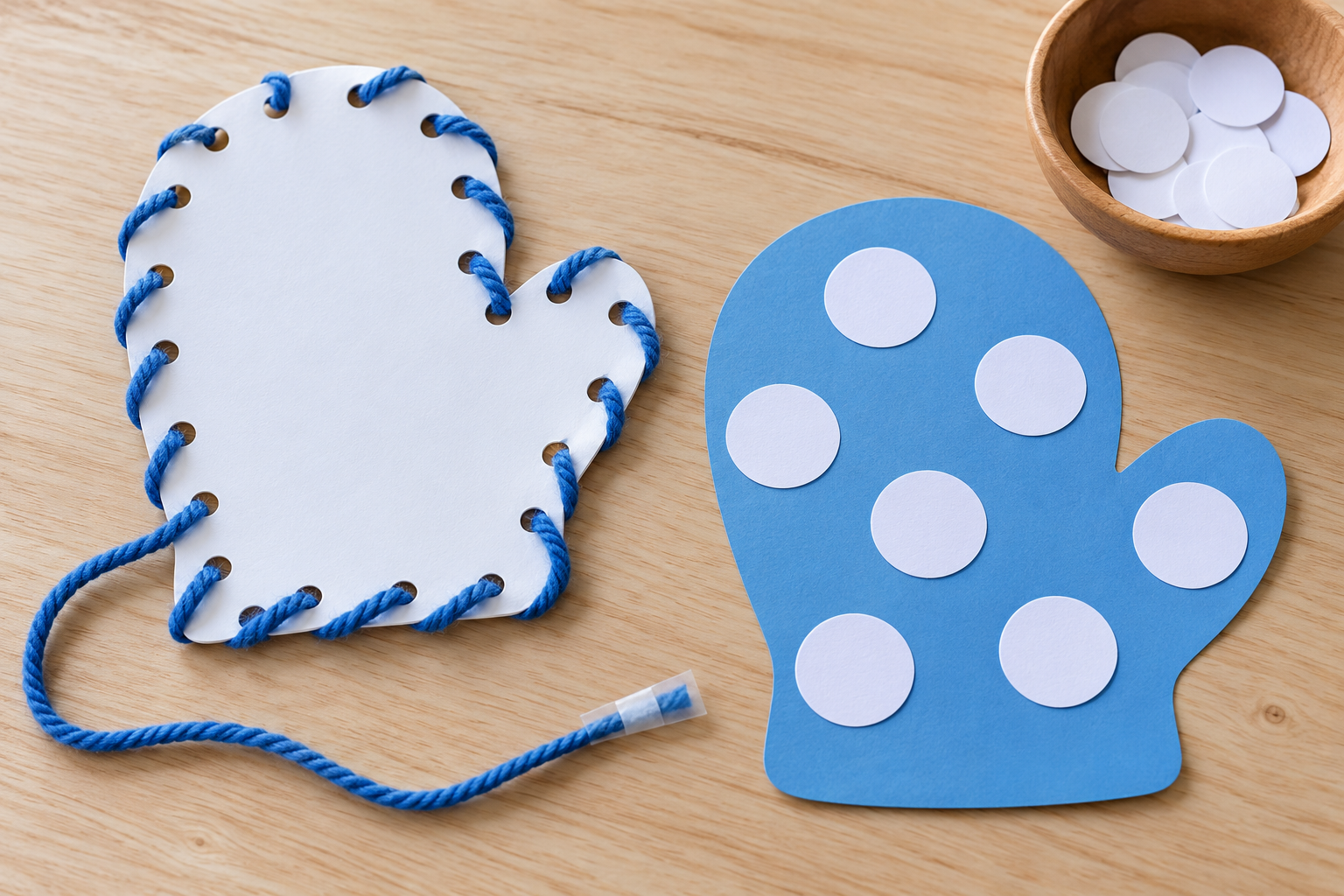
An adult punches widely spaced holes around a large cardstock mitten. Children thread short lengths of yarn through the holes, using a taped yarn end rather than a sharp needle. Keep yarn short and supervise. Children can lace every hole or choose a few; the goal is practice with hand control, not matching an adult’s example.
Paper Mitten With Animal Cutouts
Fold or join two paper mittens into a pocket and let children decorate the outside. Add animal cards for an independent retelling prop. Invite children to choose one character to draw themselves, too. Their drawing can represent the animal without looking realistic.
Pom Pom Mitten
Children glue large pom poms onto a paper mitten to create a border, a pattern, or their own design. Pom poms, beads, and googly eyes are choking hazards for children who still put things in their mouths, so supervise closely and count materials back in at cleanup. Use large paper circles or dot stickers instead when small craft materials are unsuitable for the group. Ask children to describe their choices or count the decorations, keeping the conversation connected to what they made.
Dramatic Play: Act Out The Mitten
Mark a large mitten shape on the floor with tape. Give children animal cards or simple headbands and invite them to enter in story order. Keep enough room for everyone to stand comfortably; do not require children to squeeze together or enclose them in fabric.
Offer narrator, animal, and card-helper roles so children can choose how to participate. At the sneeze, everyone can step onto their own floor spot rather than jumping into one another.
For The Woodland Mitten Repair Shop, provide paper mittens, short fabric scraps, tape, and pretend order forms. Invite children to draw a repair plan, explain what a customer needs, and test a paper pocket. This gives a familiar mitten theme preschool experience a new purpose while supporting conversation and cooperative problem-solving.
More Jan Brett Books to Pair With The Mitten
The Hat offers another story involving an animal and a piece of clothing. Compare which clothing item appears, which animals participate, and what goes wrong.
Gingerbread Baby supports another round of predicting and retelling. Extend the reading with these gingerbread man activities for preschool, while explaining that different versions have different events.
Read Alvin Tresselt’s version of The Mitten alongside Brett’s adaptation. Compare the characters and events using the actual books; do not assume every version has the same animals or sequence.
For wider planning, The Mitten fits easily into January lesson plans for preschool, a winter clothes theme, or any of these winter preschool theme ideas.
If children ask where real woodland animals go in winter, explore hibernation activities for preschoolers. For a separate habitat comparison, try these Arctic animals preschool lesson plans, explaining that the mitten’s woodland setting is not an Arctic habitat.
Free The Mitten Printables
Use the free companion pack for The Mitten story activities for preschool. It includes eight original animal retelling cards, a numbered sequencing strip, and an animal counting mat. Children can move the cards as they retell, check the sequence against the book, and count the animals gathered in the mitten.
Adults cut out the cards. Keep one set with the book and another beside the felt board so children can return to the materials. The printable supports your read-aloud; it does not reproduce the book’s text or illustrations.
Bring The Mitten to Life
Pick one retelling activity and one hands-on activity to start, and let children return to the story as many times as they like. A felt mitten and a few animal pieces go a long way. Which animal do your preschoolers love squeezing into the mitten? Share in the comments.
The Mitten Activities for Preschool FAQs
In Jan Brett’s version, the animals enter in this order: mole, rabbit, hedgehog, owl, badger, fox, bear, and finally a tiny mouse. The mouse is the smallest animal, but it is the one who ends the story when its whiskers tickle the bear’s nose. Other adaptations, including Alvin Tresselt’s, use different animals and a different order, so check the book you are reading.
Activities can support retelling, sequencing, vocabulary, counting, comparing, fine motor coordination, and cooperative play. Position words like first, next, and last come up naturally as animals enter the mitten. Choose a clear goal for each activity rather than asking children to practice everything at once.
The picture book itself works well as a read-aloud for preschool and early elementary children. The activities in this post are designed for ages 3 to 5 with adult support. Adjust the number of cards, the length of each activity, and the materials to fit individual children.
Read the book first, then offer animal cards and a mitten prop. Model a short retelling in your own words and invite children to move the animals as you go. For The Mitten Jan Brett activities, return to Brett’s version when checking the details. A flannel story makes this a hands-on way to revisit a favorite together.
Yes, with a few changes. Use a felt board, large animal cards, and the taped floor mitten, and skip pom poms, beads, small figures, and loose yarn for children under 3 or any child who still mouths objects. Keep the retelling to three or four animals and let toddlers do the moving while an older child or adult narrates.