
10 Turn Taking Activities to Teach Preschoolers Patience and Sharing
Learning to wait for a turn can be hard when you’re three or four years old! Preschoolers are still developing the self-control they need to wait, share materials, and cooperate with other children. Fortunately, these are skills children can learn through everyday play.
The best turn taking activities for preschoolers don’t have to feel like lessons. Simple games, art projects, movement activities, and even snack time can give children repeated opportunities to practice waiting and sharing while having fun.
In fact, play provides natural opportunities for children to learn important social skills such as cooperating, negotiating, and taking turns.
Whether you are teaching preschool at home or caring for several children in a home daycare, these ten activities make practicing patience and sharing a natural part of your preschool day.
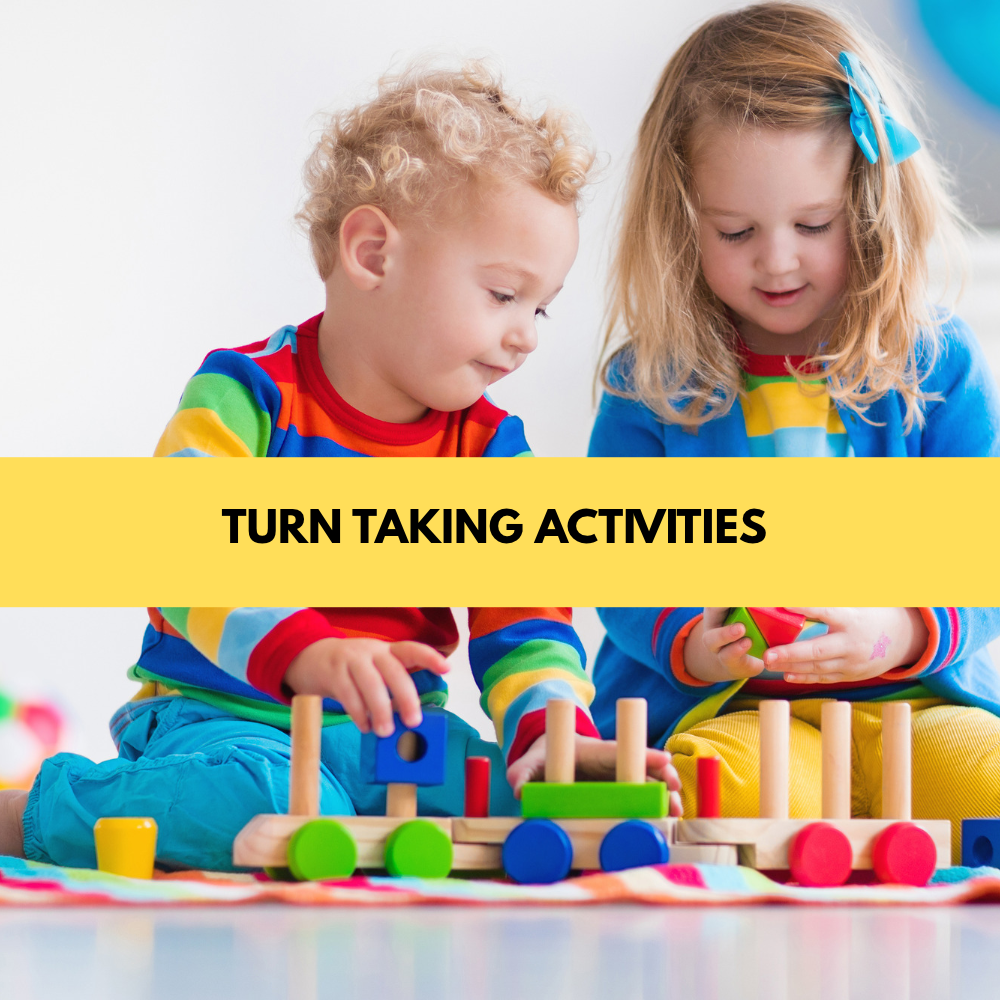
Why Turn Taking Activities Matter for Preschoolers
Turn-taking may seem like a simple childhood skill, but there is actually a lot happening when a preschooler waits for someone else.
A child has to recognize that another person has a right to participate, manage the impulse to go first, wait for a period of time, and understand that their opportunity is coming.
Those abilities contribute to children’s developing self-regulation. Waiting for a turn is one example of children learning to manage their actions rather than immediately acting on an impulse.
Social-Emotional Development
Taking turns helps preschoolers practice:
- Waiting patiently
- Managing frustration
- Cooperating with others
- Listening to peers
- Following simple rules
- Communicating wants and needs
- Solving problems
These skills develop gradually. A three-year-old who struggles to wait for the red truck isn’t being “bad” at sharing. They simply need more opportunities and adult support to practice, the same way they build other emotional skills.
Building Relationships
Turn-taking also helps children play successfully with other children, which is why it shows up in so many friendship activities for preschoolers.
As preschoolers develop socially, they become increasingly capable of cooperative play, sharing toys, taking turns, and finding solutions when two children want the same thing.
Instead of expecting preschoolers to automatically know how to share, we can create playful situations where they get to practice.
10 Engaging Turn Taking Activities for Preschoolers
Turn taking activities are simple games and routines that give preschoolers repeated practice waiting, sharing, and cooperating. The best ones use short, predictable turns and clear cues like “my turn, your turn.” For example, roll a ball around a circle, add one puzzle piece at a time, or use a timer to swap a favorite toy.
These fun games for turn taking require only simple materials and can easily be adapted for one child and an adult, siblings, playdates, or a small home daycare group.
1. Board Game Fun
Simple board and card games are some of the easiest patience teaching activities because taking turns is already built into the game.
Materials:
- A simple preschool board or card game
How to play:
- Choose a short game with simple rules, such as a printable cooperative game for preschoolers.
- Decide who will go first.
- Say, “My turn,” as the first player plays.
- When the turn ends, say, “Your turn.”
- Continue until everyone has had several turns.
Don’t worry too much about winning. The goal is practicing the back-and-forth process. NAEYC specifically recommends games as opportunities for children to practice taking turns, cooperating, and handling frustration.
Skills practiced: patience, self-control, rule-following, and turn-taking.
2. Sharing Toys
Turn a favorite toy into a simple sharing activity.
Materials:
- One desirable toy
- Optional visual timer
How to play:
- Let one child choose the toy first.
- Set a short timer, such as two or three minutes.
- Tell the waiting child, “It’s Emma’s turn now. When the timer rings, it will be your turn.”
- When the timer rings, help the children switch.
- Repeat several times.
Knowing when a turn is coming can make waiting easier than simply hearing, “You need to wait.”
Skills practiced: sharing, patience, waiting, and managing disappointment.
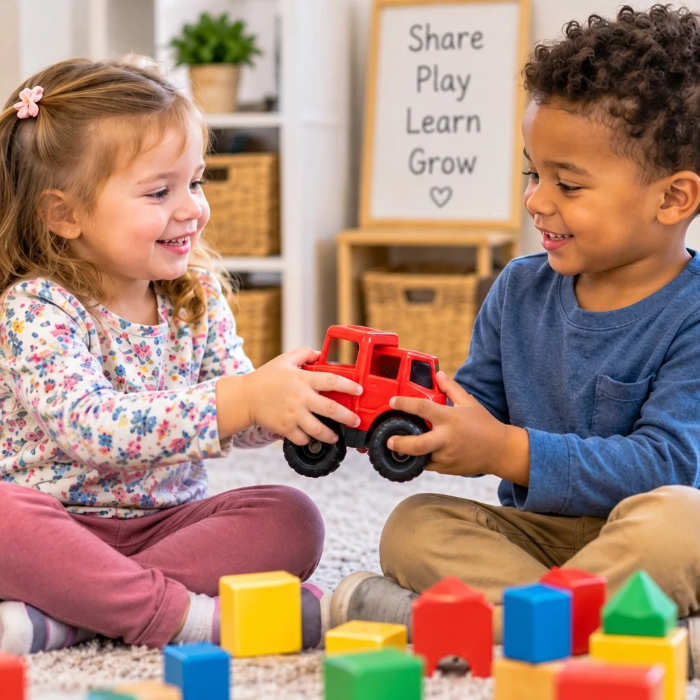
3. Role-Playing
Dramatic play creates wonderful opportunities for interactive turn taking games. This is the activity I use the most in my classroom, and it’s my favorite. We have made restaurants, doctor’s offices, and stores, including an around-the-world dramatic play market.
Materials:
- Play kitchen
- Dolls
- Doctor kit
- Dress-up clothes or other pretend-play materials
How to play:
- Choose roles together.
- Create a simple scenario.
- Model taking turns speaking and acting.
- Switch roles after several minutes.
At a pretend restaurant, for example, one child can be the server while another orders food. Then they switch. The store is great for practicing waiting, since there can be a line at the checkout.
Skills practiced: communication, cooperation, perspective-taking, and social interaction.
4. Snack Time Sharing
Everyday routines can become sharing activities for preschoolers, too.
Materials:
- A snack that can easily be divided
- Plates or napkins
How to play:
- Place the snack in the center of the table.
- Let children take turns serving one item to each person.
- Encourage them to notice who still needs some.
- Continue until everyone has been served.
Try narrating what is happening: “You gave Maya some crackers. Now you’re waiting while Leo takes his turn.”
Skills practiced: sharing, patience, kindness, and awareness of others.
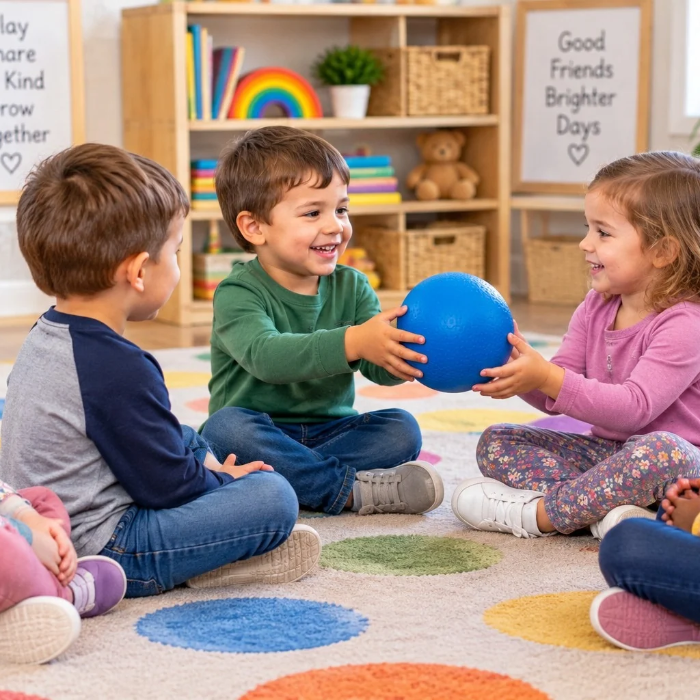
5. Pass the Ball
This is one of the easiest turn-taking activities to use with a group.
Materials:
- Soft ball
How to play:
- Sit in a circle.
- Give one child the ball.
- Have the child roll it to someone else.
- That child chooses the next person.
- Continue until everyone has received the ball.
For younger preschoolers, go around the circle in order so they can easily predict when their turn is coming. Passing a ball or other object to show whose turn it is to talk also helps preschoolers who interrupt during circle time.
Skills practiced: waiting, attention, gross motor skills, and group participation.
6. Photo Hunt
Add a little excitement with a preschool photo hunt.
Materials:
- Phone or camera
- Simple list of objects to find
How to play:
- Choose several things to find, such as something red, something round, a flower, or a favorite toy.
- Let one child find the first object.
- That child takes the picture.
- The next child searches for the next item.
- Continue switching turns.
At the end, look through the photos together.
Skills practiced: observation, patience, cooperation, and vocabulary.
7. Puzzle Partners
One puzzle can become a cooperative challenge.
Materials:
- Age-appropriate puzzle
How to play:
- Place all the puzzle pieces where everyone can see them.
- Have one child choose and place a piece.
- Then the next child chooses one.
- Continue taking turns until the puzzle is finished.
If a child knows where another child’s piece belongs, encourage helpful language rather than grabbing: “I think I know where that goes. Can I show you?”
Skills practiced: cooperation, problem-solving, patience, and communication.
8. Storytime Sharing
Reading together can become a turn-taking experience, too.
Materials:
- Favorite picture book
How to play:
- Read the story together.
- Pause occasionally to ask a question.
- Let children take turns answering.
- Allow children to take turns turning the pages.
- Invite each child to choose something they notice in an illustration.
Partner reading and shared book experiences can provide natural opportunities to practice turn-taking while also supporting language and early literacy.
Skills practiced: listening, conversation, patience, and early literacy.
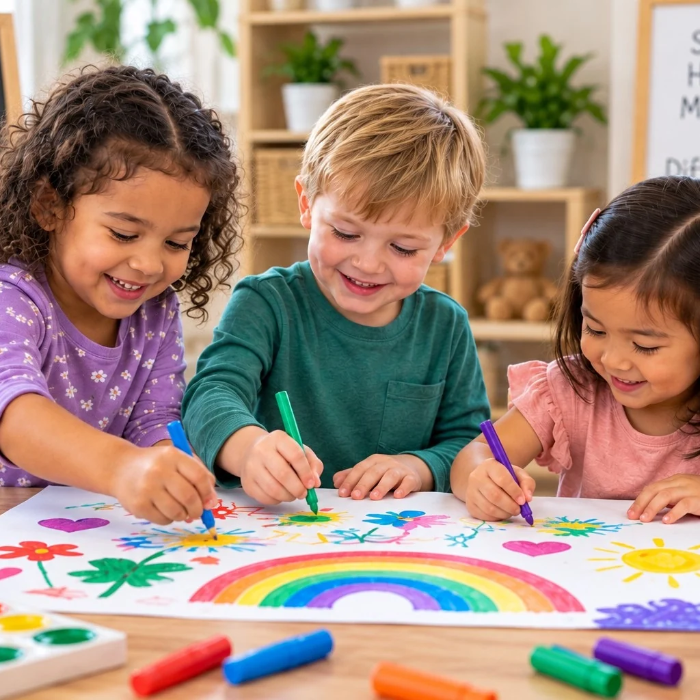
9. Craft Collaborations
Instead of giving every child a separate art project, occasionally make one creation together.
Materials:
- Large sheet of paper
- Crayons, markers, stickers, paint, or collage materials
How to play:
- Choose a simple group project.
- Put some materials in shared containers.
- Have children take turns adding something to the artwork.
- Talk about how everyone’s contribution makes the finished project unique.
Try creating a giant rainbow, neighborhood mural, silly monster, or seasonal collage.
Skills practiced: sharing materials, creativity, cooperation, and teamwork.
10. Dance Circle
Movement is especially helpful when sitting and waiting feels difficult.
Materials:
- Music
- Open space
How to play:
- Have everyone stand in a circle.
- Play upbeat music.
- Choose one child to create a dance move.
- Everyone copies the move.
- Choose the next child to lead.
- Continue until everyone has had a turn.
Children get the excitement of being the leader while also practicing waiting while someone else leads.
Skills practiced: patience, imitation, confidence, gross motor skills, and group participation.
Tips for Encouraging Patience and Sharing
Even the best preschool games for sharing won’t mean preschoolers suddenly become perfect turn-takers. Social skills develop with repeated practice and adult support.
Set Children Up for Success
Keep waiting periods short at first.
Waiting ten minutes for a favorite toy can feel enormous to a young child. Start with short turns and gradually make them longer as children’s ability to wait develops.
Visual timers can also make waiting more concrete. Instead of repeatedly saying, “Wait,” you can say, “Look, the red part is getting smaller. When it’s gone, it will be your turn.”
Also prepare children before situations where sharing might be difficult. For example, before a playdate, a child can put away a few special toys they don’t want other children to use and leave out toys they are comfortable sharing.
Model Positive Behavior
Preschoolers learn an enormous amount by watching adults.
Use turn-taking language throughout the day:
“It’s your turn to stir. Then it will be my turn.”
“You used the red marker. May I have a turn when you’re finished?”
“I’m waiting while you finish. I know I’ll get a turn next.”
Modeling gives children words they can eventually use with their peers.
Use Praise Effectively
Instead of simply saying, “Good job sharing,” tell children exactly what they did successfully.
Try:
“You waited until Mia finished with the truck.”
“Well done! You gave Noah a turn with the markers.”
“You really wanted to go first, but you waited.”
Specific feedback helps children understand which behaviors were successful and encourages them to repeat those behaviors. Early childhood guidance also emphasizes noticing and describing children’s positive social behavior rather than relying only on general praise.
Make Turn-Taking Part of Everyday Preschool Play
Teaching patience and sharing doesn’t require an elaborate social-emotional curriculum. Some of the most effective learning patience preschool activities happen naturally while children play.
Roll a ball back and forth. Share the markers. Take turns adding puzzle pieces. Let everyone choose a dance move.
Each little experience gives preschoolers another chance to practice waiting, communicating, cooperating, and recognizing that other people deserve turns, too.
Most importantly, don’t expect perfection. Turn-taking is a developing skill. With consistent opportunities, supportive adults, and plenty of playful practice, children can gradually become more comfortable waiting, sharing, and playing cooperatively with others.
And when learning happens through play, practicing patience can actually be fun. Which of these turn taking activities will you try first? Let us know in the comments!
Frequently Asked Questions
Some of the easiest activities include rolling a ball back and forth, completing a puzzle together, playing simple board games, taking turns adding blocks to a tower, and letting children take turns choosing songs or dance moves. Activities with short, predictable turns are especially helpful for beginners.
Start by modeling sharing and giving your child plenty of opportunities to practice. Rather than forcing a child to immediately give up something they are using, teach them that another person can have a turn when they are finished. A timer can help make turns predictable. Give specific encouragement when your child waits, shares, or communicates appropriately.
Turn-taking supports children’s developing social-emotional skills, including cooperation, communication, self-control, and problem-solving. It also helps children participate successfully in group play and develop relationships with peers. The same back-and-forth rhythm shows up in conversation, so practicing turns in play also helps children learn to listen and wait before they talk.
Board games, card games, ball games, cooperative puzzles, building games, dramatic play, and group movement games all provide natural opportunities to practice patience and sharing. Choose games with simple rules and relatively short turns so preschoolers don’t have to wait too long.
Model the behavior you want to see, provide words your child can use, keep expectations developmentally appropriate, and notice successful attempts. Try phrases such as, “Can I have a turn when you’re done?” and “You can have it when my turn is finished.” With siblings, use the same timer rules for everyone so the older child isn’t always the one expected to give in.