
How to Teach Preschoolers Math
How to teach preschoolers math is a question on many parents’ and educators’ minds. While math might seem complex, its foundation is built much earlier than we think. Preschoolers, with their curious and playful nature, are natural explorers of the world around them. By understanding how preschoolers learn and focusing on concrete experiences, we can lay a strong foundation for future math success.
We are here to guide you on how to make learning math an adventure for your preschoolers. We will share simple yet effective strategies for incorporating math into everyday life, from playtime to mealtime. Let’s unlock your little ones’ math potential and watch them grow into confident mathematicians.

Teaching math can be one of the most enjoyable and beneficial experiences you can share with your preschoolers. Young children are natural explorers, and they learn best through hands-on activities. Fortunately, math is everywhere daily, making it a perfect subject for playful learning.
While you may not realize it, your child is already being introduced to fundamental math concepts like counting, sorting, and measuring through everyday play. Incorporating math into your routine can help your child build a strong foundation for future learning.
If you are looking for a complete and comprehensive mathematics curriculum, you have come to the right place. Check out my Daily Lessons in Preschool Mathematics Curriculum. It might just be the game-changer you need for your best year of math instruction yet!
-
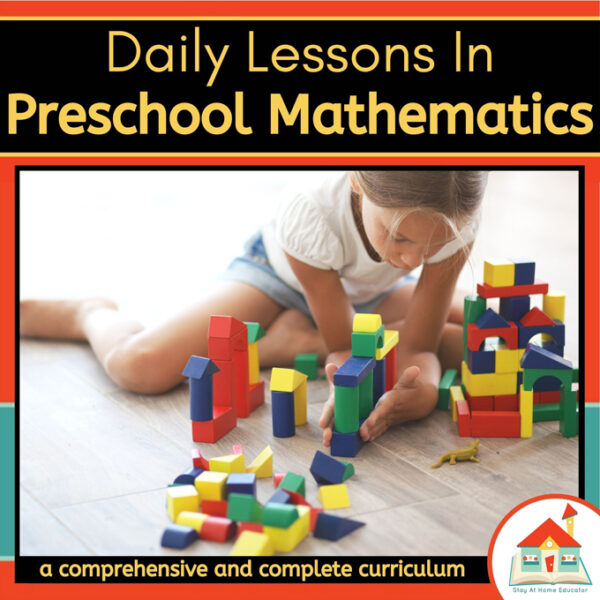 Product on sale*** Daily Lessons in Preschool Mathematics Curriculum | Full Year Math InstructionOriginal price was: $162.00.$139.00Current price is: $139.00.
What are Early Math Skills?
Early math skills are the foundational building blocks children naturally develop in their early years. These essential abilities, often referred to as pre-math or early numeracy skills, serve as the groundwork for more advanced mathematical concepts.
Early math skills encompass a wide range of abilities crucial for future mathematical thinking. These include:
- Number Sense: Understanding quantities, number order, and how numbers relate.
- Shape Recognition: Identifying and naming basic geometric shapes.
- Measurement: Comparing sizes, weights, and lengths of objects.
- Patterns: Recognizing, creating, and extending patterns.
It is important to for children to develop these skills at a young age, as they build a strong foundation for future learning, improve problem-solving and critical thinking, and boost confidence. They also make everyday tasks easier and support overall academic success.

How Children Learn Math: The Concrete Pictorial Abstract Approach
The Concrete-Pictorial-Abstract (CPA) approach is a structured method for introducing mathematical concepts to young learners. This framework guides children through a progression of developmental learning stages:
- Concrete Stage: Children initially explore mathematical ideas through hands-on interactions with physical objects. This tactile experience is essential for building foundational understanding.
- Pictorial Stage: As children’s comprehension grows, they begin to represent concrete objects with pictures and diagrams. This step bridges the gap between concrete experiences and abstract symbols.
- Abstract Stage: Building on their concrete and pictorial understanding, children can then work with abstract symbols, such as numbers and equations. This final stage marks a significant milestone in their mathematical journey.
By following the CPA approach, you can support your children in developing a strong grasp of mathematical principles.
Are Preschoolers in the Concrete, Pictorial, or Abstract Stage?
Most preschoolers are primarily in the concrete stage of learning. They thrive on hands-on experiences and learn best through exploration and play. It is essential to provide ample opportunities for them to manipulate objects and engage in sensory activities. While gradually introducing pictorial and abstract concepts can be beneficial, the primary focus should be on building a strong foundation through concrete experiences.

Fun and Engaging Math Activities for Preschoolers
Math should not be boring for little ones. It can be a learning adventure filled with fun and discovery!
Let’s explore some creative ways to make math a playful and fun experience! From sorting and counting to measuring and finding patterns. Here are some ideas for hands-on math activities:
Sorting Activities:
Sorting isn’t just about tidying up; it’s a math brain booster! Gather toys, buttons, or even snacks and challenge your preschoolers sort them by color, size, shape, or type. This helps them understand categories and classification, which are essential math skills.
- Sorting Fruits and Vegetables Activity
- Fine Motor Color Sorting Activity
- Shamrock Color Sorting Activity
Counting Games:
Turn everyday moments into counting opportunities. Count toys, steps, or even fingers and toes. Use snacks for a tasty counting practice. This helps children develop number sense and one-to-one correspondence.
- Composing Ten: A Ten-Frame Counting Activity
- One-on-one Correspondence Counting Activity
- Ice Cream Counting Card Activity
Measuring Activities:
Comparing sizes, heights, or weights is a fun way to introduce measurement concepts. Use blocks to measure the length of toys, compare the weight of stuffed animals, or see who’s taller! This sparks curiosity and lays the foundation for understanding measurement units.
- Comparing Length with Rainbow Strips
- Balancing Scale and Counting Bears Activity
- Flower Height Measurement Activity
Shape exploration:
Hunt for shapes in your surroundings! Look for circles in plates, squares in windows, and triangles in roofs. Encourage your child to create shapes with playdough or blocks. This helps them recognize and visualize different shapes, enhancing spatial awareness.
Incorporating math into everyday routines is another effective strategy. For example, while cooking, children can measure ingredients, count steps in a recipe, and recognize the shapes of utensils. Shopping trips offer opportunities to compare prices, estimate quantities, and count products or even money.
Additionally, every preschool classroom should be filled with books and songs. There are lots of stories and songs that teach math concepts in a fun and lively way. Be sure to make these a part of your weekly lesson plans!

Creating a Math-Rich Environment
Imagine a classroom where math is everywhere. That’s what we call a math-rich environment! It’s a place where kids are naturally curious about numbers, shapes, and patterns.
To create this magical space, let’s try these ideas:
- Hands-on Fun: Fill the room with toys like blocks, puzzles, and counting bears. These are like little math playgrounds where kids can explore and discover.
- Math Everywhere: Make posters or charts with numbers, shapes, and patterns. Make math visible and accessible.
- Storytime Math: Weave math into your storytelling. Talk about numbers, shapes, and patterns in the stories. Sing math songs too!
- Family Math Time: Encourage parents to play math games at home. This shows kids that math is a part of everyday life and also is fun! Parental involvement in math practice and games can make a big difference in kids’ attitudes towards math.
And remember teachers, your attitude matters, too! If you’re excited about math, your kids will be too.
We recognize that some educators and parents have some math-related anxiety. One suggestion to help boost your own confidence in math instruction is to use a research-based, developmentally appropriate mathematics curriculum.
Our comprehensive math curriculum makes math fun and easy to teach! We ditch the boring worksheets and replace them with hands-on activities that cover all the important math skills. From learning something new to practicing what they already know, our lessons are designed to keep kids engaged and excited. We even mix math with stories to make learning even more fun! If you have any worries about effectively teaching math to your preschoolers, our curriculum will put you at ease and take all the guesswork out of your planning.
-
Product on sale*** Daily Lessons in Preschool Mathematics Curriculum | Full Year Math InstructionOriginal price was: $162.00.$139.00Current price is: $139.00.
Early math education is vital for a child’s overall development. By understanding how preschoolers learn and providing engaging math experiences, we can build a strong foundation for future success in mathematics.
Be sure to keep your math lessons hands-on and fun! Keep in mind that your preschoolers are primarily in the concrete stage of development, which is why a tactile approach is so important in these early years. Remember, the goal is to foster a love of learning and problem-solving, not just to teach numbers and facts.

I’m Sarah, an educator turned stay-at-home-mama of five! I’m the owner and creator of Stay At Home Educator, a website about intentional teaching and purposeful learning in the early childhood years. I’ve taught a range of levels, from preschool to college and a little bit of everything in between. Right now my focus is teaching my children and running a preschool from my home. Credentials include: Bachelors in Art, Masters in Curriculum and Instruction.


