Easy Preschool Math Activities (Low-Prep & Fun)
Some of the most easy preschool math activities are also the simplest. When math is playful, hands-on, and part of everyday experiences, preschoolers are more likely to stay engaged and build curiosity. And that’s what we want! Curious little mathematicians.
I’m sharing low-prep math activities for preschoolers that support early learning through play. These activities focus on counting, sorting, shapes, measurement, graphing, and patterns. All the core skills that prepare children for kindergarten while keeping learning fun and developmentally appropriate.
Preschool Math Activities You’ll Find Here
- Easy counting games
- Sorting and comparing activities
- Shape activities
- Measurement activities for preschoolers
- Simple graphing games
- Patterning ideas
And How to Put it into a System for Teaching Preschool Math
You’ll also get ideas for how to add these math activities into a system for teaching, like in my Daily Lessons in Preschool Math Curriculum. By the end, you’ll have a clear framework you can use to support preschool math learning and duplicate this success in your own classroom.

Why Easy Math Activities Matter for Preschoolers
Preschoolers learn best through active, hands-on activities that support formal instruction. According to the NAEYC, early math experiences help children develop confidence and problem-solving skills regardless of their starting level.
Easy, real-life math activities:
- Build confidence through small increments of success
- Encourage critical thinking
- Strengthen fine motor skills
- Help children see how math works in daily life
When math feels approachable, children are more likely to stay engaged and excited to learn more. And the best way to make this happen is for teachers to have a toolkit of easy preschool math activities.
Easy Preschool Math Activities by Skill Area
At this foundational stage, it’s crucial to introduce preschoolers to math concepts in a manner that is both engaging and accessible, as well as systematic.
Some of the easiest math activities have the greatest impact in learning because they are also high interest activities. These activities can help children develop tactile learning, boost engagement, build confidence, and promote curiosity.
By introducing children to fun games and activities, parents and teachers can help children get excited about math and lay the foundation for their future academic success.
Here are some of the activities designed specifically for preschoolers:
Easy Counting Activities
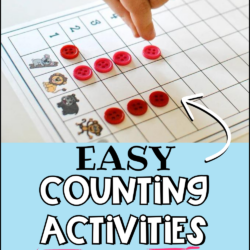
Counting doesn’t have to mean flashcards (although games are a fun way to use them). These activities build number sense through movement, play, and visual supports.
- Composing Ten: A Ten-Frame Counting Activity
- This activity builds on ten-frame skills by helping preschoolers practice making ten through rolling dice, counting objects, and filling the frame. Children strengthen number sense, one-to-one correspondence, and early addition skills while actively manipulating materials.
- One-on-one Correspondence Counting Activity
- Using stickers, cereal, or other small manipulatives, preschoolers practice matching one object to one number. This activity helps children slow down their counting, improve accuracy, and build a strong foundation for future math skills.
- Ice Cream Counting Card Activity
- Preschoolers count and add scoops to ice cream cones using themed counting cards. This activity supports number recognition, counting skills, and fine motor development while keeping learning playful and engaging.
Read this: Simple Preschool Math Activities
Easy Activities to Teach Sorting
Sorting lays the foundation for logic, patterns, and problem-solving.
- Sorting Fruits and Vegetables Activity
- Preschoolers sort colorful manipulatives to match different fruits and vegetables, strengthening categorization and color recognition skills. The activity also provides fine motor practice as children pick up and transfer items using fingers or tongs.
- Fine Motor Sorting Activity
- This activity combines color sorting with fine motor development using jumbo tweezers. As preschoolers grasp and sort items by color, they build hand strength, coordination, and early logic skills.
- Shamrock Color Sorting Activity
- A seasonal sorting activity that helps preschoolers practice color recognition and classification. Children sort shamrocks by color while also developing fine motor skills, making it a great fit for spring or holiday themes.
Read this: A Guide to Developing Preschool Math Skills
Easy Preschool Shape Activities
- Shape Train Activity
- Preschoolers build a train using different shapes, practicing shape recognition, matching, and spatial awareness. The activity encourages problem-solving as children figure out how shapes fit together to form the train.
- Farm Theme Shape Activity
- These themed shape mats help preschoolers identify and match common shapes while strengthening fine motor skills. The playful farm theme keeps children engaged as they manipulate shapes and build visual discrimination skills.
- Playdough Shape Mats
- Children build shapes using playdough, helping them learn shape names and attributes through hands-on exploration. This tactile activity also supports hand strength and coordination.
Read this: Best Preschool Math Books for Early Learning
Easy Measurement Activities for Preschoolers
- Comparing Length with Rainbow Strips
- Preschoolers compare and measure colorful strips to explore concepts such as longer, shorter, and equal. The simple setup makes this activity easy to use in small groups or math centers.
- Balancing Scale and Counting Bears Activity
- Using a balance scale and counting bears, preschoolers explore weight while practicing counting and one-to-one correspondence. This activity encourages prediction, experimentation, and early problem-solving.
- Flower Height Measurement Activity
- Preschoolers measure flower heights using manipulatives instead of standard tools, helping them understand comparison and measurement concepts. The activity also includes fine motor practice and works well with seasonal themes.
Read this: Preschool Math Lesson Ideas
Easy Activities to Teach Graphing
- Fall Graphing Game for Preschool
- Children count, sort, and graph fall-themed items such as leaves, acorns, and pinecones. This activity introduces data collection and visual representation in a playful, hands-on way.
- Winter Penguins Graphing Activity
- This race-style graphing game has preschoolers count and record penguin movement. It supports counting, comparison, and early graphing skills while keeping children actively engaged.
- It’s a Zoo Counting Activity
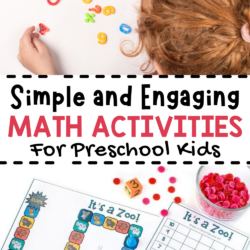
- Preschoolers move through a gameboard collecting animals and then count and graph what they have gathered. This activity blends counting, sorting, and graphing into one cohesive learning experience.
Read this: Preschool Math Lesson Ideas
Easy Patterning Activities
- Patterned Feathers Turkey Craft
- Preschoolers create repeating patterns by stringing beads onto turkey feathers. This craft strengthens pattern recognition while also supporting counting, color recognition, and fine motor skills.
- Farm Animal Patterning Strips
- Using farm animal images, preschoolers create and extend AB and ABC patterns. The clear visuals help children recognize patterns and predict what comes next.
- Scooping and Pouring Patterns
- Children scoop and pour different colored materials to create repeating patterns. This sensory-rich activity strengthens pattern recognition while developing coordination and control.
How to Put It into a System
If you’re enjoying these easy preschool math activities, you may be wondering how to put them into a system for the most effective teaching. Preschool math develops in layers, so try a free week of the curriculum sample.
This is exactly how our Daily Lessons in Preschool Math Curriculum is designed to work. The curriculum takes the same hands-on, play-based activities you see here and organizes them into short, daily lessons that build skills gradually over time. Instead of guessing what to teach next, you’re guided through counting, sorting, shapes, patterns, measurement, and more in a clear, developmentally appropriate sequence—so nothing is rushed and nothing is missed.
How to Keep Preschool Math Simple (Without Worksheets)
- Use objects you already have (toys, food, nature items)
- Focus on one skill at a time
- Repeat activities with small variations
- Follow your child’s interest, not a rigid schedule
Consistency matters more than complexity.
Daily Lessons in Preschool Math Curriculum
If you love these activities but want everything planned for you, the Daily Lessons in Preschool Math Curriculum provides a full year of hands-on, play-based instruction—without worksheets or overwhelm.
It covers all five core math disciplines through short, engaging daily lessons that naturally spiral skills over time.
Skills included:
- Counting (0–5, 0–10, 0–20)
- Comparing & Sorting
- Shapes
- Positions & Patterns
- Measurement
- Graphing
- Early Addition & Subtraction
FAQ: Easy Preschool Math Activities
For most preschoolers (roughly ages 3–5), the most helpful math skills fall into a few big buckets: counting and number sense, sorting and classifying, shapes and spatial awareness, patterns, and early measurement (longer/shorter, heavier/lighter, more/less). These skills show up constantly in real life and build a strong foundation for kindergarten math.
A simple way to prioritize is: start with what your child naturally enjoys (blocks, cars, pretend play, sensory bins), then choose one math goal to weave into that play. Preschool math works best when it’s short, repeated, and hands-on—not “one and done.”
Most preschoolers do best with 5–15 minutes at a time. That’s long enough to practice a skill without pushing attention past its limit.
If your child is engaged, you can extend naturally—but it’s okay to stop while it’s still fun. In fact, stopping at a high point often makes kids more likely to want to do it again tomorrow. Over time, those short, consistent moments add up to big growth.
This is very common. Some kids memorize counting like a song, but still need practice connecting numbers to “how many.” Focus on one-to-one correspondence (touch each object as you count), counting small sets, and stopping at the final number (“There are 6!”).
Helpful games include: counting snacks onto a plate, parking cars into numbered spots, rolling a die and building a tower with that many blocks, or filling a ten-frame. You’ll know it’s clicking when your child can count objects accurately and answer “How many?” without recounting every time.
If a child resists, it’s usually because the activity feels confusing, too hard, or too “school-ish.” The fix is almost always: make it more playful, shorter, and easier.
Try switching to activities that feel like games (dice + counters, scavenger hunts, sorting, building challenges). Reduce the demand: instead of “count to 10,” try “can you give me three blocks?” Also, keep your language light—use curiosity (“I wonder…”) instead of testing (“What number is that?”). Confidence is the goal first; skills follow.
Grab our Math Lesson Plans for Preschoolers Bundle
Bundle and save on preschool math lesson plans for the year!
Shop our Measurement, Graphing & Sorting Preschool Lesson Plans
Simplify instruction with ready-to-use lessons on measurement, sorting, and graphing.

Shop our Counting, Addition & Subtraction Preschool Math Lesson Plans
Help preschoolers master math skills with playful and done-for-you math lesson plans.
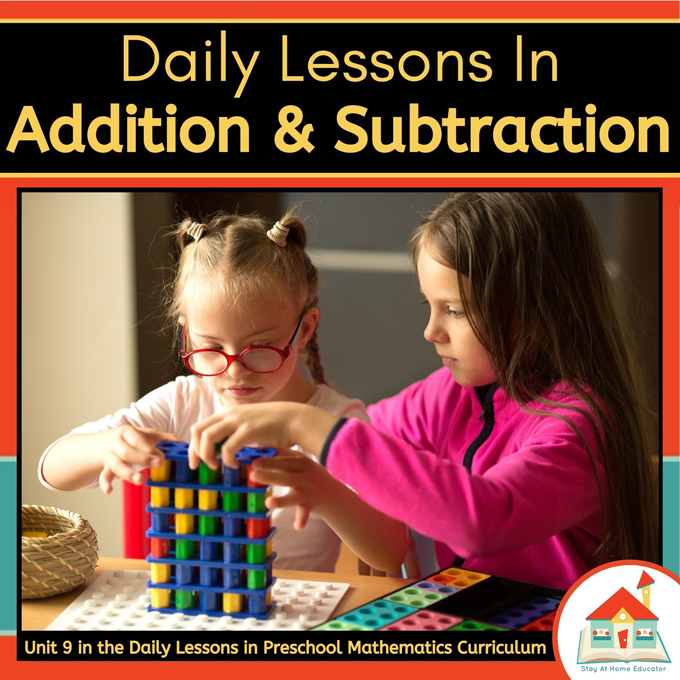
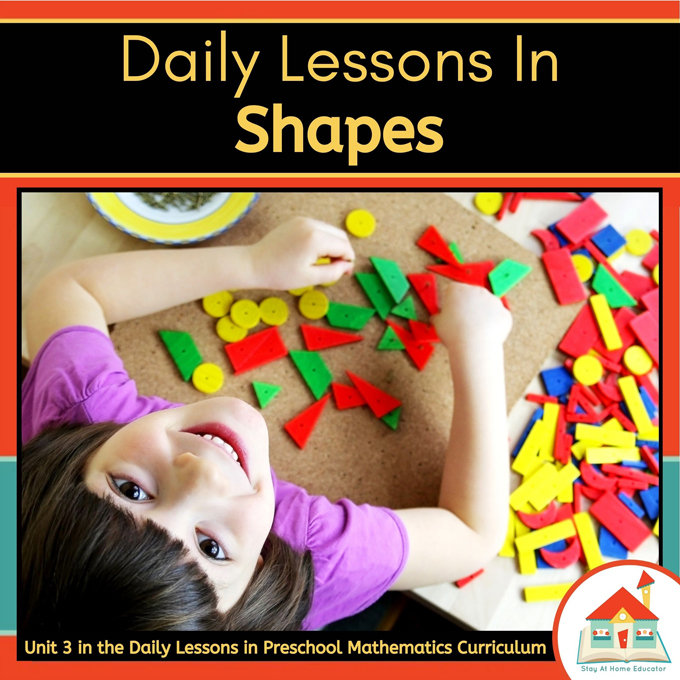
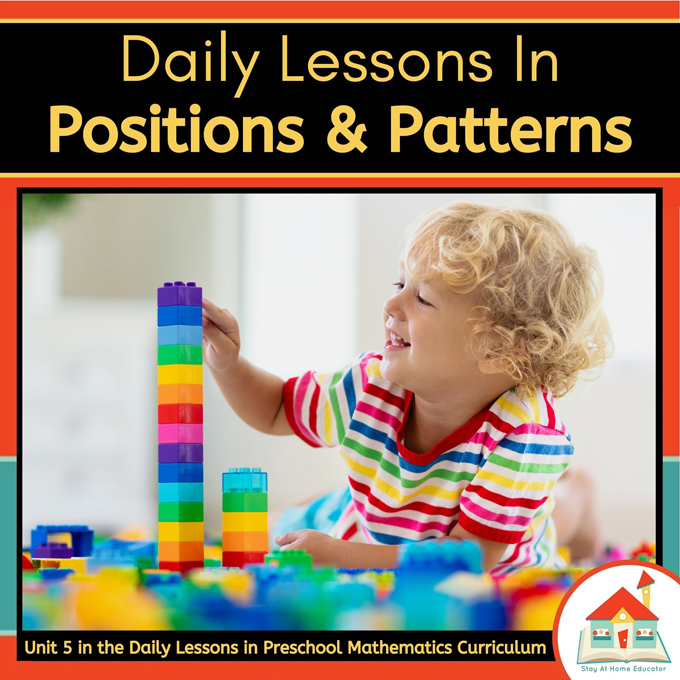
Shop our Shapes, Patterns, and Comparing Math Lesson Plans
Find the perfect preschool math lessons for easy, effective teaching.

I’m Sarah, an educator turned stay-at-home-mama of five! I’m the owner and creator of Stay At Home Educator, a website about intentional teaching and purposeful learning in the early childhood years. I’ve taught a range of levels, from preschool to college and a little bit of everything in between. Right now my focus is teaching my children and running a preschool from my home. Credentials include: Bachelors in Art, Masters in Curriculum and Instruction.