
Weekly Preschool Themes: How to Plan All 52 Weeks the Easy Way
Planning preschool can feel overwhelming. You want your children engaged and having fun. And you also want some structure so the week doesn’t feel scattered or chaotic.
That’s where weekly preschool themes make all the difference.
Using a weekly theme gives your preschool lesson plans a clear focus while still allowing flexibility, creativity, and time for play. Instead of scrambling for activities that kinda’ fit, you’ll learn how to plan weekly preschool themes, how to turn them into organized preschool lesson plans, and how to map out an entire year the easy way.
What You’ll Learn
- Why weekly preschool themes make planning easier
- How to organize themes for the whole year
- A simple framework for weekly preschool lesson plans
- How to break big seasonal themes into weekly topics
- 52 weekly preschool themes organized by season
- How to match themes with literacy and math skill growth
- When done-for-you lesson plans can save time
Ready for a Done-for-You Plan?
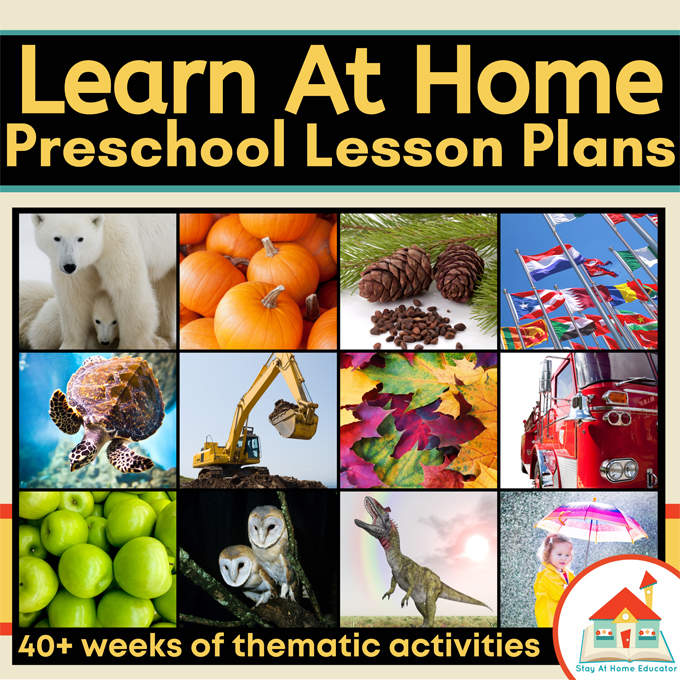
If you love the idea of using weekly preschool themes but don’t have the time to create detailed thematic activities from scratch, I’ve got you covered. Both parents and teachers love our Learn At Home Preschool Activity Plans Bundle.
It offers a full-year of theme-based activities that perfectly support the Daily Lessons in Preschool Curriculum. So yes, lesson planning did just get easier.

Why Use Weekly Preschool Themes?
Themed learning offers a unique blend of structure and flexibility. They help focus activities and make learning super interesting for kids.
There are many advantages of incorporating weekly preschool themes into your lesson plan. Here are a few:
- Focused Learning: When children explore one topic for several days, they build deeper understanding. Counting fish during an ocean theme or sorting leaves during a fall theme reinforces concepts naturally.
- Engagement and Fun: Weekly themes make learning exciting and keep children motivated. Thematic activities cater to different learning styles, ensuring all children are engaged and participating.
- Organization and Planning: Instead of planning 25 unrelated activities, you plan around one central idea. This makes materials easier to gather and lessons easier to organize. And, you can save these ideas and use them year after year.
You can dive deeper into what thematic teaching looks like in this article, “Preschool Themes for Teaching“.
How to Create Weekly Preschool Lesson Plans (Step-by-Step)
Effective preschool lesson planning balances intentional learning goals with developmentally appropriate practice. The following framework provides a clear structure for designing cohesive, engaging, and purposeful weekly plans.
1. Begin with Developmental Considerations
Lesson planning should be grounded in an understanding of:
- Children’s developmental stage
- Individual interests and needs
- Social-emotional competencies
- Targeted academic or skill-based goals
Planning Tip: Observe first, plan second. Brief observational notes throughout the week can reveal exactly where children are ready to grow next.
2. Select a Developmentally Appropriate Theme
While not required, a weekly theme can provide organizational cohesion. Themes may be selected based on:
- Seasonal relevance
- Student interest
- Teacher enthusiasm
Themes should remain concrete and accessible. Most importantly, the theme should support learning objectives rather than replace them.
Planning Tip: Teacher enthusiasm plays a huge role in student engagement. Preschoolers are highly responsive to adult energy, and their investment in a theme often mirrors the authenticity and interest modeled by the teacher. So, make sure you like what you’re teaching, too.
3. Identify Clear Weekly Learning Objectives
Each week should include three to five focused learning goals targeting areas such as early literacy, numeracy, fine motor development, language expansion, or social-emotional growth. Clearly defined objectives guide instructional decisions and ensure intentionality across all planned activities.
For educators using a structured, comprehensive preschool curriculum (such as the Daily Lessons in Preschool Curriculum), this step is often embedded within the program itself. In that case, objectives are pre-aligned and sequenced, allowing teachers to focus on responsive instruction rather than independent goal mapping.
Planning Tip: Write objectives in measurable, observable terms. If you can clearly see or hear the skill in action, it is likely well-defined.
4. Prepare Materials Strategically
Materials should be accessible, purposeful, and developmentally appropriate. High-quality instruction relies more on intentional design than on expensive or elaborate resources. Effective planning may include:
- Utilizing existing classroom resources
- Incorporating natural or seasonal materials
- Repurposing recycled items when appropriate
Planning Tip: Prepare materials in advance, but remain flexible in how they are used. Young children often extend activities in unexpected and valuable ways.
5. Establish a Consistent Yet Flexible Daily Structure
Preschool-aged children benefit from predictable routines while requiring flexibility to respond to emerging interests and needs.
A developmentally appropriate daily structure may include:
- Morning meeting or circle time
- Guided or themed activity
- Center-based exploration
- Outdoor or gross motor time
- Reflection or closing activity
Planning Tip: Think of your daily schedule as a framework rather than a script. A well-structured rhythm supports learning, but responsiveness sustains it.
Read this: How to Create a Daily Preschool Schedule and download our Preschool Schedule Guidebook, too.
How to Break a Big Theme into Weekly Plans
Large themes feel overwhelming until you break them into focused weekly units. In fact, this is my favorite way of planning preschool themes. Assign an umbrella theme for the month, and then weekly themes to break id down.
Let’s take a look at how a more prominent theme, like spring, can be broken down into engaging weekly themes:
- Week 1: Rain and Clouds – Explore weather patterns, make rain sticks, and have a cloud-dough sensory play activity.
- Week 2: Birds and Nests – Learn about different birds, create bird feeders, and sing songs about nests.
- Week 3: Plants or Gardening – Plant seeds, explore the parts of a plant, and make paper flower crowns.
- Week 4: Flowers – Learn about different flower colors and shapes, participate in a flower sorting activity, and create a flower collage.
This approach keeps content fresh while maintaining seasonal continuity, and you can use this approach with just about any theme!
52 Weekly Preschool Themes (Organized by Season)
Use this list to map out your entire preschool year. These weekly preschool themes can be rotated seasonally or mixed throughout the year depending on your calendar, student interests, or classroom setting.
Fall Preschool Themes
Fall is a natural time to explore change, harvest, and community. If you’d like even more ideas and activity suggestions, visit our full guide to Fall Themes for Preschool for detailed lesson inspiration.
- All About Me – Explore names, body parts, and personal preferences while building routines.
- Families – Discuss family roles, traditions, and similarities and differences.
- Apples – Count, sort, taste-test, and explore simple apple science.
- Pumpkins – Compare sizes, explore the pumpkin life cycle, and practice describing.
- Leaves – Observe seasonal changes, create patterns, and explore colors.
- Fall Weather – Learn about wind, rain, and temperature changes.
- Farm – Explore animals, crops, and where food comes from.
- Harvest – Discover seasonal foods and gratitude themes.
- Woodland Animals – Study habitats and forest life.
- Community Helpers – Learn about neighborhood jobs through role play.
- Fire Safety – Discuss safety rules and emergency helpers.
- Squirrels & Acorns – Explore collecting, sorting, and seasonal preparation.

Winter Preschool Themes
Winter offers rich opportunities to explore weather, culture, and caring for others. For additional winter lesson ideas and printables, visit our complete Winter Theme Ideas page.
- Snow & Ice – Investigate melting, freezing, and winter textures.
- Arctic Animals – Learn about cold-weather habitats.
- Penguins – Explore movement and simple graphing activities.
- Hibernation – Discuss animal life cycles and seasonal changes.
- Winter Animals – Compare how animals adapt.
- Winter Clothing – Practice sequencing and categorizing clothing.
- Gingerbread – Retell stories and explore measurement.
- Holidays Around the World – Introduce global traditions in age-appropriate ways.
- Lights & Shadows – Experiment with light and shadow play.
- Kindness & Friendship – Practice sharing and conversation.
- Healthy Habits – Learn about hygiene and daily routines.
- Feelings & Emotions – Build emotional vocabulary and social awareness.

Spring Preschool Themes
Spring is perfect for exploring growth, life cycles, and nature. For even more seasonal activities, visit our full Spring Preschool Themes collection.
- Rain & Clouds – Explore weather and simple water observations.
- Rainbows – Investigate colors and pattern creation.
- Birds & Nests – Learn about habitats and building structures.
- Seeds & Plants – Plant seeds and observe growth.
- Gardening – Explore soil, tools, and responsibility.
- Flowers – Compare shapes, colors, and plant parts.
- Butterflies – Study transformation and life cycles.
- Bees – Discuss pollination and teamwork.
- Bugs & Insects – Sort and observe insects.
- Frogs & Pond Life – Explore habitats and water ecosystems.
- Baby Animals – Compare parent and offspring traits.
- Earth Day & Recycling – Discuss caring for the planet.

Summer Preschool Themes
Summer themes are playful, exploratory, and perfect for hands-on learning. For more activity ideas, visit our complete Summer Preschool Themes page.
- Ocean – Explore sea animals and water play.
- Beach – Investigate sand, shells, and textures.
- Camping – Practice sequencing events and outdoor safety.
- Backyard Nature – Observe insects and plants.
- Zoo Animals – Compare habitats and diets.
- Pets – Discuss responsibility and animal care.
- Sports & Movement – Develop coordination and teamwork.
- Water Play & Safety – Experiment with floating and sinking.

Anytime Preschool Themes
These themes work at any point in the year and are perfect for filling gaps in your calendar. Check out our page Fun Preschool Theme Ideas for Anytime for even more ideas.
- Colors – Explore color recognition and mixing.
- Shapes – Identify and build basic shapes.
- Five Senses – Engage in sensory exploration.
- Music & Rhythm – Develop listening skills and creative expression.
- Transportation – Sort vehicles by land, air, and water.
- Construction – Build structures and explore positional words.
- Space – Learn about planets and day and night.
- Dinosaurs – Compare sizes and explore fossils.
Read this: Unique Preschool Theme Ideas
How These Weekly Preschool Themes Support Real Skill Growth
Weekly preschool themes make learning exciting. They spark interest, invite hands-on questioning, and give your week a clear focus. But engagement alone isn’t enough.
Preschoolers also need intentional skill progression. That’s repeated exposure to foundational literacy, language, and math concepts that build steadily over time.
That’s where strong preschool lesson plans make the difference. Themes create engagement and skill progression creates growth.
When you combine the Learn At Home Preschool Activity Plans Bundle with our Daily Lessons in Preschool Curriculum, each weekly theme is intentionally paired with development across literacy, oral language, and math. And it works.
Frequently Asked Questions About Weekly Preschool Themes
Planning weekly preschool themes for the year starts with organizing your calendar into 36 to 40 instructional weeks. Begin by grouping themes seasonally, then fill in additional anytime themes to complete your year. After choosing your themes, map them alongside your literacy and math goals so skills build progressively. This approach allows you to stay flexible while maintaining structure. Many teachers find it helpful to outline all 52 theme ideas first, then narrow them down based on holidays, school breaks, and student interests.
Most preschool programs use between 36 and 40 weekly themes, depending on the length of the school year. Having a list of 52 weekly preschool themes gives you flexibility. It allows you to adjust for snow days, extended projects, or student-led exploration without running out of ideas. Some teachers rotate favorite themes annually while introducing new ones to keep the curriculum fresh.
Effective preschool lesson plans should include literacy, math, hands-on exploration, fine motor development, and social-emotional learning opportunities. Within each weekly theme, activities might include a read-aloud, phonological awareness practice, counting or sorting activities, sensory exploration, art, and music or movement. The key is ensuring that activities are developmentally appropriate while supporting consistent skill progression throughout the year.
The best weekly preschool themes for the beginning of the year focus on routines, relationships, and classroom expectations. Themes like All About Me, Families, Feelings, and Classroom Rules help children feel secure while building foundational skills in listening, speaking, and social interaction. Starting with familiar topics supports confidence and makes it easier to introduce early literacy and math activities within a meaningful context.
Yes, many preschool teachers and homeschool parents reuse weekly preschool themes each year because young children benefit from predictable seasonal exploration. Themes like Apples, Pumpkins, Snow, Plants, Ocean, and Community Helpers remain developmentally appropriate year after year. You can keep the same theme while rotating activities, books, or centers to refresh your preschool lesson plans without starting from scratch.
Grab our Weekly Thematic Activity Plans
Engaging, hands-on themes that complement your math and literacy curriculum.
Shop Done-for-You Preschool Curriculum
Build strong foundations with hands-on, structured lesson plans and activities.


I’m Sarah, an educator turned stay-at-home-mama of five! I’m the owner and creator of Stay At Home Educator, a website about intentional teaching and purposeful learning in the early childhood years. I’ve taught a range of levels, from preschool to college and a little bit of everything in between. Right now my focus is teaching my children and running a preschool from my home. Credentials include: Bachelors in Art, Masters in Curriculum and Instruction.


