
Music Lesson Plans for Preschool: A Simple 5-Day Plan Anyone Can Teach
You don’t have to play the piano, read sheet music, or even consider yourself a good singer to teach music to your preschooler.
Really.
For young children, music education isn’t about memorizing notes or learning complicated musical theory. It’s about listening, moving, experimenting with sounds, recognizing patterns, keeping a beat, and discovering that music can be created almost anywhere.
That’s what makes music such a wonderful addition to preschool at home.
These simple music lesson plans for preschoolers provide five days of playful, intentional music experiences using materials you probably already have. Each lesson introduces an important musical concept while supporting children’s language, motor, cognitive, social, and emotional development.
And if your singing voice isn’t exactly concert-ready?
Your preschooler won’t mind, trust me.
Why Music Belongs in Preschool Lesson Plans
Music can sometimes be treated as the activity we pull out when we have five extra minutes.
Turn on a song. Dance around. Move on to the next activity.
But music deserves a more intentional place in early childhood learning. In my classroom, music is in all parts of our day, from the time we come in until we go home. We sing when we line up, we sing when we collect name cards, we sing our names, and we sing when we clean up our toys. We just love to sing!
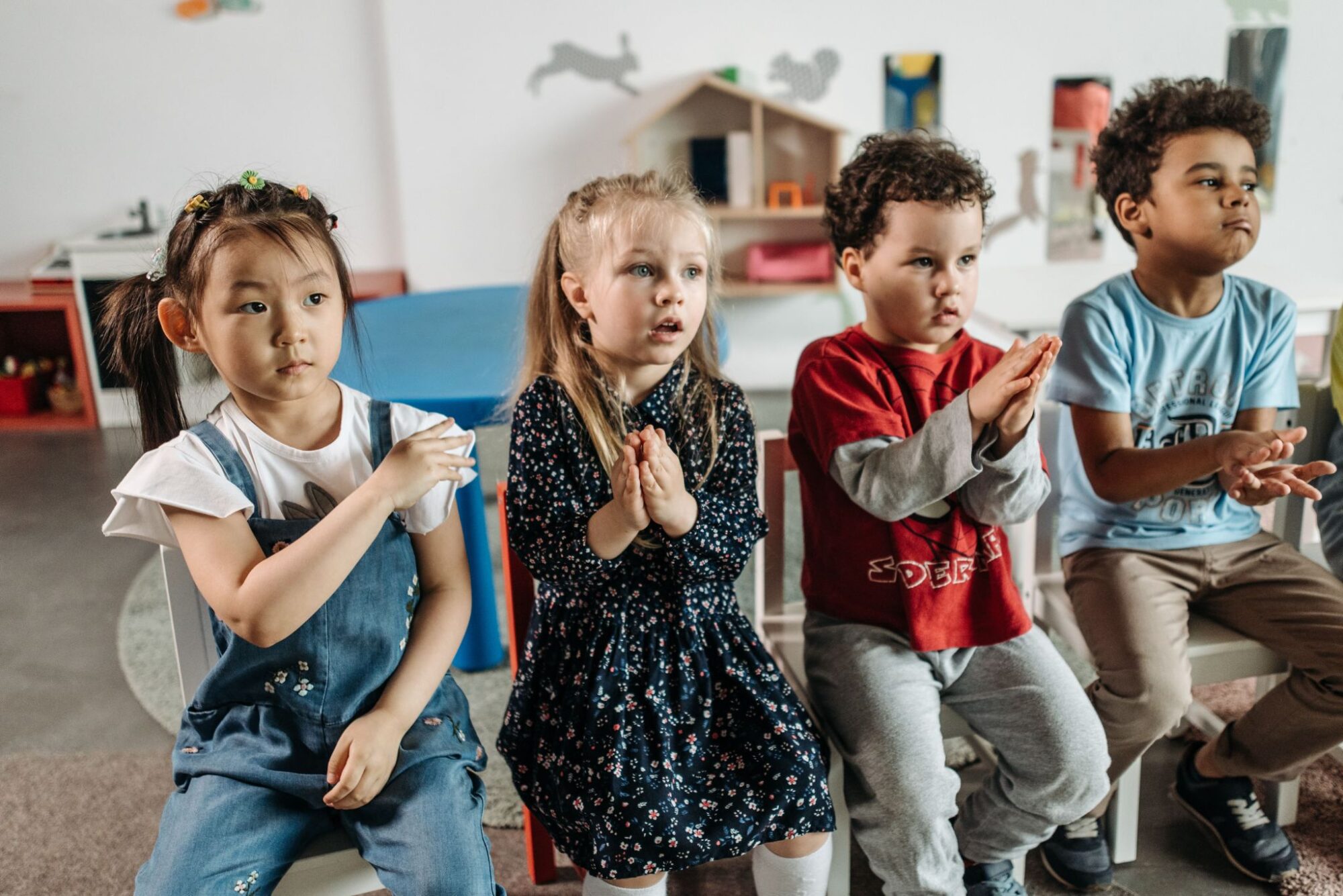
Music combines listening, language, movement, memory, patterns, and emotional expression. When children clap a repeating rhythm, remember the words to a song, or move their bodies to match changes in music, they are using multiple skills at the same time.
Cognitive Benefits and Brain Development
Young children’s brains are constantly creating and strengthening connections through experience.
Musical activities provide rich opportunities to listen carefully, remember sequences, recognize patterns, and predict what happens next.
Think about a simple clapping pattern:
Clap, clap, pause. Clap, clap, pause.
A preschooler copying that pattern has to listen, remember the sequence, and coordinate their hands to reproduce it.
Music can also reinforce early math concepts.
Rhythms have patterns. Songs have sequences. Beats can be counted. Music can be fast or slow, longer or shorter, and divided into repeating sections.
Children don’t need to know they’re practicing mathematical thinking.
They’re simply making music.
Language and Listening Skills
Songs naturally expose children to words, rhymes, repetition, and sound patterns.
A familiar song also requires children to remember what comes next.
Pause before the final word in a favorite song and watch what happens.
Your preschooler will probably fill it in.
That’s memory, listening, language, and prediction happening within a musical experience.
Social and Emotional Growth
Music also gives children a way to express feelings.
A child can stomp loudly to powerful music, sway gently to quiet music, or invent a silly dance when something sounds funny.
Music can also become a shared experience.
When children sing, dance, clap, or play instruments together, they practice watching others, taking turns, listening, and participating as part of a group.
The benefits of music for preschoolers extend far beyond learning how to sing a song.
The Building Blocks of a Preschool Music Lesson
You don’t need to understand complicated musical terminology or own a single instrument to begin teaching music to preschoolers.
Start with three simple ideas: rhythm, dynamics, and pitch.
Rhythm and Beat
A beat is the steady pulse in music.
You can help children feel a beat by clapping, marching, tapping their knees, or patting the floor.
Rhythm is the pattern of sounds that happens over that beat.
Try:
Clap, clap, tap, clap.
Then ask your preschooler to copy you.
Keep patterns short at first.
Why it matters: Rhythm activities require children to listen, remember patterns, coordinate movement, and anticipate what comes next.
Dynamics: Loud and Soft
Dynamics simply refers to how loud or soft music is.
Preschoolers love experimenting with this one.
Try clapping loudly.
Then whisper, “Can you clap very softly?”
Bang on a homemade drum loudly and then tap it gently.
You can even pretend you’re different animals:
“How would an elephant make music?”
“How would a tiny mouse make music?”
Why it matters: Exploring volume helps children develop listening skills, self-control, and awareness of how their actions affect sound.
Pitch and Melody
Pitch refers to whether a sound is high or low.
You don’t need a piano to teach it.
Make a high squeaky sound and reach toward the ceiling.
Then make a deep low sound and crouch toward the floor.
Ask your child to imitate you.
You can also slide your voice from low to high like a siren.
Why it matters: Playing with pitch encourages careful listening and helps children notice differences between sounds.
Simple 5-Day Music Lesson Plans for Preschoolers
Music lesson plans for preschool are short, playful lessons that teach beat, rhythm, tempo, loud and soft, and high and low sounds through clapping, singing, movement, and homemade instruments. Each lesson takes about 15 to 20 minutes. For example, a rhythm lesson has children copy simple clap-and-tap patterns, then march in a rhythm parade.
Here’s the part you can actually use.
These early childhood music education lesson plans are flexible, so adjust the time according to your child’s interest. If you like to write your week down, each day drops easily into a simple preschool lesson plan format.
If your preschooler wants to keep drumming for another 15 minutes, let them.
Exploration is part of the lesson.
Day 1: Introduction to Rhythm
Goal: Children will listen to and imitate simple rhythms.
You’ll need:
- Your hands
- A table, floor, or other surface for tapping
- Optional homemade drum
Warm-Up: Find the Beat
Choose a familiar song.
Clap a steady beat while you sing.
Invite your child to clap along.
Then change the movement:
- Pat your knees.
- Tap your toes.
- March.
- Tap the floor.
Ask:
“Can you keep the beat with your feet?”
Activity: Copy My Rhythm
Start with two claps.
Clap, clap.
Have your child repeat it.
Gradually make the patterns more interesting:
Clap, tap, clap.
Tap, tap, clap, clap.
Let your child create a pattern for you to copy.
Finish: Rhythm Parade
March around the room while clapping or tapping a homemade instrument.
Why this lesson matters: Copying rhythmic patterns strengthens listening, memory, sequencing, and motor coordination.
Day 2: Tempo and Speed
Goal: Children will recognize and respond to fast and slow music.
You’ll need:
- Open space
- Music or your own singing
Warm-Up: Fast Feet, Slow Feet
Call out:
“Slow!”
Walk around the room as slowly as possible.
Then call:
“Fast!”
Move more quickly.
Alternate between the two.
Activity: Follow the Music
Play or sing a familiar song slowly.
Encourage your child to move slowly.
Then increase the tempo.
Ask:
“What happened to the music?”
Introduce the words fast and slow.
Game: Tempo Freeze
Move while music plays.
When it stops, freeze.
Each time you restart, choose a different speed.
Why this lesson matters: Responding to changes in tempo develops listening, body control, and the ability to adjust movements based on auditory information.
Day 3: Exploring Sounds
Goal: Children will explore how different materials create different sounds.
You’ll need:
Gather safe household objects such as:
- Wooden spoon
- Plastic container
- Metal bowl
- Cardboard box
- Empty plastic bottle
- Rice-filled shaker
Sound Investigation
Let your child experiment.
What happens when you tap a wooden spoon against a box?
What does the spoon sound like against a metal bowl?
Ask:
“Which sound is louder?”
“Which one sounds softer?”
“Do these sound the same or different?”
Sound Guessing Game
Have your child close their eyes.
Make a sound with one object.
Can they guess what made it?
Switch roles.
Make a Sound Pattern
Choose two objects.
For example:
Drum, shaker, drum, shaker.
Repeat the pattern together.
Why this lesson matters: Sound exploration encourages scientific thinking as children experiment with cause and effect while developing auditory discrimination and vocabulary.
Day 4: Music and Movement
Goal: Children will use their bodies to respond to musical cues.
You’ll need:
- Open space
- Favorite songs
This is one of the easiest rhythm and movement activities for preschool because children already love to move.
Warm-Up: Move Like an Animal
Ask:
“How would a bunny move to this music?”
Try hopping.
Then become an elephant, bird, snake, or frog.
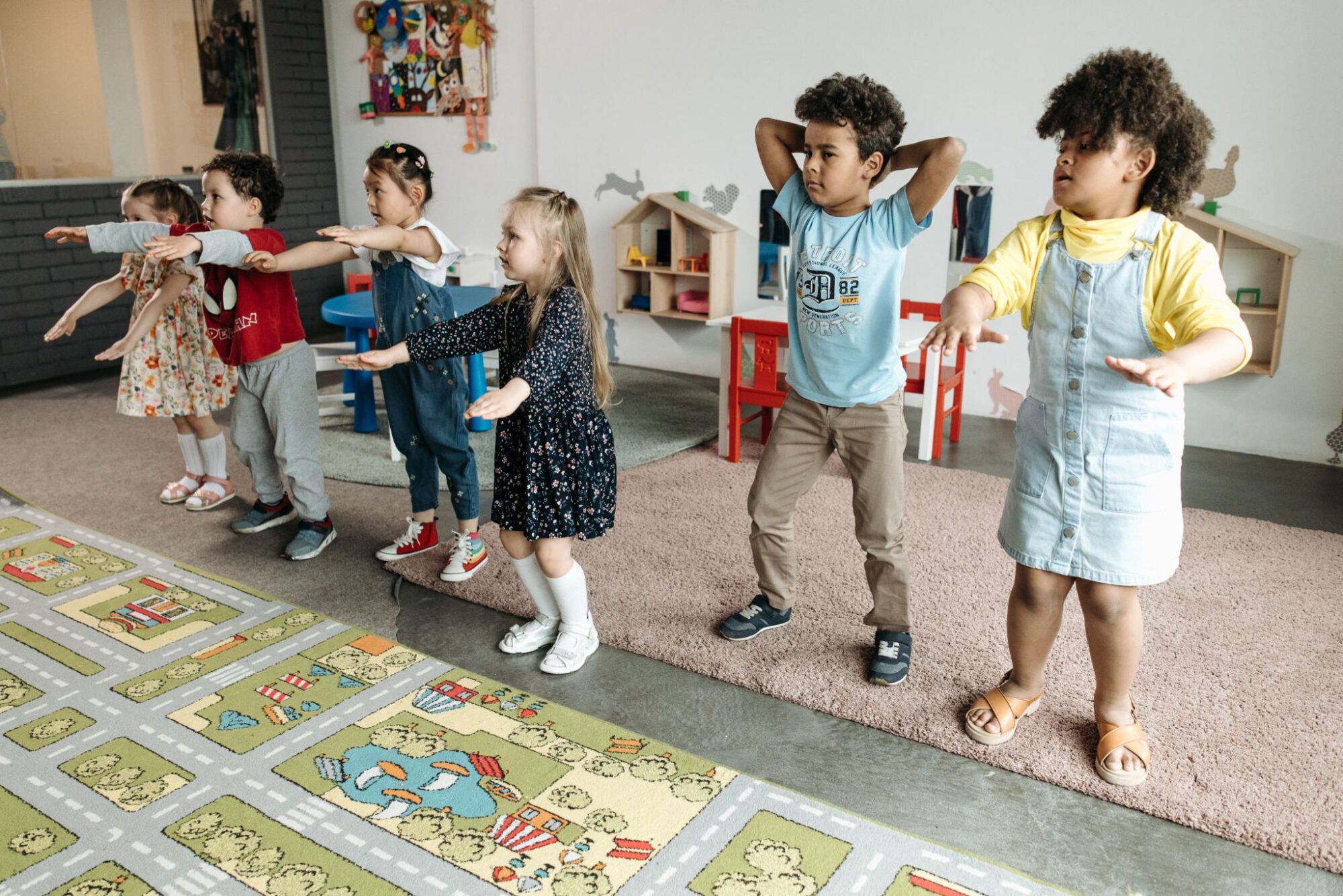
Activity: Freeze Dance
Play music and dance.
Stop the music unexpectedly.
Everyone freezes.
Restart and repeat.
Add challenges:
“Freeze on one foot!”
“Next, freeze like a statue!”
“Freeze with your hands above your head!”
Activity: Follow the Leader
Take turns creating movements while the other person copies.
Try:
- Marching
- Clapping
- Spinning
- Stomping
- Swaying
- Tiptoeing
Why this lesson matters: Music and movement support gross motor development, balance, listening, self-regulation, and creative expression.
And yes, the dancing may get silly.
That’s productive musical learning, too.
Day 5: Creating Your Own Music
Goal: Children will combine what they’ve learned to create their own musical experience.
You’ll need:
- Homemade instruments
- Household sound makers
- Plenty of imagination
Review
Ask:
“Can you show me a fast beat?”
“Next, can you make a soft sound?”
“Can you make a high sound?”
“What about a low sound?”
Start a Preschool Band
Choose your instruments.
Create a simple steady beat.
Experiment with:
- Fast and slow
- Loud and soft
- Starting and stopping
Then let your preschooler become the conductor.
The conductor decides when the music starts, stops, gets louder, or becomes softer.
Create a Song
Choose something simple: your pet, lunch, the weather, or a favorite toy.
Make up a song about it.
It doesn’t have to rhyme.
It doesn’t even have to sound particularly musical.
The goal is creating something.
Why this lesson matters: Creating music gives children opportunities to make decisions, remember concepts, express ideas, and experience the satisfaction of creating something original.
DIY Musical Instruments You Can Make Today
A preschool music curriculum at home doesn’t require purchasing a box of expensive instruments.
Your recycling bin may contain everything you need.
Shakers and Maracas
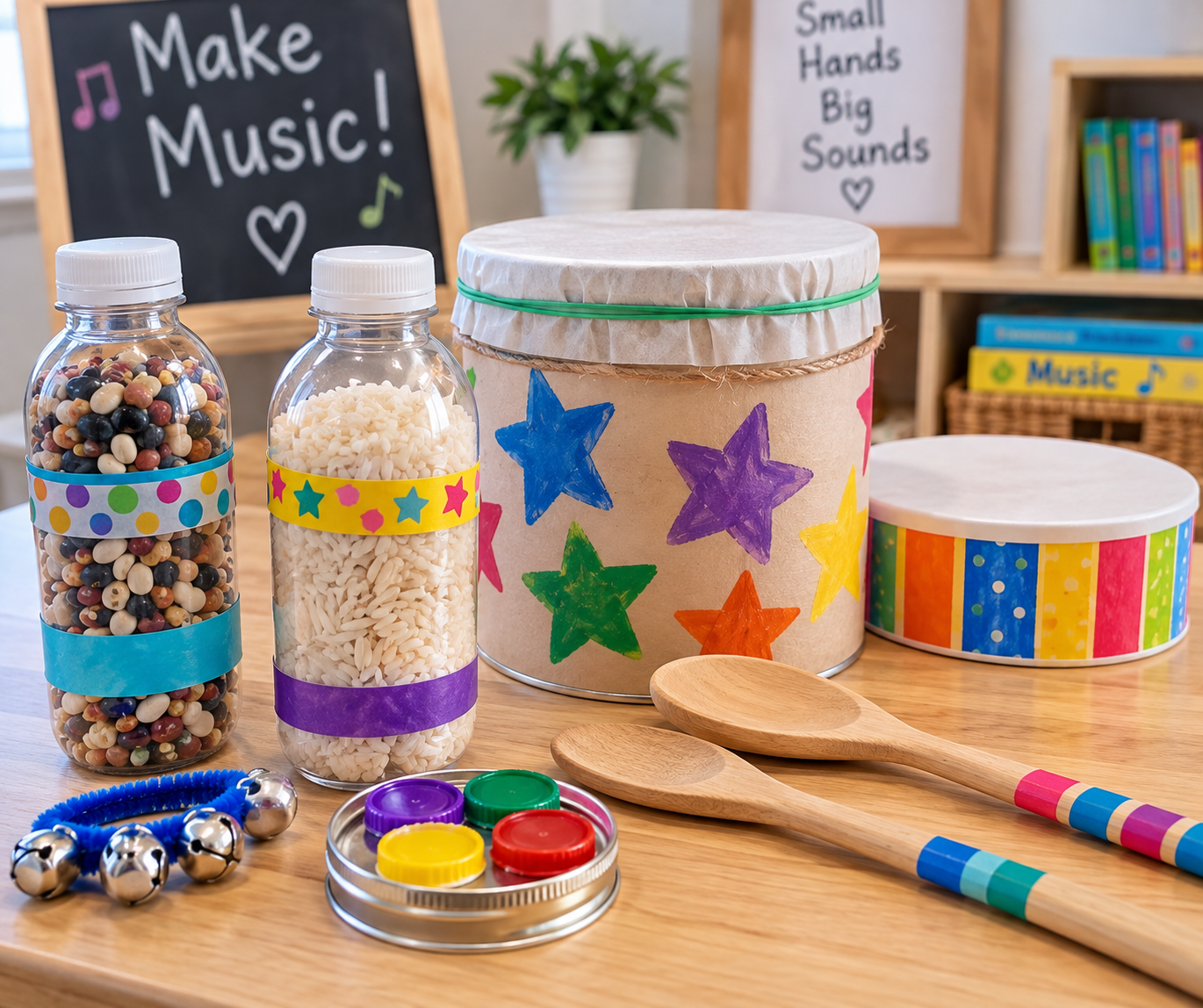
Add dry rice or beans to a clean plastic bottle or tightly sealed container.
Secure it carefully so children cannot open it. Hot glue or strong tape around the lid works well, since dried beans and rice are choking hazards for little ones.
Experiment with different fillers.
Does rice sound different from larger dried beans?
Want more shaker ideas? Try these paper plate shakers or a jingly bell stick preschool music craft that’s fun without being too loud.
Learning connection: Shaking strengthens hand and arm muscles while children explore rhythm, volume, and cause and effect.
Drums and Percussion
Turn sturdy plastic containers, oatmeal containers, or cardboard boxes into drums.
Try using hands first.
Then experiment with safe wooden spoons.
Compare sounds produced by different surfaces.
Learning connection: Drumming combines rhythm with hand-eye coordination and controlled motor movements.
Stringed Sounds
Stretch sturdy rubber bands of different thicknesses around an empty tissue box and gently pluck them.
Adult supervision is important with rubber bands.
Listen carefully.
Do all the bands make the same sound?
Learning connection: Children discover that different materials can create different pitches and vibrations.
Managing Your Preschool Music Classroom
Whether you’re teaching one child at home or several children in a preschool classroom, music can get noisy.
That’s okay.
The goal isn’t silent musical exploration.
The goal is purposeful sound.
Establish a few simple expectations.
Try:
“Instruments stay in our hands.”
“We play when the conductor says go.”
“When my hands go down, instruments become quiet.”
Practice starting and stopping before handing out multiple instruments.
You can also create a designated basket for musical materials so children know where instruments belong.
Most importantly, don’t correct every imperfect beat.
Preschool music should include experimentation.
Sometimes children will shake an instrument wildly just to discover how loud it can become. They may sing completely different words to a familiar song. They might spend ten minutes tapping different objects instead of following your planned activity.
That doesn’t mean the lesson failed.
That exploration is part of learning.
Make Music Part of Your Preschool Day
Music education doesn’t have to be complicated.
You don’t need a music degree.
You don’t need expensive instruments.
And you definitely don’t need a perfect singing voice.
You need opportunities for your preschooler to listen, move, experiment, create, and have fun with sound.
Start by clapping a beat.
Make a shaker.
Dance to a favorite song.
Bang on a cardboard box.
Then build from there. (And when your preschooler starts conducting their own kitchen band, tell us about it in the comments!)
These simple music lesson plans for preschoolers give you the structure you need while leaving plenty of room for the messy, noisy, creative exploration young children need.
Because in preschool, making music isn’t just about learning music.
It’s another way of learning about the world.
Frequently Asked Questions
Focus on simple concepts such as beat, rhythm, fast and slow, loud and soft, and high and low sounds. You don’t need to read music or play an instrument. Guided activities, familiar songs, movement, clapping, and household sound makers provide plenty of meaningful musical learning.
Three-year-olds often enjoy active, hands-on experiences. Try freeze dance, marching to a beat, shaking homemade instruments, copying simple clapping patterns, singing action songs, and experimenting with loud and soft sounds. Keep activities short and allow plenty of movement.
Music naturally contains patterns, sequences, repetition, counting, and relationships between sounds. When a child repeats a clap-tap-clap-tap pattern or counts four beats, they’re practicing the same sequencing skills found in preschool math lessons on patterns. Counting songs like Five Little Fishies add number practice, too.
Choose songs with a steady beat, lots of repetition, and simple actions, such as “Twinkle, Twinkle, Little Star,” “Old MacDonald Had a Farm,” “If You’re Happy and You Know It,” or “The Wheels on the Bus.” Because your child already knows the words, they can focus on clapping the beat, changing the tempo, or singing loudly and softly. Rotating the same few songs all week works better than introducing a new one every day.
Yes! The five-day plan above can be used as a complete introductory preschool music unit without purchasing special materials or curriculum. Repeat favorite activities, change the songs and sound makers, or expand each lesson into several days. When you’re ready for more, our free weekly preschool lesson plans cover dozens of other themes.