
Teaching Gratitude to Preschoolers: Simple Ways to Raise Thankful Kids
November often brings conversations about being thankful. But teaching gratitude to preschoolers can happen long before Thanksgiving dinner and continue after the decorations come down. It begins in small moments: noticing who helped, enjoying something together, or recognizing a kind gesture. You do not need a perfect response or a complicated lesson. A few simple words, repeated during everyday routines, give children opportunities to practice.
Whether you are teaching a preschool class or raising a child at home, this guide covers what gratitude realistically looks like at ages 3 to 5, eight simple strategies, phrases to use, and free printable sentence starter cards to help children notice and appreciate the good around them.
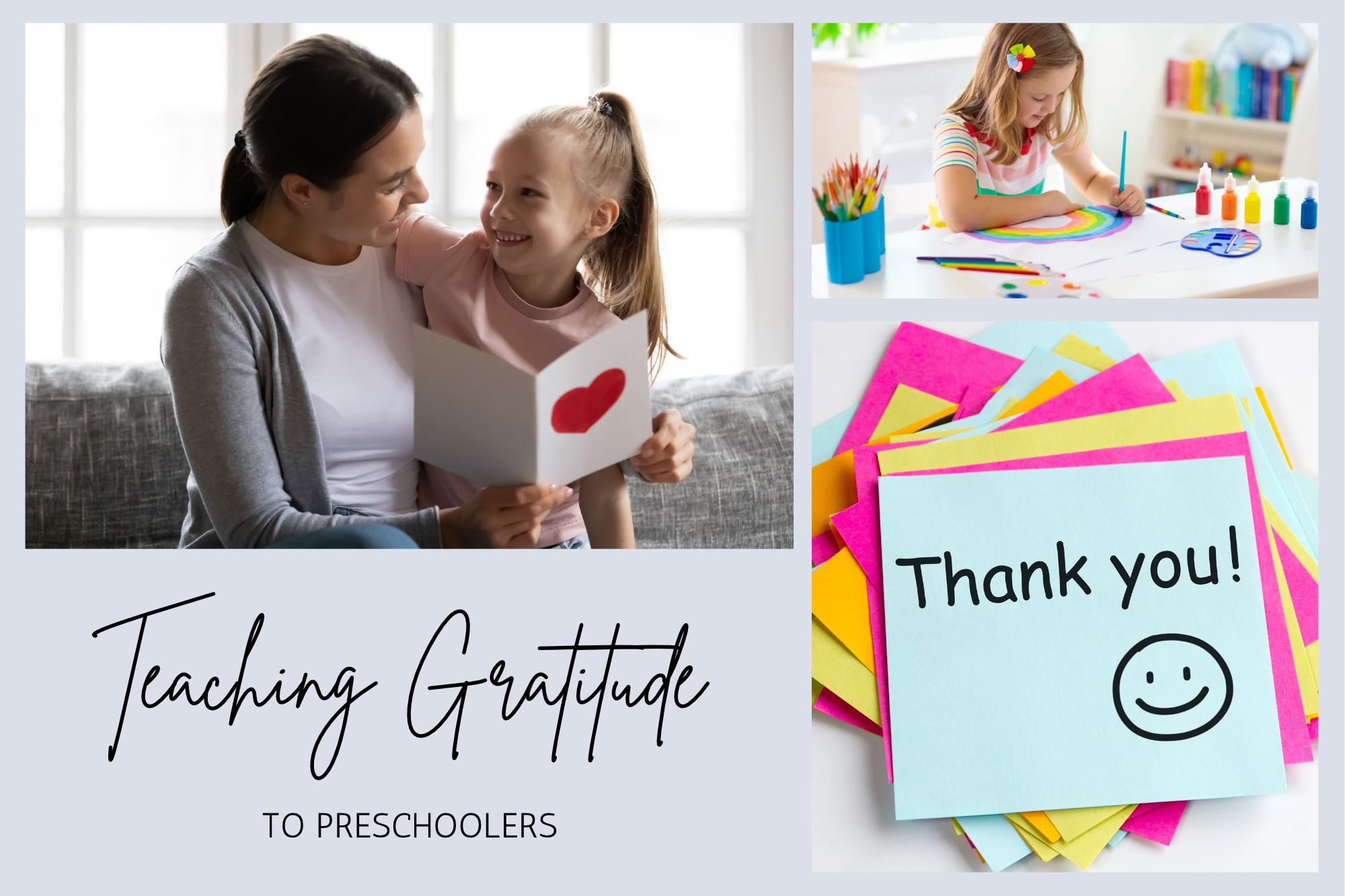
What Gratitude Looks Like in Preschoolers
Teaching gratitude to preschoolers means helping children notice something good, connect it to the person who made it happen, and show appreciation. At ages 3 to 5, that might look like naming a friend who saved them a seat or drawing a picture for a caring adult. Most preschoolers still need adult modeling and gentle prompts to get there.
Saying “thank you” is a social habit. Understanding another person’s effort and connecting it to a thankful feeling takes more practice. A child can remember the words without fully understanding them, or feel appreciation without finding words to express it.
At ages 3 to 5, empathy, emotional language, and perspective-taking are still developing. Researchers with the Raising Grateful Children project at the University of North Carolina at Chapel Hill note that these gratitude-related skills grow quickly during the preschool years, and that younger children often show only some parts of gratitude, usually when an adult prompts them. Some children need an adult to name what happened. Others begin explaining why someone’s kindness mattered. These are flexible expectations, not a checklist to master by a birthday.
Why Teaching Gratitude Matters
Gratitude offers a way to notice enjoyable experiences and caring relationships. It also creates opportunities to practice social-emotional skills: recognizing feelings, noticing another person’s actions, and responding with care. Research, mostly with older children and adults, connects gratitude with greater well-being and stronger relationships.
The UNC Raising Grateful Children team describes gratitude in four parts: what children notice that they have been given, how they think about why they received it, how they feel about it, and what they do to show appreciation. That helps explain why a reminder to say “thank you” covers only part of the process. It does not mean a preschool gratitude routine guarantees happiness or changes behavior overnight.
For more background, explore emotional development in preschoolers and ideas for teaching emotional skills.
How to Teach Gratitude to Preschoolers: 8 Simple Strategies
1. Model Gratitude Out Loud
Let children hear you notice everyday help. Say, “Thank you for bringing the towels. Now we can dry the table,” or “I’m thankful we could spend time together today.”
Specific words make the connection clear. Children hear what happened and why you appreciated it. You can model gratitude even when children do not respond. These ordinary examples are the starting point for teaching thankfulness to preschoolers.
2. Name It When You See It
Help children notice caring actions without turning every interaction into a test. “Maya moved her blocks so you could sit beside her. She made room for you.”
Pause before adding a question. Sometimes the observation is enough. At another time, try, “How did it feel when she helped?” Accept the child’s answer rather than supplying the feeling you want. Gratitude grows through noticing and conversation, not guessing the adult’s preferred response.
3. Build a Daily Gratitude Routine
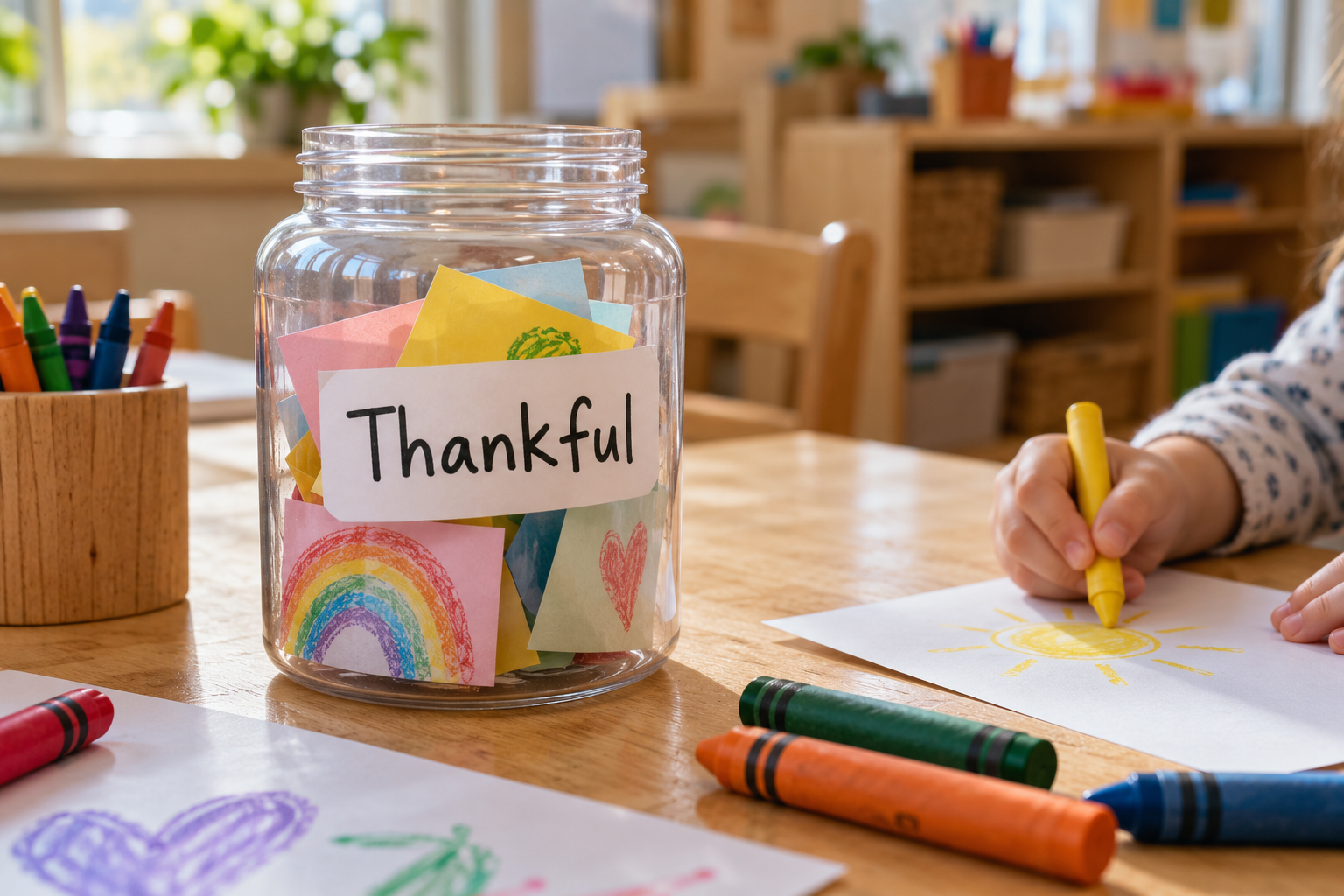
Choose one small moment that already exists in your day. During circle time, invite children to name something they enjoyed. At dinner or bedtime, ask, “What was one good thing today?”
A thankful jar can hold drawings or words an adult writes down. Read a few together occasionally. Keep participation optional, and welcome answers such as “my truck” or “playing outside.” Those concrete responses are useful starting points. One brief, comfortable routine is more manageable than several elaborate projects.
4. Use Simple Gratitude Words and Sentence Starters
Explain thankful as “feeling glad about something and appreciating it.” Connect the word to an immediate experience: “You’re glad Grandpa fixed your wagon. You can tell him that.”
Offer a beginning such as “Thank you for…” and let the child finish, point, gesture, or dictate. Children can respond in their home language or use their usual communication supports. Expressing appreciation should not depend on speaking in a particular way.
5. Read Books About Being Thankful
Picture books provide a comfortable place to talk about appreciation. Try The Thankful Book by Todd Parr, Bear Says Thanks by Karma Wilson, or Thankful by Eileen Spinelli.
Choose one question: “What does this character appreciate?” or “Who helped?” Then connect the discussion to something familiar. Avoid stopping on every page for a lesson. Enjoying the story together matters, too, and children may return to its ideas during play or conversation later.
6. Practice Giving, Not Just Getting
Let children experience contributing to something shared. They might help set the table, carry supplies, or choose a drawing to give someone.
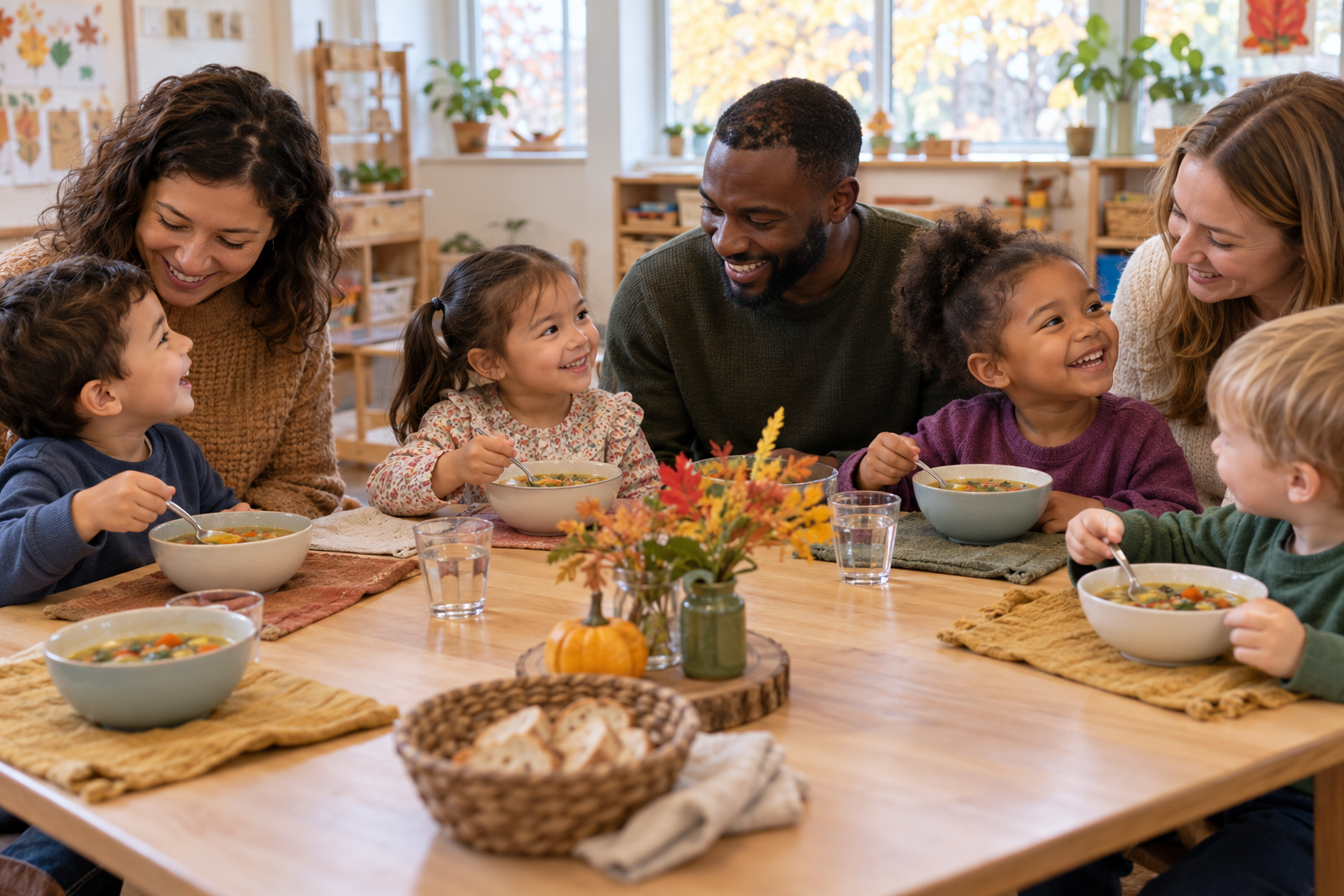
At our center, we hold an annual Stone Soup luncheon. Families sign up to bring an ingredient, and the children make the soup together. Then parents join their children to share the meal. It creates a natural opportunity to help children notice how everyone contributes. A carrot or a potato may seem like a small thing, but together those ingredients become a meal we can all enjoy.
Adults can make that connection visible: “Your family brought something for our soup, and other families did, too. Everyone helped make our lunch!”
For a similar gathering, offer ways to participate without purchasing ingredients, and follow your usual food preparation and allergy procedures. The shared experience matters more than the size of anyone’s contribution.
7. Make Thank-You Notes a Habit
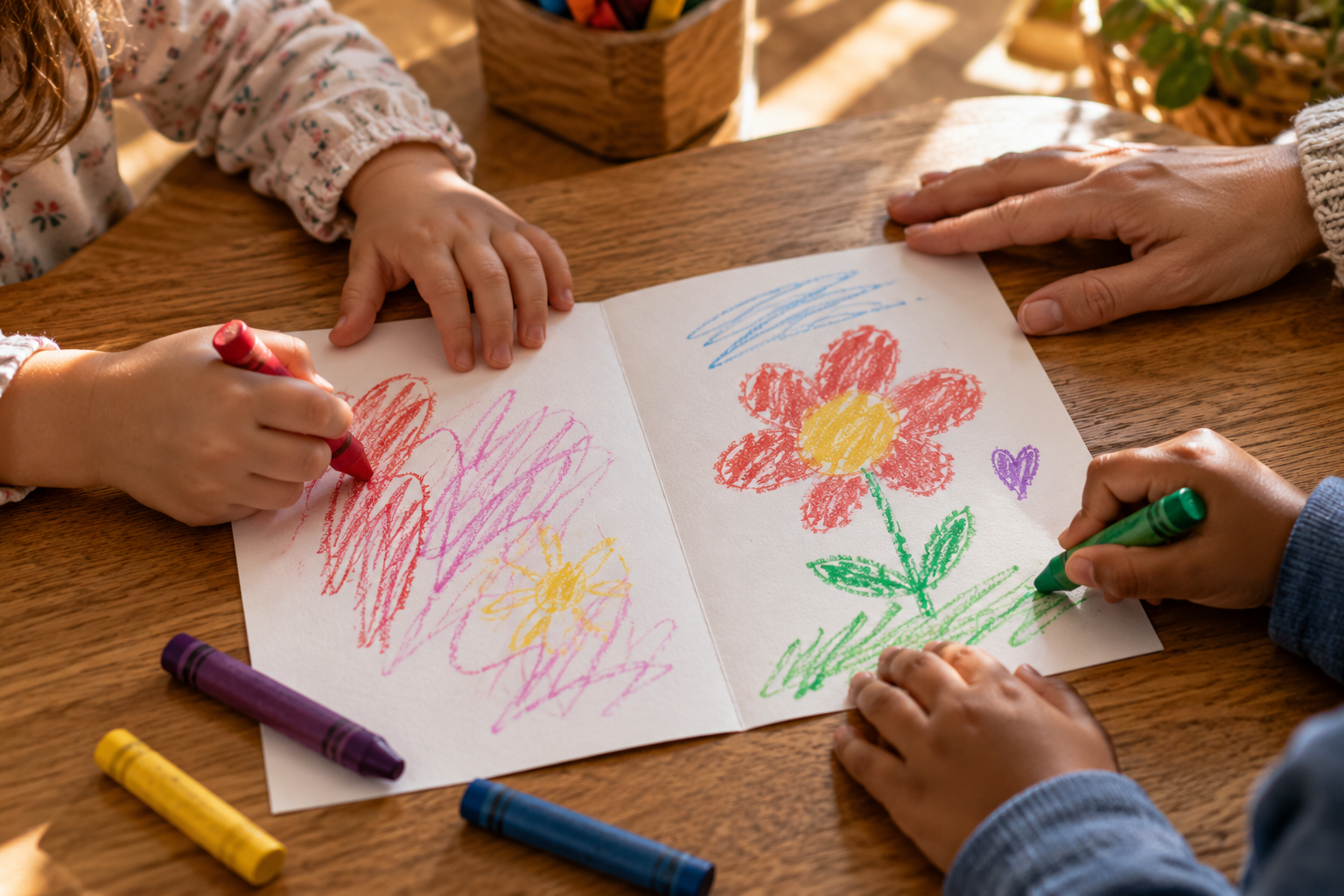
A preschool thank-you note can be a drawing, scribbles, or a few dictated words. After someone helps, ask, “Would you like to make a picture for them?”
If the child agrees, ask what they want the person to know. Write down their words, even if the message is short. Offer help with delivery, but let the child own the picture. Appreciation does not need adult-perfect handwriting or a polished craft.
8. Be Patient and Keep It Positive
Children forget social words when they are excited, disappointed, tired, or overwhelmed. You can model a thank-you yourself and revisit the moment later, without calling attention to the child in front of others.
Avoid “You should be grateful” or comparisons with people who have less. A child can appreciate someone and still feel upset. Try, “You wanted to keep playing. It’s hard to leave. We can thank our friends for having us when you’re ready.” Feelings do not need to disappear before appreciation becomes possible.
Gratitude Phrases to Use with Preschoolers
Keep a few familiar prompts available rather than introducing new questions every day:
- “I am thankful for…”
- “Thank you for helping me…”
- “Something good today was…”
- “Someone who helped me was…”
- “I felt happy when…”
- “I appreciate…”
Follow the child’s lead. If they name a favorite toy, you might ask what they enjoy about it. There is no need to replace their answer with something that sounds more meaningful to an adult.
Gratitude in the Preschool Classroom vs. at Home
The same approach works in both settings: notice something specific, offer language, and leave room for an authentic response.
In the classroom:
- Briefly notice a helpful action during an existing transition or meeting.
- Invite children to add a drawing to a thankful jar, with the option to pass.
- Connect shared work, such as preparing a meal, to the people who contributed.
At home:
- Share one good thing at a meal or bedtime.
- Model appreciation for everyday help, including a child’s efforts.
- Offer a drawing or short message after someone does something caring.
For hands-on extensions, explore the free gratitude lesson plans for preschool or the thankful leaf garland, and adapt materials to your setting. To keep related conversations going, the kindness lesson plans and these preschool kindness activities pair well with gratitude, as does teaching good choices. They offer related practice without making gratitude another behavior children must perform correctly.
Free Printable Gratitude Sentence Starter Cards
Use these printable cards to support gratitude in preschool or at home. Read one aloud during an existing routine, model your own response, and invite children to answer through words, drawings, or gestures.
Children can pass or return to a prompt later. The cards are conversation supports, not a worksheet or an assessment. Download the free gratitude sentence starter cards below and choose one to try together.
Teaching Gratitude to Preschoolers FAQs
Understanding develops gradually, starting in the preschool years and continuing well into elementary school and beyond. Preschoolers can begin noticing kindness and expressing appreciation with adult support, but they usually need a prompt. Older children are much more likely to say thanks on their own; in a classic 1976 study, 11- to 16-year-olds were about four times as likely as 6-year-olds to thank someone for Halloween candy. A memorized thank-you at age 3 or 4 is a good start, not the finish line.
With a 3-year-old, keep it very short and tied to the moment: “Your brother brought your blanket. That helped you feel cozy.” Say the thank-you yourself if your child doesn’t, so they hear it modeled without pressure. Repeat the same simple phrases often, since 3-year-olds learn through repetition far more than explanation.
Try, “Being thankful means noticing something good and feeling glad about it.” Then point to a familiar example, such as someone helping with a zipper or a friend sharing the swing. Gratitude for kids becomes easier to explore when it connects to something they can see or remember from today.
Manners are social behaviors, such as saying “please” and “thank you.” Gratitude includes noticing what someone did, thinking about why they did it, and feeling appreciation, with the thank-you as the outward part. When considering how to teach kids to be thankful, practice the words while also talking about the people, actions, and experiences behind them.
A gentle reminder is fine, but insisting in a tense moment usually teaches compliance rather than appreciation. If your child freezes or refuses, say the thank-you yourself (“Thank you for the snack, Grandma”) and talk about it later when everyone is calm. Over time, children connect the words to the feeling more easily when the words aren’t a demand.
Keep these conversations going beyond November. If you are planning seasonal learning, the Thanksgiving preschool lesson plans and November preschool themes can help you find a natural place to begin. What is one small gratitude moment that works in your classroom or home? Share it in the comments.