
Changing Schools as a Teacher? Here’s How to Hit the Ground Running
Changing schools as a teacher can feel surprisingly similar to being a brand-new teacher again.
Even when you have years of classroom experience, walking into a new building means learning new names, routines, expectations, personalities, and traditions. You may know exactly how to manage a classroom or plan an engaging lesson, but suddenly you’re wondering where the copier is and whether you’re supposed to take your class to lunch or meet them there.
The good news is that you aren’t starting over. You’re bringing your teaching experience, skills, and knowledge with you. What you need is time to learn how your new school works.
These tips for changing schools as a teacher can help you prepare for the transition, build relationships, and feel more at home in your new school as quickly as possible.

How to Prepare Before Changing Schools as a Teacher
When changing schools as a teacher, focus first on learning how your new school works before trying to change anything. Introduce yourself to teammates before day one, learn student names quickly, and ask “How do you usually handle this here?” instead of comparing it to your old school. Most new buildings start to feel familiar within a few months.
A successful transition can begin well before students arrive. Instead of trying to learn everything during those hectic first weeks, use the time before school starts to become familiar with your new environment.
Understanding the New School’s Culture
Every school has a culture of its own.
Some schools are highly collaborative, with teachers constantly sharing resources and planning together. Others give teachers much more independence. One school might have elaborate traditions surrounding spirit weeks and school events, while another may focus heavily on family involvement or community partnerships.
When you’re adjusting to a new school, spend some time learning what matters to the people already there.
Start with the basics. Look through the school’s website, staff handbook, calendar, social media pages, and any materials provided by your administrator.
Then ask questions.
What traditions do teachers look forward to each year? How do teams typically communicate? Are families heavily involved in classroom events? What does arrival and dismissal look like? Are there unwritten routines that everyone seems to know?
You don’t need to change your teaching personality to fit your new school. You simply want to understand the environment before deciding what you might do differently.
A teacher moving from a small neighborhood school to a larger school, for example, might discover that communication is much more structured. Instead of casually checking in with the principal throughout the day, questions may go through a team leader or department chair.
Knowing that ahead of time prevents a different system from feeling like an unfriendly one.
Connecting with Colleagues Before Day One
One of the best teacher transition strategies is also one of the simplest: introduce yourself.
If possible, reach out to your grade-level teammates or department before school begins.
Your message doesn’t need to be complicated:
“Hi! I’m joining the third-grade team this year and wanted to introduce myself. I’m excited to work with everyone. If there’s anything you think would be helpful for me to know before we get started, I’d love to hear it.”
A friendly introduction gives coworkers an easy opportunity to welcome you and may also uncover information you wouldn’t find in a handbook.
Once you’re in the building, don’t underestimate small interactions.
Eat lunch with coworkers occasionally. Stop by someone’s classroom. Ask another teacher about an activity you noticed. Offer to help when everyone is setting up for an event.
You don’t need to become best friends with the entire faculty during your first month. Focus on being approachable, interested, and willing to participate.
Strategies for Hitting the Ground Running
Once school begins, your attention will naturally turn toward your students and classroom.
This is where your existing teaching experience becomes an advantage. You already know how to teach. Now you’re adapting those skills to a different community.
Building Relationships with Students
When entering a new school, it can be tempting to prove yourself by immediately focusing on academics.
Relationships deserve just as much attention.
Building connections with students starts with showing genuine interest in who they are. Learn names quickly. Ask about interests. Notice the books they choose, activities they enjoy, and topics that make them light up.
Simple strategies can include:
- Greeting students individually when they arrive. Younger students can even pick their own greeting with a greetings cube.
- Using short morning meetings or check-ins.
- Incorporating student interests into lessons.
- Creating opportunities for students to share about themselves, like these first week of school activities.
- Following up when a child tells you something important.
- Learning about traditions and experiences within the school community.
Imagine a teacher discovering that Friday night football games are a major community event at a new school. Attending one game isn’t just a social outing. Students who see their teacher in the stands may realize, My teacher cares about the things that matter to us.
Small moments can create surprisingly strong connections.
Creating an Inviting Classroom Environment
Your classroom doesn’t need to look like your previous classroom.
In fact, changing schools can be a wonderful opportunity to reconsider what actually worked.
As you plan your new space, prioritize function before decoration.
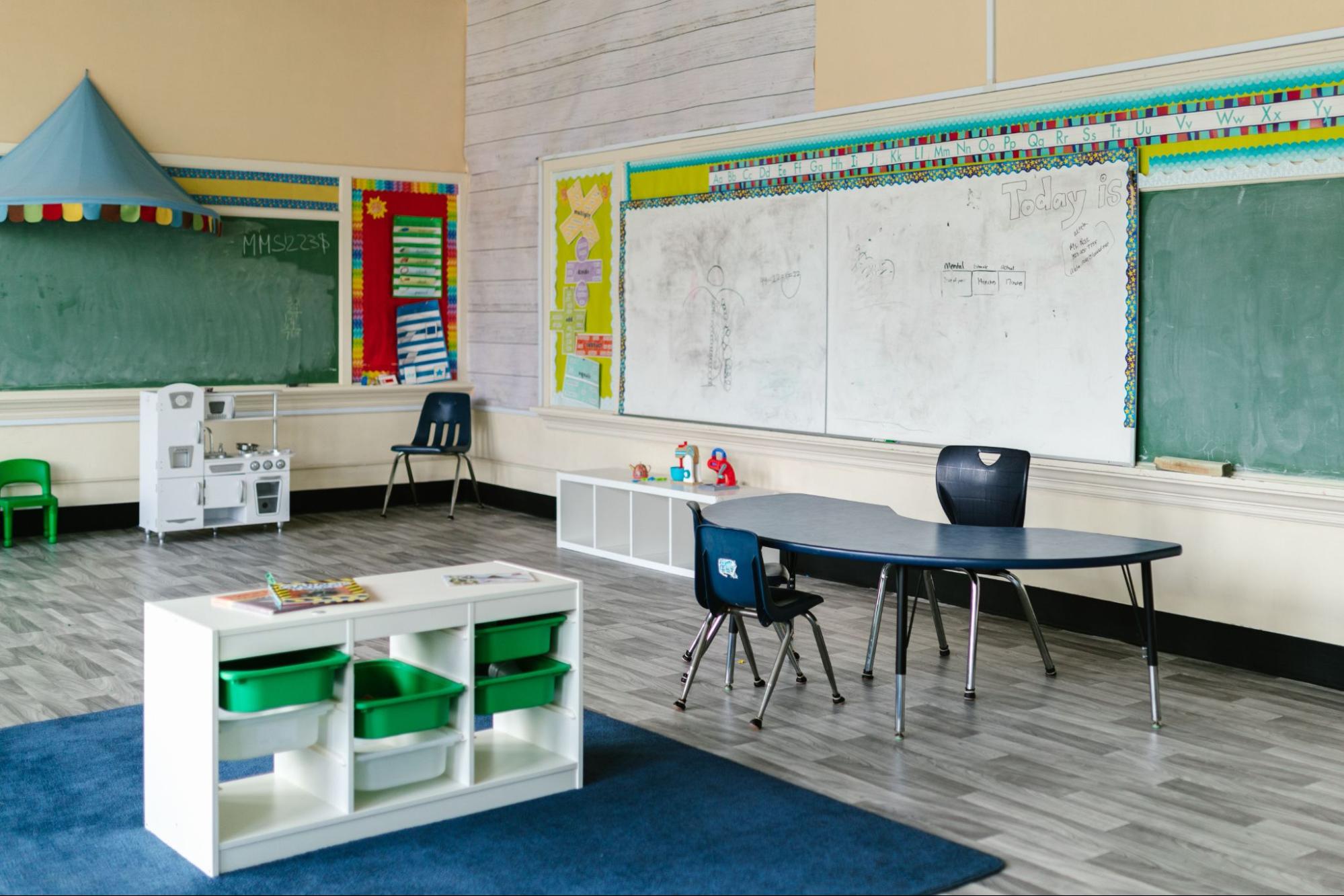
Good classroom environment tips include creating clearly defined areas, making frequently used materials accessible, building a predictable daily schedule, and giving students some ownership of the room.
Try not to completely decorate every wall before students arrive.
Leave room for student work, photographs, charts created together, and projects that reflect the actual children in your classroom. A room that develops throughout the year can feel more like our classroom than the teacher’s classroom.
It’s also worth asking teammates about school-specific expectations before spending hours setting everything up.
There is nothing quite like perfectly arranging your classroom only to discover that every teacher in the building is expected to display the same information beside the door!
Integrating Into the School Community
Teacher community integration goes beyond getting to know your immediate teammates.
Learn the names of the people who keep the school functioning.
Introduce yourself to office staff, custodians, paraprofessionals, specialists, cafeteria staff, substitutes, interventionists, and other support personnel.
These relationships matter.
Also consider participating in something outside your classroom. Just don’t volunteer for everything.
Choose one activity that genuinely interests you. That might be a committee, club, family night, school celebration, mentoring program, or community event.
This allows you to meet people naturally without overwhelming yourself during an already demanding transition.
And don’t forget families.
Introduce yourself warmly and communicate early. Families may also be getting used to having a new teacher in the school, especially in a close-knit community where staff members have been around for years.
A positive first interaction can make future communication much easier.
Overcoming Challenges During the Transition
Even with careful preparation, navigating a new teaching environment can be uncomfortable at times.
You may miss former coworkers. Also question your decision. You may accidentally break an unwritten rule or discover that a strategy that worked beautifully at your previous school doesn’t work quite the same way here.
That’s normal.
One of the biggest mistakes you can make is constantly comparing your new school with your old one.
“At my old school, we always…” can quickly become frustrating for coworkers, even when you’re simply trying to contribute an idea.
Instead, try asking:
“How do you usually handle this here?”
Once you understand the existing system, you can decide whether an idea from your previous school might be helpful.
Give yourself permission to be new, too.
You don’t have to understand every acronym, procedure, tradition, and personality during the first week. Keep notes. Ask questions. Find one or two trusted colleagues who don’t mind being your go-to people for those little questions that inevitably come up.
And remember that difficult days don’t necessarily mean you made the wrong decision.
Transitions take time.
A veteran teacher can be completely confident managing 25 students and still feel awkward walking into a new faculty meeting where everyone else seems to know exactly where to sit.
A few months later, that same room may feel completely familiar.
Making the Most of Your New Teaching Experience
Changing schools isn’t about becoming a different teacher.
It’s about taking what you’ve learned from previous experiences and allowing yourself to grow somewhere new.
Prepare before you arrive. Learn the school’s culture before trying to change it. Build relationships with students and colleagues. Create a classroom where your new students feel like they belong. Get involved in the community without overcommitting yourself.
Most importantly, give the transition time.
You may not feel completely at home during the first week, or even the first month. That’s okay. Every conversation in the hallway, successful lesson, shared laugh with a coworker, and connection with a student makes the unfamiliar a little more familiar.
Eventually, you’ll stop thinking of yourself as the new teacher.
You’ll simply be part of the school.
Have you changed schools recently? Share the best piece of advice you got (or wish you’d gotten) in the comments.
Frequently Asked Questions About Changing Schools as a Teacher
Learn as much as possible about your new school’s routines, expectations, curriculum, calendar, and culture. Read staff materials, explore the school website, introduce yourself to teammates, and ask what information would be helpful to know before your first day. Preparing for everyday procedures can make the transition much less overwhelming.
Start with small, consistent interactions. Introduce yourself to staff members, eat lunch with colleagues occasionally, participate in school activities, and ask questions about school traditions. With students, learn names quickly, show interest in their lives, create opportunities for conversation, and establish predictable classroom routines. Strong relationships don’t need to happen instantly. They grow through repeated positive interactions.
Common challenges include learning unfamiliar procedures, understanding the school’s culture, developing new professional relationships, adjusting to different expectations, and missing former coworkers. Teachers may also feel pressure to prove themselves despite already having significant experience. Give yourself time to learn the new environment, ask questions when you’re unsure, and avoid expecting yourself to know everything immediately.
Check your contract first, since many districts set a resignation or transfer deadline and some charge a penalty for leaving after it. Tell your principal before you tell colleagues or families, ideally in person, and follow up in writing. Giving as much notice as you can helps your school plan and protects your professional reputation.
Anything you bought with your own money is yours to take, but materials purchased with school or PTA funds usually stay behind. If you’re unsure about an item, ask your current administrator before packing it. It also helps to photograph your old room setup and save digital files before your account is closed, so you can reuse what worked.